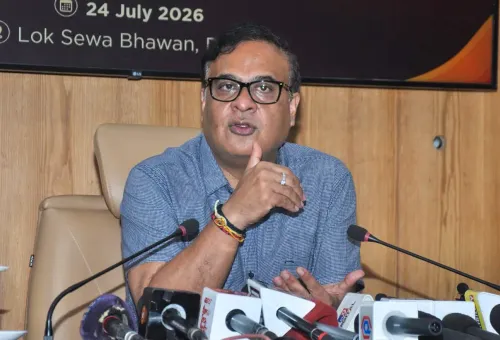
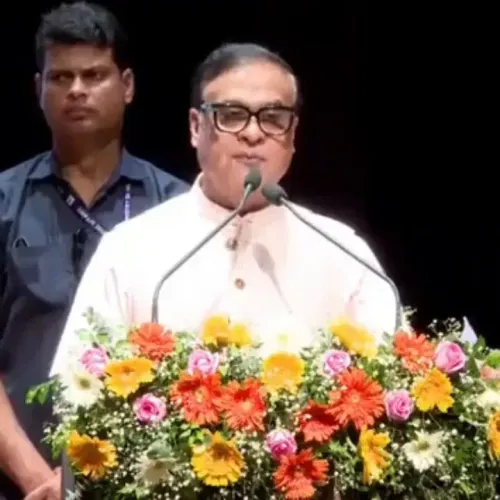
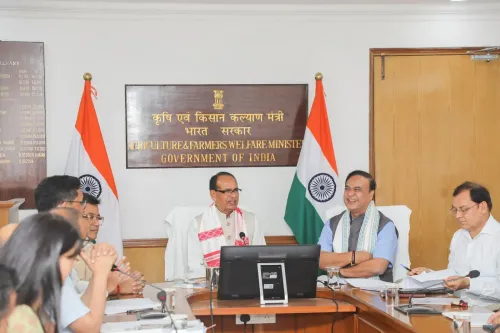
Assam CM Himanta Biswa Sarma unlocks dual scheme benefits for agri-entrepreneurs
Synopsis
Assam CM Himanta Biswa Sarma has opened a dual-benefit window for agri-entrepreneurs: low-interest AIF loans of up to ₹2 crore can now be stacked with a 35% PMFME capital subsidy. The scheme convergence, rarely available in practice, could meaningfully cut financing costs for FPOs and micro food processors trying to scale up in rural Assam.
Key Takeaways
Assam CM Himanta Biswa Sarma announced on 28 August that AIF and PMFME scheme benefits can now be combined by eligible agri-entrepreneurs.
The Agriculture Infrastructure Fund (AIF) offers loans of up to ₹2 crore with a 3% interest subvention.
The PMFME scheme provides a 35% capital subsidy — up to ₹10 lakh for individual enterprises and up to ₹3 crore for common infrastructure.
Beneficiaries already holding AIF loans are now also eligible to apply for PMFME assistance.
Farmer Producer Organisations (FPOs) are among the primary target beneficiaries of the combined scheme access.
Assam Chief Minister Himanta Biswa Sarma on Friday, 28 August announced that agri-entrepreneurs and Farmer Producer Organisations (FPOs) in the state can now combine financial incentives under two central government schemes — the Agriculture Infrastructure Fund (AIF) and the Pradhan Mantri Formalisation of Micro Food Processing Enterprises (PMFME) scheme — significantly widening access to affordable capital for food processing and allied agricultural activities.
What the Announcement Covers
Under the AIF, eligible agri-entrepreneurs and FPOs can access low-interest loans of up to ₹2 crore, accompanied by a 3% interest subvention that reduces the effective borrowing cost on agricultural infrastructure projects. Sarma confirmed the details in a post on X, stating: 'More support for food processing enterprises.'
The PMFME scheme, running in parallel, offers a capital subsidy of 35% for eligible food processing enterprises. Individual enterprises can claim a subsidy of up to ₹10 lakh, while assistance of up to ₹3 crore is available for common infrastructure projects.
Key Change: Schemes Can Now Be Combined
The significant policy shift is that beneficiaries who have already availed loans under the AIF are now also eligible to access additional assistance under the PMFME scheme. Previously, the two incentive streams were not explicitly available in combination. The convergence is designed to reduce financing costs and improve capital access for entrepreneurs seeking to establish or scale food processing units.
Why It Matters for Assam's Rural Economy
The AIF was originally designed to support investments in post-harvest infrastructure and community farming assets, while PMFME focuses on upgrading and formalising micro food processing enterprises. Allowing beneficiaries to stack both incentives addresses a persistent gap: agri-entrepreneurs often have access to credit or subsidy, but rarely both simultaneously. This comes amid a broader push by the Assam government to promote agricultural entrepreneurship and value addition as drivers of rural income and sustainable livelihoods.
Notably, FPOs — which aggregate smallholder farmers into collective market entities — stand to benefit disproportionately, as they typically struggle with collateral requirements that limit their access to formal credit.
What Happens Next
Eligible enterprises and FPOs in Assam are expected to approach their respective banks and nodal agencies to explore combined applications under both schemes. The announcement signals the state government's intent to actively facilitate scheme convergence at the ground level, though implementation timelines and state-level facilitation mechanisms were not detailed in the initial announcement.
Point of View
But it is often where real impact hides. India has dozens of agriculture and food processing schemes that operate in silos — beneficiaries frequently exhaust one window without knowing another exists, or are told they cannot combine benefits. Sarma's announcement, if backed by clear operational guidelines, could serve as a replicable model for other states. The harder question is execution: whether district-level officials and banks are equipped to process combined applications, and whether FPOs — which often lack dedicated finance teams — can navigate the dual paperwork. The announcement is directionally sound; the proof will be in disbursement data.
NationPress
12 Oct 2026
Frequently Asked Questions
What did Assam CM Himanta Biswa Sarma announce for agri-entrepreneurs?
Chief Minister Himanta Biswa Sarma announced on 28 August that agri-entrepreneurs and Farmer Producer Organisations in Assam can now combine benefits under the Agriculture Infrastructure Fund (AIF) and the PMFME scheme. This allows them to access both low-interest loans and a capital subsidy simultaneously.
How much loan can agri-entrepreneurs get under the AIF scheme?
Under the Agriculture Infrastructure Fund, eligible agri-entrepreneurs and FPOs can avail loans of up to ₹2 crore, along with a 3% interest subvention that lowers the effective cost of borrowing for agricultural infrastructure projects.
What is the capital subsidy available under the PMFME scheme?
The PMFME scheme offers a 35% capital subsidy for eligible food processing enterprises. Individual enterprises can receive a subsidy of up to ₹10 lakh, while common infrastructure projects are eligible for assistance of up to ₹3 crore.
Who is eligible to combine both AIF and PMFME benefits?
Beneficiaries who have already availed loans under the AIF scheme are now also eligible to access additional assistance under the PMFME scheme. Farmer Producer Organisations and agri-entrepreneurs involved in food processing and allied agricultural activities are the primary target group.
Why is the convergence of AIF and PMFME schemes significant?
The convergence allows eligible enterprises to reduce financing costs by combining subsidised credit with a capital grant, addressing a longstanding gap where agri-entrepreneurs could access either credit or subsidy but rarely both together. It is particularly beneficial for FPOs that face collateral constraints in accessing formal credit.