Assam CMO hails PM Modi's 12 years of welfare reforms

Synopsis
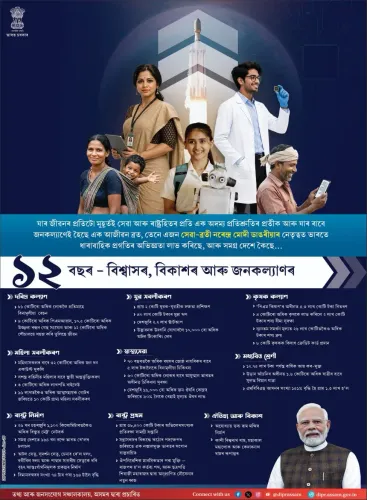
The Chief Minister's Office of Assam on 10 June 2026 praised PM Modi's 12-year record on welfare, citing GST simplification, digital payments, Sukanya Samriddhi, and social security schemes as milestones that have improved ease of living for millions of Indians.
Key Takeaways
The Assam Chief Minister's Office posted on 10 June 2026 crediting PM Narendra Modi with 12 years of welfare transformation.
The Sukanya Samriddhi Yojana , launched 22 January 2015 , provides savings support for girl children under the Beti Bachao Beti Padhao campaign.
The GST , implemented on 1 July 2017 , unified multiple central and state taxes into a single indirect tax structure.
Digital payment expansion accelerated after November 2016 demonetisation through UPI and banking linkages.
Social security schemes PM Jeevan Jyoti Bima Yojana and PM Suraksha Bima Yojana (both 2015 ) extended low-cost insurance to unorganised sector workers.
The post is part of a broader pattern of BJP-ruled states publicly aligning with central welfare milestones.
The Chief Minister's Office of Assam on Wednesday, 10 June 2026, credited Prime Minister Narendra Modi with transforming the ease of living for millions of Indians over the past 12 years, citing reforms spanning digital payments, tax simplification, and social security.
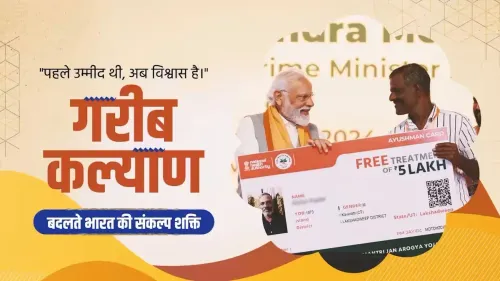
The official post, shared under the hashtags #12YearsOfGaribKalyan and #LongestServingElectedPMModi, stated: 'From digital payments to a simpler GST, from Sukanya Samriddhi to social security for all — the last 12 years have transformed the ease of living for millions under the leadership of Hon'ble Prime Minister Shri Narendra Modi.'
Context
The message from the Assam Chief Minister's Office marks a broader BJP-ruled-state pattern of publicly aligning with central government welfare milestones. The post enumerates four distinct policy pillars — digital payments, the Goods and Services Tax (GST), the Sukanya Samriddhi Yojana, and social security schemes — each of which was rolled out during the Modi government's tenure beginning May 2014.Policy Backdrop
The Sukanya Samriddhi Yojana was launched on 22 January 2015 under the Beti Bachao Beti Padhao campaign as a savings instrument for girl children, aimed at supporting their education and long-term financial security. The GST came into force on 1 July 2017, replacing a web of central and state levies with a unified indirect tax structure after years of constitutional negotiation between the Centre and states. Digital payment infrastructure received a significant push following the November 2016 demonetisation, with the Unified Payments Interface (UPI) and banking linkages expanding rapidly thereafter. Social security coverage was extended to unorganised sector workers through schemes such as the Pradhan Mantri Jeevan Jyoti Bima Yojana and the Pradhan Mantri Suraksha Bima Yojana, both launched in 2015 at low premium points to maximise reach.Stakeholders and Impact
The beneficiary groups cited across these initiatives are broad: girl children and their families under Sukanya Samriddhi, small taxpayers and businesses under GST rationalisation, unorganised sector workers under social security schemes, and the general population through the shift to cashless transactions. Together, these programmes represent a cross-cutting welfare and economic-reform agenda that successive central budgets have continued to build upon. For Assam specifically, financial inclusion and digital payment adoption have been policy priorities given the state's large rural and semi-urban population. The CMO's endorsement signals continued state-level commitment to driving enrolment and awareness of centrally sponsored schemes.What's Next
Attention will now turn to state-level progress reports on social security enrolment drives and any further GST rate rationalisation proposals in upcoming central budgets. As the Modi government marks this milestone, BJP-governed states are expected to amplify the messaging through on-ground outreach campaigns, particularly targeting beneficiaries of the Sukanya Samriddhi and insurance schemes in rural constituencies.Point of View
A tactic that reinforces the BJP's 'Garib Kalyan' brand ahead of electoral cycles. By bundling structurally distinct reforms — tax policy, fintech, gender welfare, and social insurance — under a single 12-year arc, the messaging frames incremental policy continuity as transformational governance. The invocation of 'LongestServingElectedPMModi' adds a constitutional-record dimension that elevates the communication beyond routine scheme promotion. Analysts will note that the effectiveness of this framing depends heavily on ground-level enrolment data and beneficiary satisfaction, metrics that remain contested in public discourse.
NationPress
26 Oct 2026
Frequently Asked Questions
What is the Sukanya Samriddhi Yojana mentioned by the Assam CMO?
The Sukanya Samriddhi Yojana is a government savings scheme for girl children launched on 22 January 2015 under the Beti Bachao Beti Padhao campaign, designed to fund their education and financial security through a high-interest savings account.
When was GST introduced in India?
GST was introduced across India on 1 July 2017, replacing multiple central and state indirect taxes with a unified goods and services tax structure.
What social security schemes did the Modi government launch for unorganised workers?
The Pradhan Mantri Jeevan Jyoti Bima Yojana and Pradhan Mantri Suraksha Bima Yojana, both launched in 2015, provide low-premium life and accident insurance cover to workers in the unorganised sector.
Why is the Assam CMO posting about PM Modi's 12 years?
The post is part of the #12YearsOfGaribKalyan campaign in which BJP-ruled state governments publicly mark the anniversary of PM Modi's tenure by highlighting central welfare and economic reforms implemented since May 2014.
How did digital payments grow under the Modi government?
Digital payment adoption accelerated significantly after the November 2016 demonetisation, driven by the expansion of UPI infrastructure and banking linkages that brought cashless transactions to a wider population.