CM Gujarat Office Marks 12 Years of Modi Govt Welfare Push
Synopsis
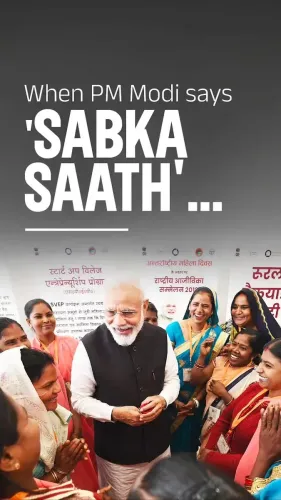
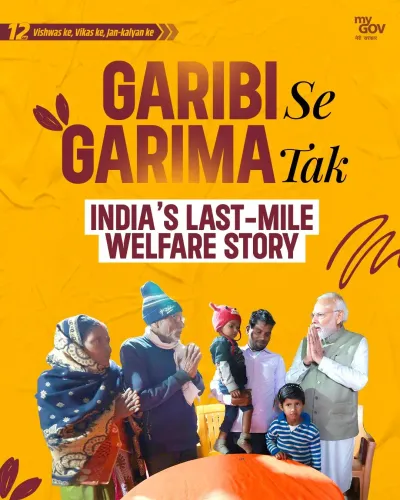
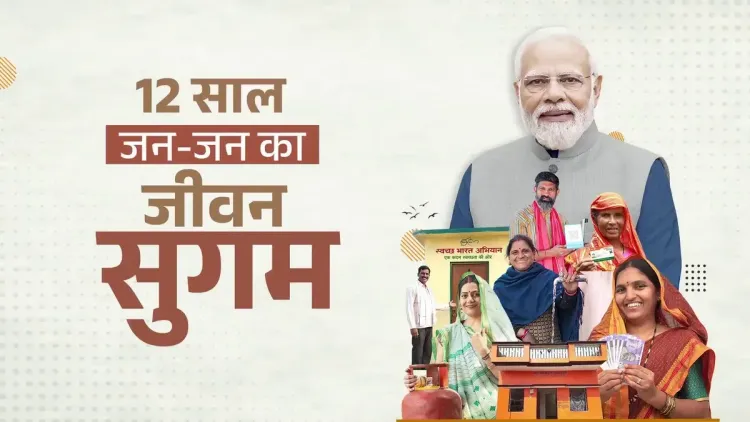
The Chief Minister's Office of Gujarat on 9 June 2026 marked 12 years of the Modi-led central government, highlighting housing, clean water, health and digital schemes as transformative for crores of Indian citizens under the #12YearsOfSeva campaign.
Key Takeaways
The Gujarat CMO posted on 9 June 2026 marking 12 years of the Modi government's welfare programmes under #12YearsOfSeva .
The post cited Pradhan Mantri Awas Yojana (launched June 2015 ) for providing pucca housing to low-income households.
Jal Jeevan Mission , announced in August 2019 , aims to deliver tap water connections to every rural household in India.
Ayushman Bharat , inaugurated in September 2018 , offers health insurance of up to Rs 5 lakh per year to vulnerable families.
The Digital India programme, launched in 2015 , underpins the digital access dimension cited in the post.
The messaging follows a pattern of BJP-governed states amplifying central welfare narratives around Modi government anniversaries.
The Chief Minister's Office of Gujarat on Tuesday, 9 June 2026 highlighted the welfare record of the Narendra Modi-led central government over the past 12 years, citing improvements in housing, drinking water, healthcare and digital access for crores of citizens across India.
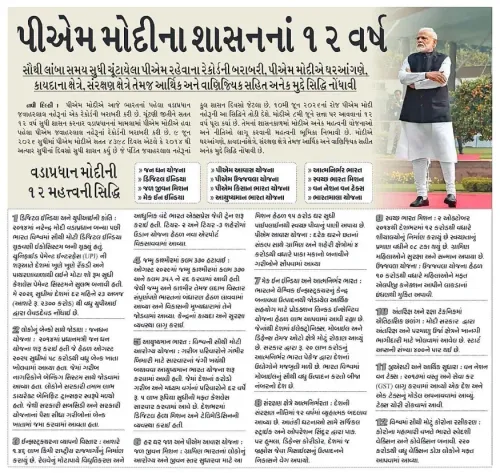
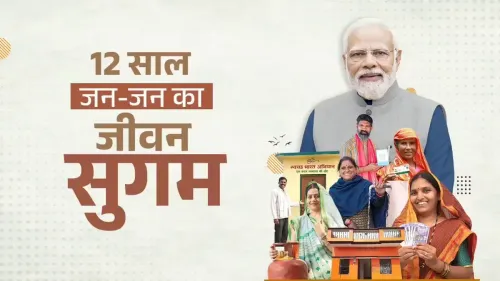
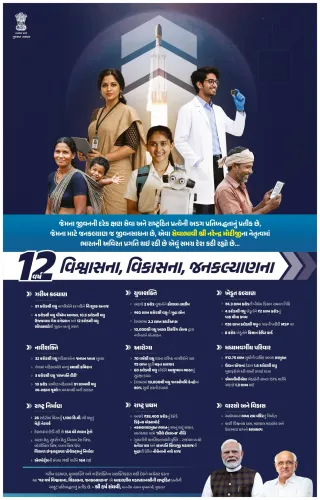
The post, shared under the hashtag #12YearsOfSeva, stated in Gujarati: 'Manniya Vadapradhan Shri Narendrabhai Modina netrutvama kendra sarkarni jankalyankari yojnao thaki chhella 12 varshmaan deshna karodo nagarikona jeevan banyun chhe vadhu sugam, surakshit ane samruddh' — translated as: 'Under the leadership of honourable Prime Minister Shri Narendra Modi, the welfare schemes of the central government have, over the last 12 years, made the lives of crores of citizens of the country more comfortable, secure and prosperous.'
Context
The Gujarat CMO's post marks what the ruling dispensation calls a milestone of 12 years of governance since the NDA government assumed office in May 2014. The message specifically highlights four pillars: pucca (permanent) housing with amenities, clean tap water, health coverage and a digital revolution. These correspond to flagship central programmes that have been rolled out progressively since 2014.
The post is part of a broader pattern of BJP-ruled state governments amplifying the central government's welfare narrative around anniversaries of the Modi administration, framing delivery of beneficiary schemes as markers of inclusive development.
Policy Backdrop
The housing reference points to the Pradhan Mantri Awas Yojana, launched in June 2015, which targets pucca homes for urban and rural low-income households. The clean water mention aligns with the Jal Jeevan Mission, announced in August 2019 with the aim of delivering tap water connections to every rural household.
On health, the post alludes to Ayushman Bharat Pradhan Mantri Jan Arogya Yojana, inaugurated in September 2018, which provides health insurance coverage of up to Rs 5 lakh per year to economically vulnerable families. The digital dimension corresponds to the Digital India programme, launched in 2015, aimed at expanding e-governance, digital infrastructure and broadband connectivity nationwide.
Stakeholders and Impact
The primary beneficiaries of the schemes cited are rural households, the urban poor and economically weaker sections across India. Each programme targets saturation coverage — meaning every eligible household rather than a percentage — a model that has been central to the government's communication strategy.
The Gujarat CMO's amplification of this messaging underscores the state's alignment with the central government's development narrative, particularly as both are governed by the Bharatiya Janata Party. Gujarat has frequently been positioned as a model state for scheme implementation under this framework.
What's Next
Observers will watch for updated scheme dashboards and utilisation data as the government approaches the 2026-27 Union Budget cycle. Possible announcements on extended targets for housing completions and water connections are anticipated, given that original deadlines for both Pradhan Mantri Awas Yojana and Jal Jeevan Mission have been revised previously.
The continued emphasis on '12 years of seva' signals that welfare delivery will remain a central theme in the BJP's political communication ahead of upcoming electoral cycles, with state units like Gujarat's CMO serving as key amplifiers of that message.
Point of View
Water, health and digital programmes under a single '12 years of seva' frame, the messaging seeks to convert scheme delivery into political capital ahead of future electoral cycles. The choice of Gujarati-language content signals that the primary audience is the home-state voter base, reinforcing Modi's Gujarat identity even as the claims are national in scope. The absence of specific beneficiary figures — consistent with the post's broad language — leaves the narrative aspirational rather than auditable, a deliberate posture that allows the message to travel without inviting fact-check friction.
NationPress
19 Sept 2026
Frequently Asked Questions
What is the #12YearsOfSeva campaign about?
#12YearsOfSeva is a social media campaign marking 12 years of the Narendra Modi-led central government since May 2014, highlighting welfare schemes in housing, water, health and digital access for Indian citizens.
What is Pradhan Mantri Awas Yojana?
Pradhan Mantri Awas Yojana is a central government housing scheme launched in June 2015 to provide permanent, amenity-equipped homes to urban and rural low-income households across India.
What is the Jal Jeevan Mission?
Jal Jeevan Mission is a flagship programme announced in August 2019 with the goal of delivering individual tap water connections to every rural household in India; its original 2024 deadline has since been extended.
What does Ayushman Bharat offer to beneficiaries?
Ayushman Bharat Pradhan Mantri Jan Arogya Yojana, inaugurated in September 2018, provides health insurance coverage of up to Rs 5 lakh per year to economically vulnerable families in India.
Why did the Gujarat CMO post about central government schemes?
Gujarat's CMO, like other BJP-governed state offices, routinely amplifies the central government's welfare narrative around Modi government anniversaries, framing scheme delivery as evidence of inclusive development.