CM Gujarat: Modi's 12 years empowered India's middle class
Synopsis
The Chief Minister's Office of Gujarat marked 12 years of PM Modi's governance on 15 June 2026, crediting a cluster of central welfare schemes — Jan Dhan, Mudra, Awas Yojana, Ayushman Bharat and Skill India — with making middle-class families more self-reliant and prosperous.
Key Takeaways
The Chief Minister's Office of Gujarat posted on 15 June 2026 marking 12 years of PM Modi-led welfare governance.
The post, in Gujarati, says middle-class life has become 'simple, convenient and happy' under schemes launched since 2014 .
Pradhan Mantri Jan Dhan Yojana (2014) and Pradhan Mantri Mudra Yojana (2015, credit up to Rs 10 lakh ) are central to the financial inclusion narrative.
Pradhan Mantri Awas Yojana (2015) and Ayushman Bharat (2018) addressed housing and health for middle and lower-income families.
The campaign hashtag #12YearsOfSakshamMiddleClass signals a coordinated social media push around the milestone.
Next Union Budget allocations and scheme performance reviews will be key indicators of continued middle-class policy focus.
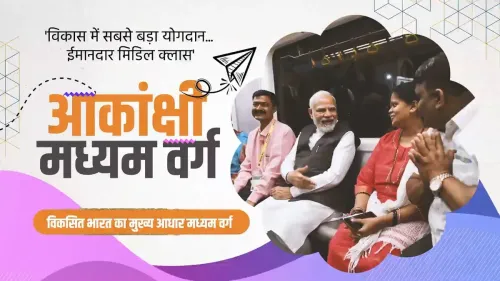
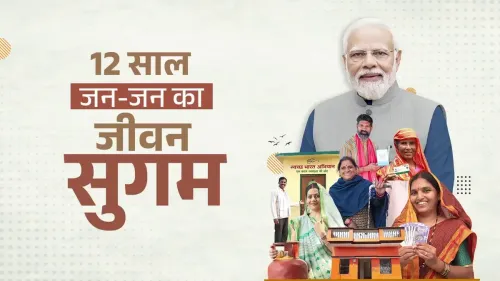
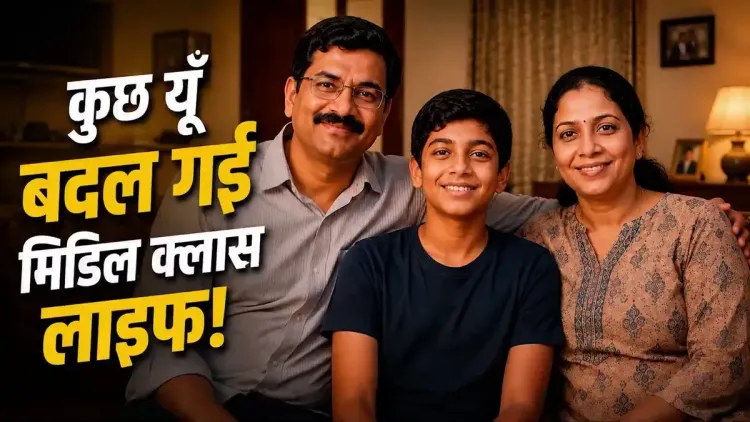
The Chief Minister's Office of Gujarat on Monday, 15 June 2026, shared a message crediting the welfare initiatives undertaken over the past 12 years under Prime Minister Narendra Modi's leadership with making life easier, more comfortable, and more prosperous for India's middle class.
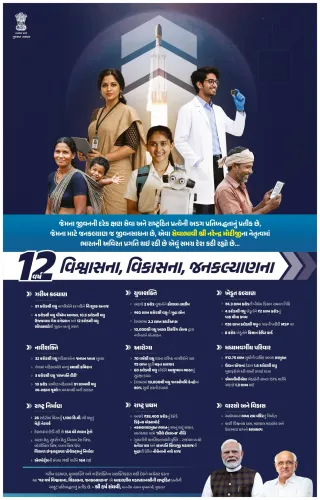
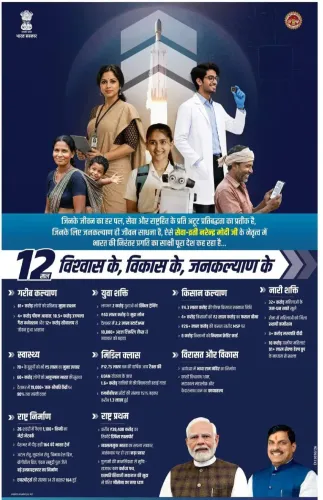
The post, shared in Gujarati, states that the many public welfare and people-centric initiatives and schemes implemented across the country over the last 12 years under the leadership of 'માનનીય વડાપ્રધાન શ્રી નરેન્દ્રભાઈ મોદી' ('Honourable Prime Minister Shri Narendra Modi') have made the lives of the middle class 'simple, convenient and happy', while middle-class families have become 'capable and prosperous' with self-reliance and self-confidence. The post carried the hashtag #12YearsOfSakshamMiddleClass.
Context
The messaging marks what the Government of Gujarat frames as a milestone — 12 years of welfare-oriented governance under Prime Minister Modi, who took office at the Centre in May 2014. Gujarat's CMO account has consistently amplified centrally aligned welfare themes, positioning the state as a model of implementation for national schemes. The post arrives as the Union government periodically reviews the outreach and coverage of its flagship programmes.
Policy Backdrop
Several large-scale central schemes form the backbone of this welfare narrative. Pradhan Mantri Jan Dhan Yojana, launched in 2014, brought banking access to previously unbanked households, directly benefiting lower and middle-income families. Pradhan Mantri Mudra Yojana, introduced in 2015, extended micro-credit of up to Rs 10 lakh to small entrepreneurs and self-employed individuals — a segment that forms the economic backbone of the middle class.
Pradhan Mantri Awas Yojana, also launched in 2015, targeted affordable housing for urban and rural middle and lower-income families. Ayushman Bharat, rolled out in 2018, provided health coverage to economically vulnerable families, including middle-class segments. The Skill India Mission, initiated in 2015, sought to enhance employability and self-employment opportunities, reinforcing the theme of self-reliance central to today's post.
Stakeholders and Impact
The schemes collectively address the financial, housing, health, and skills needs of urban salaried households and middle-class families — a demographic that has historically fallen between the gaps of poverty-targeted programmes and the affluent bracket. By framing this constituency as the beneficiary of a decade-plus of policy attention, the messaging seeks to consolidate the perception of inclusive governance. Gujarat, as the Prime Minister's home state and a BJP-governed state with a strong urban middle-class base, serves as a natural amplifier for such national themes.
What's Next
Observers will watch the next Union Budget allocations and periodic scheme performance reviews for data on middle-class coverage metrics, including the number of Mudra loan disbursements, Jan Dhan account activity, and Awas Yojana completion rates. As the 12-year milestone is marked through state-level communication campaigns, the political salience of the middle-class welfare narrative is likely to remain prominent in the run-up to future electoral cycles. Further messaging from state governments aligned with the #12YearsOfSakshamMiddleClass campaign is expected across social media platforms.
Point of View
State-amplified messaging exercise tied to the BJP's 12-year governance milestone at the Centre — a pattern seen consistently since 2014, where Gujarat's official channels echo national political narratives. By centering the 'middle class' rather than the poor, the messaging marks a deliberate pivot: the middle class is framed not as a bystander to welfare but as its primary beneficiary, a politically significant reframing ahead of future electoral contests. The cluster of schemes cited — Jan Dhan, Mudra, Awas, Ayushman Bharat — represents the Union government's most visible direct-benefit architecture, and invoking them together reinforces the argument that welfare governance has moved beyond subsidy-dependency toward self-reliance. Whether the narrative translates into measurable gains for the middle class remains a question that scheme performance data and budget allocations will eventually answer.
NationPress
19 Sept 2026
Frequently Asked Questions
What is the #12YearsOfSakshamMiddleClass campaign about?
The #12YearsOfSakshamMiddleClass campaign marks 12 years of PM Narendra Modi's governance since 2014 , highlighting welfare schemes such as Jan Dhan, Mudra, Awas Yojana and Ayushman Bharat as having improved the lives of India's middle-class families.
Which welfare schemes benefited the middle class under PM Modi?
Key schemes include Pradhan Mantri Jan Dhan Yojana (banking access, 2014), Pradhan Mantri Mudra Yojana (micro-credit up to Rs 10 lakh, 2015), Pradhan Mantri Awas Yojana (affordable housing, 2015), Ayushman Bharat (health coverage, 2018), and the Skill India Mission (2015).
Why did the Gujarat CMO post about Modi's welfare schemes?
The Chief Minister's Office of Gujarat regularly amplifies centrally aligned welfare messaging, and this post marks the 12-year milestone of PM Modi's governance at the Centre, with Gujarat serving as a key platform for such campaigns given its political and historical connection to the Prime Minister.
What does 'Saksham Middle Class' mean?
'Saksham' is a Hindi and Gujarati word meaning 'capable' or 'empowered'. Saksham Middle Class refers to the campaign's framing of India's middle class as having become self-reliant and prosperous through government welfare and financial inclusion initiatives over the past 12 years .
What is Pradhan Mantri Mudra Yojana and who does it help?
Pradhan Mantri Mudra Yojana , launched in 2015 , provides micro-credit of up to Rs 10 lakh to small entrepreneurs, self-employed individuals, and micro-businesses — a segment that forms a significant part of India's middle class and informal economy.