Assam's Anna Sewa Din: 83.75% Ration Cards Reached by Day 7
Synopsis
Assam's AnnaSewaDin campaign cleared 83.75% ration card coverage and distributed 1,17,605 MT of PMGKAY rice by Day 7 on 7 August 2026, under Chief Minister Himanta Biswa Sarma's leadership, in a state-wide push to close last-mile food security gaps.
Key Takeaways
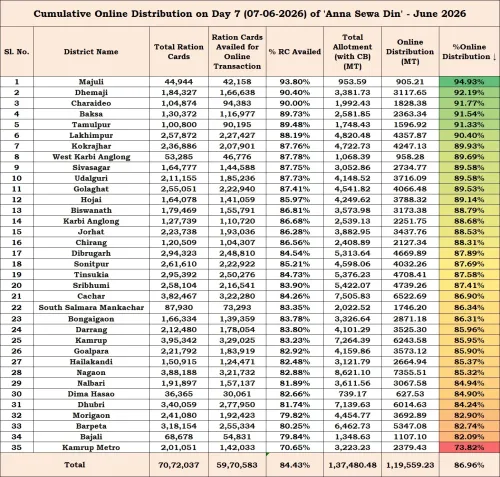
58,80,151 ration cards availed by Day 7 of AnnaSewaDin, representing 83.75% coverage.
1,17,605.19 metric tonnes of PMGKAY rice distributed, reaching 85.99% of the target.
The campaign is a state-level drive under Chief Minister Dr.
Himanta Biswa Sarma to saturate NFSA and PMGKAY entitlements across Assam .
PMGKAY (Pradhan Mantri Garib Kalyan Anna Yojana) was launched in 2020 and has been extended in phases by the central government.
Rice distribution rate ( 85.99% ) is outpacing ration card coverage ( 83.75% ), indicating strong field-level logistics.
Daily public updates from the Chief Minister's Office create a real-time accountability scorecard for the campaign.
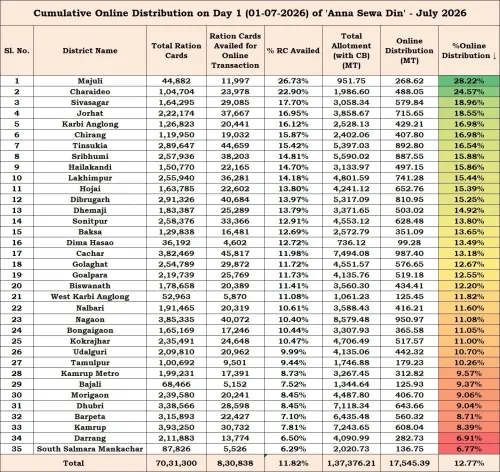
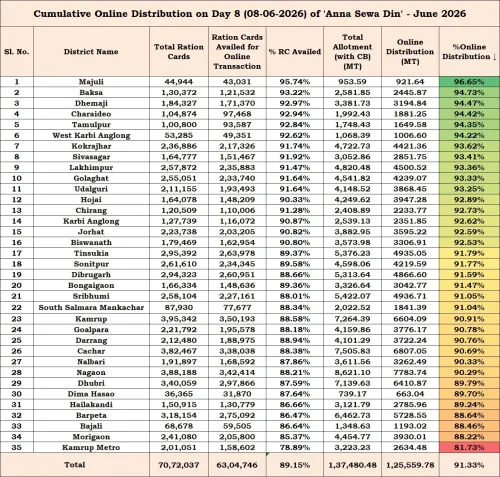
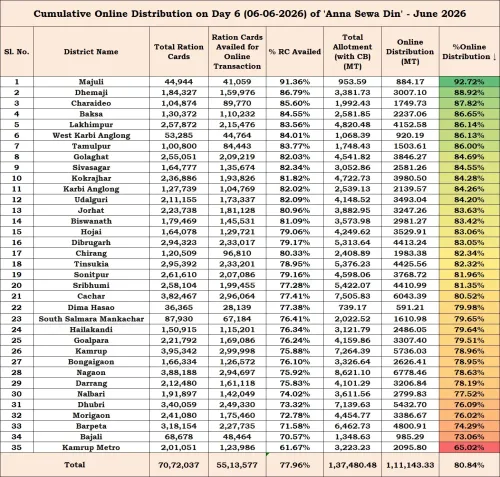
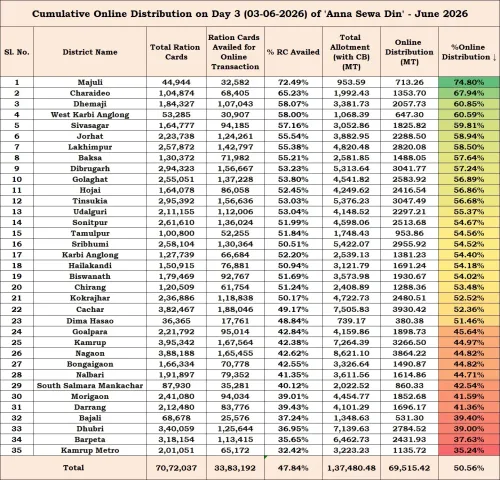
More than 58.8 lakh households in Assam now have their ration cards in hand — and the state is not done yet. The Chief Minister's Office of Assam confirmed on 7 August 2026 that Day 7 of the ongoing #AnnaSewaDin campaign has closed with 58,80,151 ration cards availed, representing 83.75% coverage, alongside 1,17,605.19 metric tonnes of PMGKAY rice distributed — 85.99% of the target.
What AnnaSewaDin is, and why the numbers matter
The AnnaSewaDin campaign is a state-level saturation drive designed to close the gap between eligible beneficiaries and actual ration card holders across Assam. At its core, the drive operationalises two central entitlements: the National Food Security Act (NFSA), passed in 2013, which guarantees subsidised grains to eligible households, and the Pradhan Mantri Garib Kalyan Anna Yojana (PMGKAY), originally launched in 2020 as pandemic relief and extended in successive phases by the central government.
The gap between a scheme's design and its last-mile reach is where food security either works or fails. Assam's campaign is a direct assault on that gap — and after seven days, the coverage figures suggest the drive is landing.
CM Himanta's food-security push across Assam's districts
Under the leadership of Chief Minister Dr. Himanta Biswa Sarma, who has helmed Assam since 2021, the state has leaned into centralised welfare delivery campaigns as a governance signature. The AnnaSewaDin drive fits that pattern: a time-bound, measurable push to ensure that NFSA beneficiaries — the poorest households — are not excluded by administrative lag or documentation barriers.
With 85.99% of targeted PMGKAY rice already distributed, the campaign's grain delivery is outpacing even its card-coverage rate, suggesting field-level logistics are holding. The remaining ~14% of the target represents hundreds of thousands of households still in the pipeline as the campaign continues.
A pattern seen across Indian states — but the scale here is striking
Saturation drives of this kind are not unique to Assam. Multiple Indian states run periodic exercises to update ration rolls and reduce exclusion errors under the NFSA framework. What makes the Assam figures notable is the pace: crossing 83% ration card coverage and distributing over 1.17 lakh metric tonnes of rice within seven days points to significant administrative mobilisation at the district and block level.
The campaign's daily updates — and the specificity of the numbers being published — also signal a deliberate accountability mechanism, giving the public a running scorecard rather than a post-facto report.
The final tally, when AnnaSewaDin concludes, will be the real test of whether Assam has meaningfully narrowed its food-security coverage gap — or simply moved faster toward a ceiling that was already close.
Point of View
Time-bound delivery events with public scorecards. Publishing daily granular figures — ration cards availed, metric tonnes distributed — is as much a political signal as an administrative one, positioning the BJP-led state government as an efficient executor of central schemes ahead of electoral cycles. The 83-85% coverage band after seven days is strong by historical standards for such drives, but the remaining gap will determine whether the campaign produces genuine inclusion or merely consolidates coverage among households already close to the system. Assam's approach mirrors a national pattern where states compete on welfare delivery metrics, with PMGKAY acting as the most visible and politically salient lever.
NationPress
22 Sept 2026
Frequently Asked Questions
What is the AnnaSewaDin campaign in Assam?
AnnaSewaDin is a state-level saturation campaign in Assam aimed at ensuring all eligible households receive their ration cards and PMGKAY free rice under the National Food Security Act framework.
What is PMGKAY and who benefits from it?
PMGKAY (Pradhan Mantri Garib Kalyan Anna Yojana) is a central government scheme launched in 2020 that provides free food grains to National Food Security Act beneficiaries, covering poor households across India.
How much rice has been distributed under AnnaSewaDin so far?
By Day 7 of the campaign on 7 August 2026, a total of 1,17,605.19 metric tonnes of PMGKAY rice had been distributed in Assam, representing 85.99% of the target.
What percentage of ration cards have been covered in Assam's campaign?
As of Day 7, 58,80,151 ration cards had been availed, covering 83.75% of the targeted beneficiaries in Assam.
Who is leading the AnnaSewaDin food security campaign in Assam?
The campaign is being conducted under the leadership of Chief Minister Dr. Himanta Biswa Sarma, with updates published by the Chief Minister's Office of Assam.