CM Himanta's Assam Destroys Narcotics Worth Rs 472 Cr

Synopsis
The Chief Minister's Office of Assam declared on 13 July 2026 that the state is destroying seized narcotics worth Rs 472 crore over 10 days, the latest milestone in CM Himanta Biswa Sarma's signature zero-tolerance anti-drug campaign targeting Golden Triangle trafficking routes through the northeast.
Key Takeaways
The Chief Minister's Office of Assam announced a 10-day narcotics destruction drive on 13 July 2026 .
Seized drugs with an estimated value of Rs 472 crore are scheduled for destruction in this single window.
CM Himanta Biswa Sarma has run a zero-tolerance anti-drug campaign as a signature policy since taking office in May 2021 .
Assam sits along Golden Triangle trafficking corridors from Myanmar , making it a critical enforcement frontier.
Destruction events comply with the NDPS Act and prevent seized contraband from re-entering circulation.
Stakeholders are watching for deeper inter-agency coordination on border security and rehabilitation alongside enforcement.
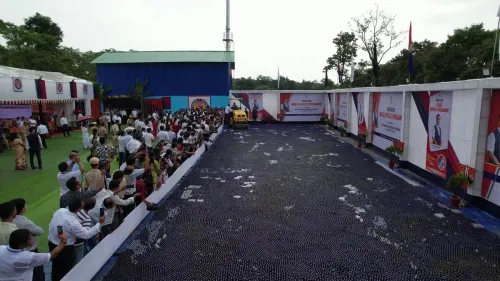
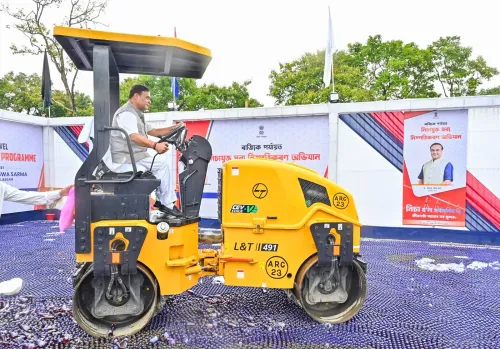
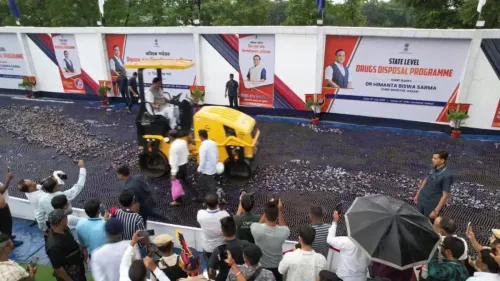
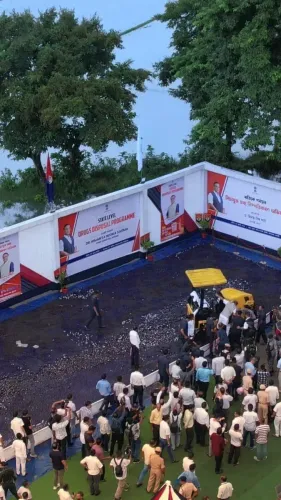
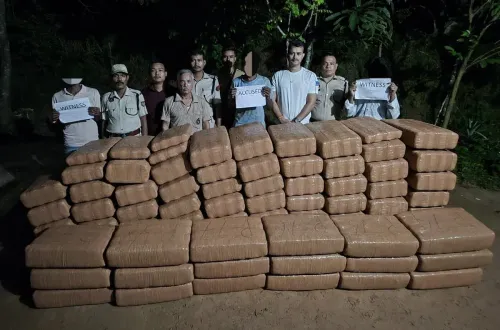
The Chief Minister's Office of Assam announced on Monday, 13 July 2026 that the state is conducting a large-scale destruction of seized narcotics as part of its continuing zero-tolerance anti-drug campaign, with contraband worth an estimated Rs 472 crore scheduled for destruction over a 10-day window.
Context
The CMO's post — 'Zero tolerance. Relentless action. Assam's war on drugs continues with the destruction of narcotics' — signals another milestone in a campaign that Chief Minister Himanta Biswa Sarma has made a defining feature of his administration since taking office in May 2021. The public destruction of confiscated contraband is a deliberate act of deterrence, designed to demonstrate that seized drugs will never re-enter circulation.
Assam occupies a strategically sensitive position in India's northeast, sharing a porous border with Myanmar and sitting along trafficking corridors that funnel synthetic drugs and heroin from the Golden Triangle into the Indian mainland. The state has long been both a transit zone and a destination market, making enforcement particularly consequential.
Policy Backdrop
The Sarma government launched an intensified statewide anti-drug drive immediately upon assuming office in 2021, ordering regular and publicly visible destruction of seized contraband under the provisions of the Narcotic Drugs and Psychotropic Substances (NDPS) Act. Between 2022 and 2025, multiple large-scale incineration events were held at Guwahati and district headquarters across the state, each accompanied by zero-tolerance declarations from the administration.
The current destruction drive fits within this established pattern, but the scale — narcotics valued at Rs 472 crore over 10 days — represents one of the more significant single-window destruction exercises conducted by Assam Police in recent years. Destruction events serve a dual legal purpose: complying with court orders for disposal of case-property and removing any risk of re-trafficking of seized material.
Stakeholders and Impact
The communities most directly affected by Assam's drug problem are its border districts — areas where trafficking networks have historically recruited local youth as couriers and where addiction rates have risen alongside supply. Assam Police, the frontline agency executing seizures and destructions, has expanded its narcotics enforcement units significantly under the current administration.
Youth welfare groups and civil society organisations in the northeast have broadly welcomed the visible destruction drives as a credible signal of state intent, though they have also called for parallel investment in rehabilitation and demand-reduction programmes. The campaign's success in reducing street-level availability of drugs remains a longer-term metric that enforcement alone cannot deliver.
What's Next
With the 10-day destruction schedule underway, attention will turn to whether the state announces further inter-agency coordination with central narcotics bodies and border security forces to plug the supply routes that replenish seized stocks. Any new notifications on cross-border fencing projects along the Assam-Myanmar corridor, or formal coordination frameworks with neighbouring northeastern states, will be closely watched as indicators of whether the campaign is deepening beyond periodic destruction events into sustained supply-chain disruption.
Point of View
If verified, would rank among the largest single-window destructions in the state's history, underlining an escalation in both seizure capacity and public communication. However, analysts tracking the northeast corridor note that destruction events address the symptom rather than the supply chain; without sustained border-management investment and demand-side rehabilitation, the campaign risks becoming a cycle of seizure and replacement. The broader policy test will be whether Assam converts enforcement momentum into measurable reductions in street-level drug availability and addiction rates.
NationPress
12 Oct 2026
Frequently Asked Questions
What is the Assam narcotics destruction drive in July 2026?
The Assam government announced a 10-day drive beginning around 13 July 2026 to publicly destroy seized narcotics worth an estimated Rs 472 crore, continuing CM Himanta Biswa Sarma's zero-tolerance anti-drug campaign under the NDPS Act.
How much drugs is Assam destroying in the 2026 drive?
Assam is destroying narcotics with an estimated street value of Rs 472 crore over a 10-day period, making it one of the larger single-window destruction exercises the state has conducted.
Why does Assam have a major drug problem?
Assam borders Myanmar and lies along trafficking corridors from the Golden Triangle, a major global source of heroin and synthetic drugs, making it both a transit route and a destination market for narcotics.
What is Himanta Biswa Sarma's anti-drug policy?
Since becoming Chief Minister in May 2021, Himanta Biswa Sarma has pursued a zero-tolerance anti-drug policy involving intensified Assam Police seizures, regular public destruction of confiscated contraband, and repeated zero-tolerance declarations.
Under which law are drugs destroyed in Assam?
Narcotics are destroyed under the Narcotic Drugs and Psychotropic Substances (NDPS) Act, which mandates court-ordered disposal of seized contraband to prevent it from re-entering circulation.