Assam Cabinet cuts land norms for private universities, eases homestay rules
Synopsis
The Assam Cabinet has slashed private university land requirements — from 60 to 35 bighas in rural areas — and introduced a single-window, auto-renewal system for homestays. Both moves signal a deliberate regulatory reset by CM Himanta Biswa Sarma to draw private capital into two sectors the Northeast has long underserved: quality tourism accommodation and higher education.
Key Takeaways
The Assam Cabinet on 23 June 2026 approved two major policy reforms under Chief Minister Himanta Biswa Sarma .
The Assam Tourism Accommodation (Development & Registration) Rules, 2026 introduce a single-window registration and automatic three-year renewal for homestays.
Minimum land for private universities in rural areas cut from 60 bighas to 35 bighas ; in urban areas from 30 bighas to 21 bighas .
Amendments target the Assam Private Universities Act, 2007 , aiming to attract greater private investment in higher education.
Both reforms are part of the state government's broader push to make Assam an investment-friendly destination in the Northeast.
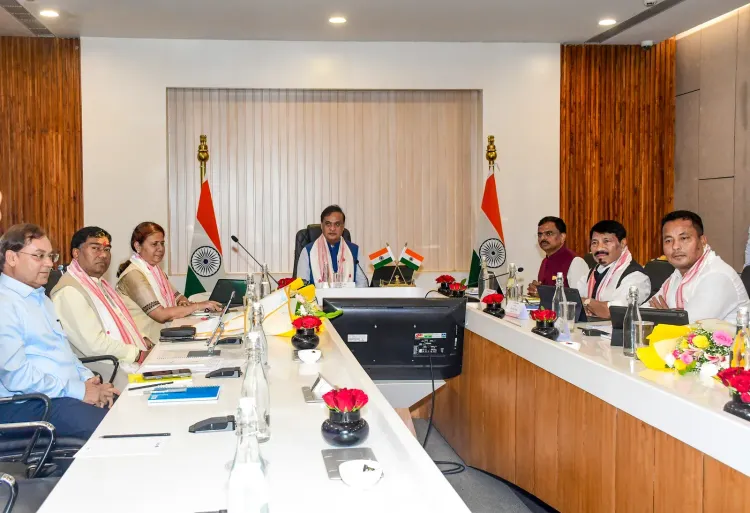
The Assam Cabinet on Tuesday, 23 June 2026, approved two significant policy reforms — a simplified registration framework for homestays and a reduction in minimum land requirements for private universities — aimed at boosting tourism and attracting private investment in higher education across the state. The decisions were taken at a Cabinet meeting chaired by Chief Minister Himanta Biswa Sarma at Lok Sewa Bhawan in Dispur, Guwahati.
New Homestay Rules
The Cabinet cleared the Assam Tourism Accommodation (Development & Registration) Rules, 2026, which establish a single-window registration system for homestays and other tourism accommodation facilities. The rules also introduce an automatic renewal mechanism every three years, reducing procedural delays and compliance burdens for operators.
Chief Minister Sarma told reporters that the move is designed to encourage more local residents — particularly in rural and eco-tourism destinations — to participate in the tourism economy, while improving the quality and availability of accommodation for visitors. This comes amid a broader national push to develop community-based tourism, with several northeastern states competing to attract domestic and international travellers.
Private University Land Norms Slashed
The Cabinet also approved amendments to the Assam Private Universities Act, 2007, significantly lowering the minimum land requirement for establishing private universities. In rural areas, the threshold has been reduced from 60 bighas to 35 bighas. In urban areas, the requirement has been cut from 30 bighas to 21 bighas.
Sarma asserted that the amendment is aimed at attracting greater private investment in higher education and facilitating the establishment of quality institutions in the state. The land relaxation addresses what officials describe as one of the primary barriers faced by educational investors, while maintaining regulatory oversight.
Why It Matters for the Northeast
Assam has been positioning itself as an emerging education hub in the Northeast, and the revised norms could accelerate that ambition. Notably, land availability has historically constrained private university proposals in the region, where geography and land classification rules create additional hurdles. By lowering the entry threshold, the government is signalling a shift toward a more investment-friendly regulatory environment.
The Chief Minister said the reforms will improve access to quality learning opportunities and strengthen Assam's standing as a destination for higher education in the region.
Broader Policy Direction
Both decisions are part of the Himanta Biswa Sarma government's stated agenda to create a more business-friendly climate in Assam, spanning sustainable tourism development and educational infrastructure expansion. Industry observers will watch whether the simplified homestay norms translate into measurable growth in registered tourism accommodation, and whether the revised land thresholds prompt a new wave of private university applications in the state.
Point of View
But the real question is whether it removes the right barrier. Land was one constraint; regulatory uncertainty, faculty availability, and accreditation timelines are others that the amendment does not address. On homestays, the single-window and auto-renewal provisions are overdue — Assam's tourism potential, particularly in eco and rural circuits, has been throttled by registration friction for years. Whether these reforms translate into on-ground growth will depend on implementation speed and district-level compliance, two areas where state policy in the Northeast has historically lagged intent.
NationPress
22 Sept 2026
Frequently Asked Questions
What did the Assam Cabinet approve on 23 June 2026?
The Assam Cabinet approved two key reforms: the Assam Tourism Accommodation (Development & Registration) Rules, 2026, simplifying homestay registration, and amendments to the Assam Private Universities Act, 2007, reducing minimum land requirements for private universities. Both decisions were chaired by Chief Minister Himanta Biswa Sarma at Lok Sewa Bhawan in Dispur.
How have land requirements for private universities in Assam changed?
Under the revised norms, the minimum land required to set up a private university in rural Assam has been reduced from 60 bighas to 35 bighas. In urban areas, the requirement has been lowered from 30 bighas to 21 bighas.
What are the new homestay registration rules in Assam?
The Assam Tourism Accommodation (Development & Registration) Rules, 2026 introduce a single-window registration system and an automatic renewal mechanism every three years, reducing procedural delays for homestay and tourism accommodation operators.
Why is Assam reducing land norms for private universities?
The government says land availability has been one of the primary barriers to private investment in higher education in the state. The relaxation is intended to attract more educational institutions while maintaining regulatory oversight, as part of Assam's ambition to become an education hub in the Northeast.
Who benefits from the new homestay rules in Assam?
Local residents, entrepreneurs, and small operators — particularly in rural and eco-tourism areas — stand to benefit most. The simplified registration and auto-renewal system reduces compliance burdens and is expected to encourage more community participation in Assam's tourism economy.