Assam adds 8 co-districts, total reaches 47 under Sarma's governance push
Synopsis
Assam is quietly rewriting how government reaches its people. With 8 new co-districts added to the existing 39, CM Himanta Biswa Sarma is betting that proximity — not just policy — is the real fix for last-mile governance in a state defined by difficult terrain and remote communities.
Key Takeaways
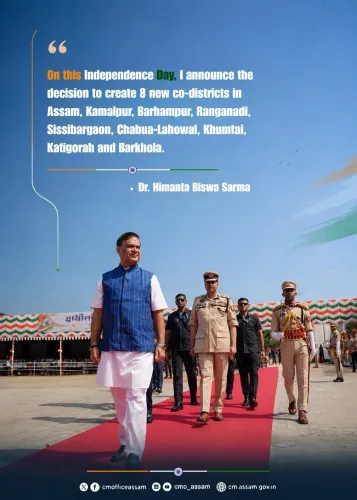
Assam CM Himanta Biswa Sarma announced 8 new co-districts on 18 August , taking the state total to 47 .
39 co-districts were already operational before this expansion.
The co-district model brings selected administrative functions closer to citizens, reducing travel to district headquarters.
The expansion targets residents in remote and rural areas affected by difficult terrain and poor connectivity.
The government is expected to formally notify the locations and jurisdictions of the new co-districts.
The move is part of Assam's broader push for digital governance and last-mile delivery of welfare schemes.
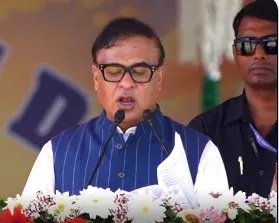
Assam Chief Minister Himanta Biswa Sarma on Tuesday, 18 August announced the creation of eight new co-districts across the state, taking the total operational count to 47. The expansion is part of the state government's ongoing effort to decentralise administration and bring government services within easier reach of citizens in remote and rural areas.
What the Expansion Covers
With 39 co-districts already functional, the addition of eight more is designed to extend the model's reach into areas where difficult terrain and poor connectivity have historically made access to district-level administration a challenge. The government is expected to formally notify the locations and administrative jurisdictions of the new co-districts as part of the rollout process.
'Good governance begins when the Government comes closer to the people. Our Co-district model is doing exactly that — bringing administration within easier reach. With 39 already operational, we are now creating 8 more Co-districts to deepen Ease of Governance across Assam,' Chief Minister Sarma said in a post on X.
How the Co-District Model Works
Under the co-district framework, selected administrative and government functions are handled through co-district offices positioned closer to citizens, reducing the need for residents to travel to distant district headquarters for routine services. The model is specifically tailored to Assam's geographic realities — a state where long distances, hilly terrain, and connectivity gaps can make even basic administrative tasks burdensome for rural populations.
The initiative is also expected to improve coordination between government departments at the local level, enabling faster implementation of welfare and development programmes at the grassroots.
Part of a Broader Governance Agenda
The co-district expansion sits within a wider administrative reform agenda that the Assam government has been pursuing, which includes a push towards digital governance and improved last-mile delivery of government schemes. CM Sarma has consistently emphasised citizen-centric governance and reducing administrative hurdles as priorities of his administration.
Notably, the co-district model has emerged as one of the state's flagship administrative innovations since its launch, drawing attention as a replicable framework for decentralised governance in states with challenging geography.
What This Means for Residents
The expansion is expected to directly benefit residents of remote and semi-urban areas by reducing dependence on district headquarters for routine government interactions. With more co-district offices operational, citizens will be able to access a range of administrative services closer to their homes, cutting both travel time and associated costs.
As the government moves to notify the eight new co-districts, the model's long-term impact on service delivery and administrative efficiency in Assam will be closely watched.
Point of View
Digital infrastructure, and service mandates do not keep pace. The government has so far led with the numbers; a public dashboard tracking service delivery outcomes at each co-district would make the reform verifiable rather than merely aspirational.
NationPress
3 Oct 2026
Frequently Asked Questions
What is the co-district model in Assam?
The co-district model is an administrative framework introduced by the Assam government to decentralise governance. It places selected government offices and services closer to citizens, reducing the need for residents — especially in remote areas — to travel to district headquarters for routine administrative tasks.
How many co-districts does Assam now have?
As of 18 August, Assam has a total of 47 co-districts. Eight new ones were announced by Chief Minister Himanta Biswa Sarma, adding to the 39 that were already operational.
Why is the co-district expansion significant for Assam?
Assam's difficult terrain, long distances, and connectivity gaps make access to district-level administration challenging for many rural and remote residents. The co-district model directly addresses this by bringing services geographically closer to citizens, cutting travel time and administrative barriers.
When will the new co-districts become operational?
The government is expected to formally notify the locations and administrative jurisdictions of the eight new co-districts as part of the expansion process. A specific operational date has not yet been announced.
How does the co-district model support welfare delivery?
By positioning administrative offices closer to local communities, the model is designed to improve coordination between government departments at the grassroots level and speed up the implementation of welfare and development programmes in underserved areas.