CM Himanta announces 8 new co-districts for Assam on Independence Day

Synopsis
Chief Minister Himanta Biswa Sarma announced the creation of 8 new co-districts in Assam on Independence Day 2026 — Kamalpur, Barhampur, Ranganadi, Sissibargaon, Chabua-Lahowal, Khumtai, Katigorah and Barkhola — as part of the state's ongoing push to decentralise administration and improve citizen access to government services.
Key Takeaways
8 new co-districts announced for Assam on Independence Day, 15 August 2026 by Chief Minister Dr.
Himanta Biswa Sarma .
The co-districts named are Kamalpur, Barhampur, Ranganadi, Sissibargaon, Chabua-Lahowal, Khumtai, Katigorah and Barkhola .
Co-districts are sub-district administrative units designed to bring government services closer to citizens without creating full new districts.
The move continues a pattern of administrative decentralisation in Assam under Dr.
Sarma's government since 2021 .
Formal notifications on boundaries, staffing and powers of the new units are awaited as the next administrative step.
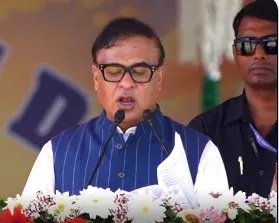
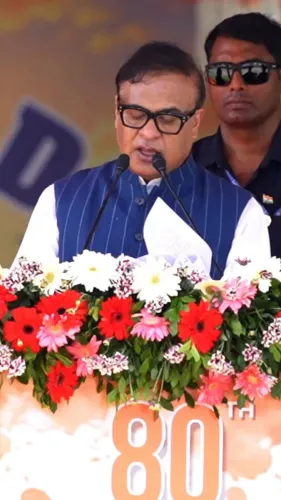
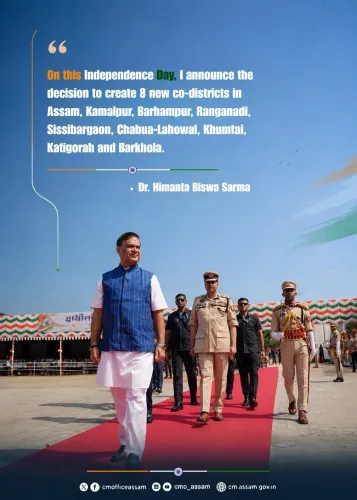
Eight new administrative units, eight new promises to the people of Assam. On Independence Day, 15 August 2026, Chief Minister Dr. Himanta Biswa Sarma used the state's biggest civic occasion to announce the creation of 8 new co-districts — a structural reform aimed at bringing government closer to citizens across the northeastern state.
The new co-districts named by the Chief Minister are Kamalpur, Barhampur, Ranganadi, Sissibargaon, Chabua-Lahowal, Khumtai, Katigorah and Barkhola. The announcement was made directly by Dr. Himanta Biswa Sarma and shared through the official Chief Minister's Office of Assam account on X, signalling the state government's intent to push through administrative decentralisation at scale.
Why co-districts — and why now
The logic is straightforward: large administrative districts in Assam have long meant that citizens in remote areas must travel significant distances to access basic government services — land records, revenue matters, administrative grievances. Co-districts, sitting below full districts in the administrative hierarchy, are designed to bridge that gap without the full resource commitment of carving out entirely new districts. Assam has a precedent here. Under Dr. Sarma's tenure since 2021, the state has pursued incremental administrative restructuring to decentralise governance across its diverse and geographically complex terrain. This announcement fits squarely within that arc — eight more nodes in the administrative network, eight more points where the state touches the citizen. The broader pattern holds across India. States from Uttar Pradesh to Rajasthan have repeatedly created smaller administrative units in recent years, driven by the same logic: governance efficiency degrades with size, and smaller units allow faster grievance redressal and more accountable local administration.What comes next for the 8 co-districts
The announcement marks the political decision; the administrative machinery now has to catch up. Formal government notifications detailing the precise boundaries, staffing structures, and powers of each co-district will be the critical next step. Budgetary allocations and an implementation timeline will determine how quickly residents of Kamalpur, Ranganadi, Chabua-Lahowal and the five other units actually feel the change on the ground. For Assam, a state that has seen significant administrative reorganisation over the decades, this is less a rupture than an acceleration — the state's governance map, redrawn once again on the day the nation marks its independence.Point of View
The co-district push reinforces a governance-first brand that has defined his tenure since 2021, prioritising structural reform over headline-grabbing welfare schemes. The co-district model is also politically astute: it creates visible, named administrative units in specific localities, generating local stakeholder investment without the fiscal and political complexity of full district bifurcations. The real test will be implementation speed — administrative announcements in Assam have a history of outpacing the notifications and budgets that give them teeth.
NationPress
30 Sept 2026
Frequently Asked Questions
What are the 8 new co-districts announced in Assam?
The 8 new co-districts announced by Chief Minister Himanta Biswa Sarma on Independence Day 2026 are Kamalpur, Barhampur, Ranganadi, Sissibargaon, Chabua-Lahowal, Khumtai, Katigorah and Barkhola.
What is a co-district in Assam?
A co-district is a sub-district administrative unit in Assam that sits below a full district in the administrative hierarchy, designed to improve access to government services for residents in large or remote districts.
Why did Assam create new co-districts?
The creation of co-districts is aimed at decentralising administration, reducing the geographic burden on citizens who need to access revenue and government services, and improving administrative efficiency across Assam's large districts.
When did Himanta Biswa Sarma announce the new co-districts?
Chief Minister Dr. Himanta Biswa Sarma announced the 8 new co-districts on Independence Day, 15 August 2026.
What happens after the co-district announcement in Assam?
Following the political announcement, the state government is expected to issue formal notifications specifying the boundaries, administrative powers, staffing and budgetary allocations for each of the 8 new co-districts.