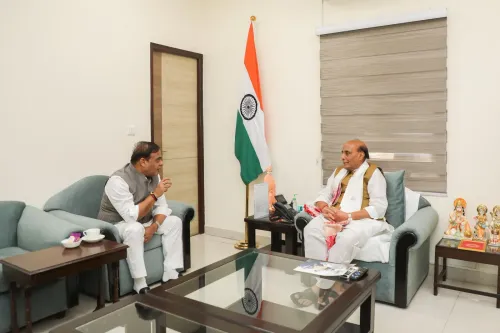
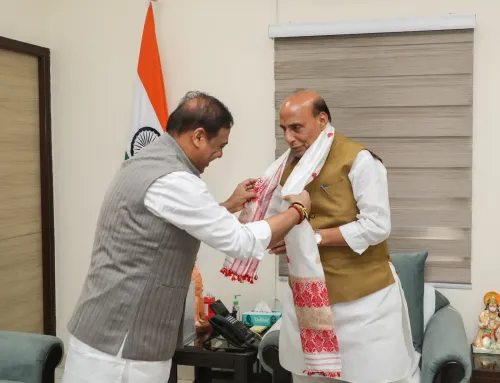
CM Himanta's Assam Pitches for Defence Manufacturing Role
Synopsis
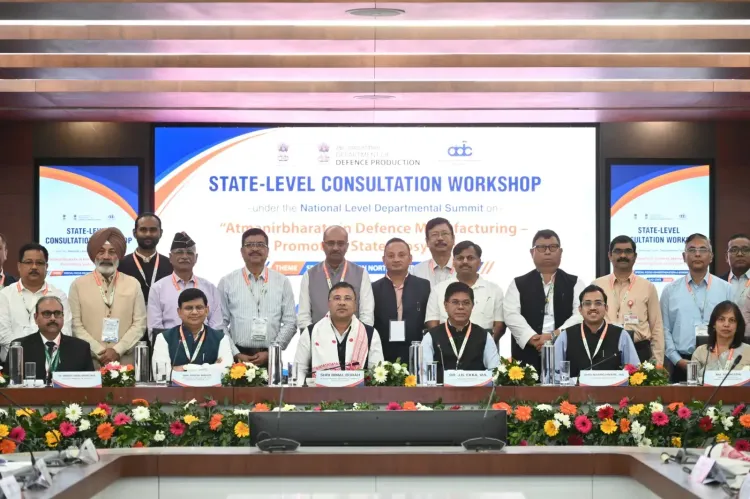
Assam's Chief Minister's Office hosted a State-Level Consultation Workshop on Defence Manufacturing on June 25, 2026, urging industries to leverage the state's strategic location, skilled workforce, and connectivity under the Make in Assam and Make in India frameworks led by PM Modi and CM Himanta Biswa Sarma.
Key Takeaways
The Chief Minister's Office of Assam held a State-Level Consultation Workshop on Defence Manufacturing on June 25, 2026 .
Industries were encouraged to use Assam's strategic location bordering Bhutan , Bangladesh , and proximity to Myanmar for aerospace and defence supply chains.
The initiative is framed under the national Make in India and Atmanirbhar Bharat programmes championed by PM Narendra Modi .
Himanta Biswa Sarma is leading Assam's push to join established defence manufacturing states like Uttar Pradesh and Tamil Nadu .
India's Defence Production and Export Promotion Policy (2020) targets $25 billion in defence exports, providing the national policy anchor for state-level efforts.
Follow-up actions expected include state incentive notifications and participation in platforms such as Aero India or DefExpo .
The Chief Minister's Office of Assam on Thursday, June 25, 2026, announced that a State-Level Consultation Workshop on Defence Manufacturing was held to encourage industries to tap into Assam's aerospace and defence potential, positioning the state as a partner in the national #MakeInAssam journey.
Context
The workshop brought together industry stakeholders to explore how Assam can leverage its strategic location, skilled workforce, and growing connectivity to participate in India's defence manufacturing ecosystem. The Chief Minister's Office framed the initiative as a direct extension of efforts led by Prime Minister Narendra Modi and Chief Minister Dr. Himanta Biswa Sarma to place Assam firmly on the country's defence manufacturing map.
The state's geography is a central selling point: Assam borders Bhutan, Bangladesh, and shares proximity with Myanmar, giving it logistical relevance for supply chains oriented toward Southeast Asia — a corridor that national planners have increasingly prioritised under the Act East Policy.
Policy Backdrop
Prime Minister Modi's Make in India initiative, launched in September 2014, identified defence as a priority sector to reduce India's dependence on imports. The subsequent Atmanirbhar Bharat declaration of May 2020 sharpened those targets, and the Defence Production and Export Promotion Policy released in September 2020 set an ambition of $25 billion in defence exports by 2025.
Since 2014, the central government has steadily opened defence manufacturing to private players and state governments through revised offset rules and dedicated production corridors. States such as Uttar Pradesh and Tamil Nadu have already established defence industrial corridors, and Assam's state-level consultation mirrors that competitive push among Indian states to attract aerospace and defence investment.
Stakeholders and Impact
The primary beneficiaries of a successful defence manufacturing push in Assam would be local MSMEs, the state's skilled workforce, and larger anchor industries that could set up facilities in the region. Improved connectivity — including road, rail, and air links developed in recent years across the Northeast — makes logistics for component supply and finished goods movement more viable than in earlier decades.
For the broader national programme, integrating a northeastern state into the defence production network diversifies India's manufacturing base away from its traditional clusters in Bengaluru, Hyderabad, and Chennai, reducing concentration risk and extending economic benefits to a historically underdeveloped region.
What's Next
Observers will watch for follow-up state policy notifications on incentives, land allocation, or dedicated zones for defence manufacturing units in Assam. Participation in national-level platforms such as Aero India or DefExpo would be a visible next step to signal the state's readiness to private and public sector defence firms.
If Assam translates the workshop's momentum into concrete policy frameworks and investment commitments, it could emerge as the Northeast's first meaningful node in India's expanding defence industrial base — a development that would carry both economic and strategic significance for the region.
Point of View
CM Himanta Biswa Sarma simultaneously advances a local industrial agenda while aligning visibly with the ruling party's national narrative — a dual dividend that is politically useful ahead of any electoral cycle. The move also signals competitive pressure: with Uttar Pradesh and Tamil Nadu already operating defence corridors, Assam risks being left behind if it does not formalise incentives quickly. The real test will be whether the workshop produces binding policy commitments or remains an aspirational signal.
NationPress
24 Sept 2026
Frequently Asked Questions
What happened at Assam's defence manufacturing workshop in June 2026?
The Chief Minister's Office of Assam held a State-Level Consultation Workshop on Defence Manufacturing on June 25, 2026, where industries were encouraged to invest in Assam's aerospace and defence sector using its strategic location, skilled workforce, and connectivity.
Why is Assam considered important for defence manufacturing in India?
Assam borders Bhutan and Bangladesh and is close to Myanmar, giving it strategic logistical value for defence supply chains oriented toward Southeast Asia, which aligns with India's Act East Policy.
What is the Make in Assam initiative?
Make in Assam is a state-level industrial promotion campaign that encourages domestic and foreign companies to set up manufacturing units in Assam, aligned with the central government's Make in India programme.
What is India's defence export target under the Defence Production and Export Promotion Policy?
The Defence Production and Export Promotion Policy, released in September 2020, set a target of $25 billion in defence exports by 2025 as part of India's Atmanirbhar Bharat push.
How does Assam compare to other states in defence manufacturing?
Assam is at an earlier stage compared to Uttar Pradesh and Tamil Nadu, which already have established defence industrial corridors; the June 2026 workshop is part of efforts to close that gap.