Assam floods: Ex-Congress MLA Debabrata Saikia pushes for Dikhow River Basin rehab project
Synopsis
With nearly three lakh people hit by floods in Sivasagar and adjoining districts, former Congress MLA Debabrata Saikia is pushing Assam to go beyond relief — demanding a statutory rehabilitation project funded through mining-linked trusts and an expert probe into whether mining activities worsened the Dikhow basin floods.
Key Takeaways
Former Assam Congress leader Debabrata Saikia has submitted a representation to Chief Secretary Ravi Kota on 29 July seeking a special rehabilitation project for the Dikhow River Basin .
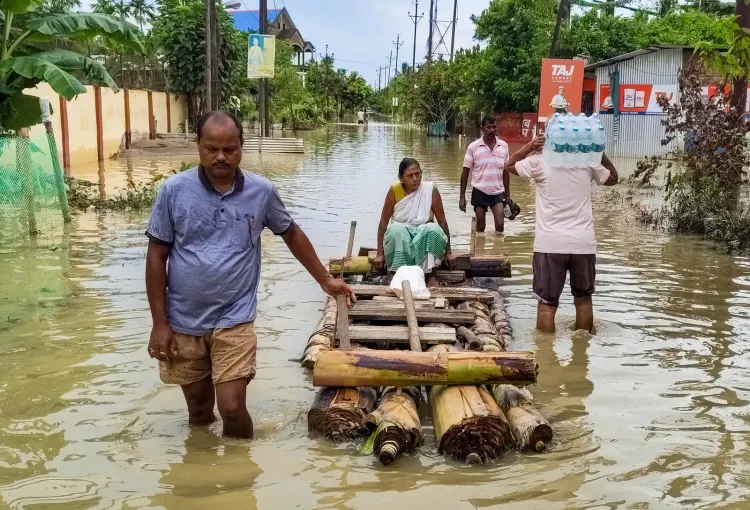
Nearly three lakh people were impacted in Sivasagar district alone; Charaideo and Jorhat were also severely affected.
The proposal seeks funding under DMFT and PMKKKY , both linked to statutory support for mining-affected communities.
Saikia called for a high-level expert committee including IIT Guwahati to investigate the role of mining in aggravating floods — without directly attributing blame.
Demands include disaster-resilient housing, livelihood grants, silt removal from farmlands, and stricter monitoring of mining activities.
The existing state government compensation was described as insufficient for families who lost homes and livelihoods.
Former Assam Leader of the Opposition and ex-Nazira MLA Debabrata Saikia has formally urged the Assam government to launch the Special Integrated Dikhow River Basin Rehabilitation Project under the District Mineral Foundation Trust (DMFT) and the Pradhan Mantri Khanij Kshetra Kalyan Yojana (PMKKKY), seeking sustained rehabilitation for flood-affected families and ecological restoration across Upper Assam. The demand was made through a detailed representation submitted to Chief Secretary Ravi Kota on 29 July.
Scale of the Devastation
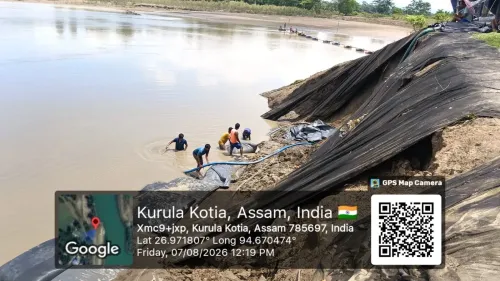
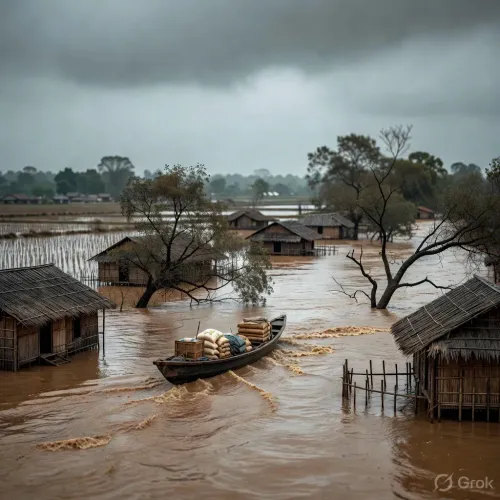
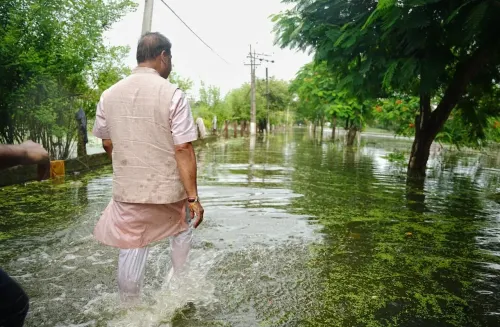
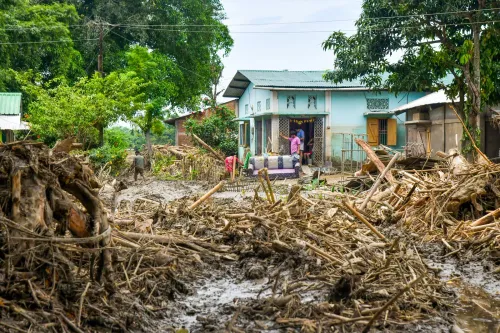
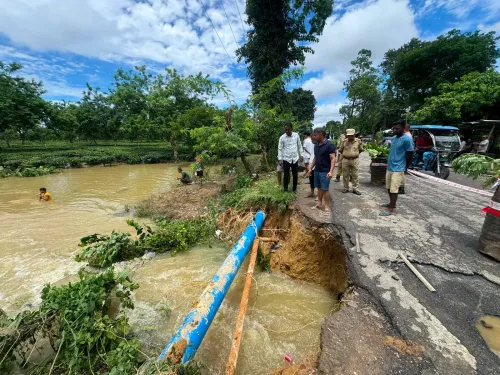
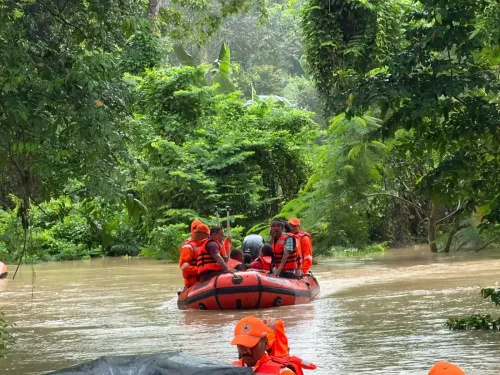
Saikia, a senior Indian National Congress (INC) leader, highlighted that Sivasagar was among the worst-hit districts in the recent flood cycle, with nearly three lakh people impacted across different phases. The Nazira Co-District recorded extensive destruction — including collapse of homes, large-scale crop losses, damage to fisheries and livestock, and prolonged inundation of villages. The adjoining districts of Charaideo and Jorhat were also severely affected, underscoring the regional scale of the crisis.
What the Proposal Demands
Saikia's memorandum calls on the state to declare the entire Dikhow River Basin a special rehabilitation zone under DMFT and PMKKKY, contending that mining-affected communities are entitled to statutory support for environmental restoration and livelihood recovery. Among the specific demands are permanent disaster-resilient housing, livelihood restoration grants, scientific removal of sand and silt from agricultural land, reconstruction of damaged public infrastructure, and ecological restoration of the Dikhow River. He also called for stricter monitoring of mining activities and transparent utilisation of DMFT funds.
Mining Link Under Scrutiny
Notably, Saikia stopped short of directly attributing the floods to mining operations. He said the exact causes require scientific assessment and called for an expert investigation into whether authorised and illegal mining, river morphology changes, and other human interventions aggravated the disaster. This measured framing distinguishes the representation from a political allegation — it is, in effect, a demand for accountability through evidence.
Expert Committee Sought
The memorandum also seeks the constitution of a high-level expert committee comprising officials from the Mines and Minerals Department, Water Resources Department, Assam State Disaster Management Authority (ASDMA), IIT Guwahati, river scientists, environmental experts, and representatives of affected communities. The committee would be tasked with examining the cumulative impact of mining on the Dikhow basin and recommending long-term flood mitigation measures.
Compensation Deemed Insufficient
Saikia contended that the existing compensation package announced by the state government falls short for families who have lost both their homes and livelihoods. He argued that a comprehensive rehabilitation package — rather than temporary relief — is what the scale of the disaster demands. This comes amid recurring concerns about the adequacy of post-flood relief frameworks in Assam, a state that has battled annual flooding for decades. The state government is yet to formally respond to the representation.
Point of View
Which, if accepted, would bind the state to a higher standard of accountability. The call for an expert committee to examine mining's role in the Dikhow floods is the more consequential ask: Assam's sand and coal mining economy has long operated in a regulatory grey zone, and a formal investigation could open liability questions the state may prefer to avoid. Crucially, annual flood relief in Assam has functioned as a political ritual rather than a structural solution for decades — this proposal, whatever its political provenance, at least frames the problem as one of governance failure, not just natural calamity.
NationPress
13 Sept 2026
Frequently Asked Questions
What is the Special Integrated Dikhow River Basin Rehabilitation Project?
It is a proposed long-term rehabilitation initiative for flood-affected communities in Upper Assam's Dikhow River Basin, to be funded through the District Mineral Foundation Trust (DMFT) and the Pradhan Mantri Khanij Kshetra Kalyan Yojana (PMKKKY). Former Congress MLA Debabrata Saikia has urged the Assam government to formally launch the project following devastating floods in Sivasagar, Charaideo, and Jorhat districts.
How many people were affected by the Assam floods in Sivasagar?
Nearly three lakh people were impacted at different stages of the recent floods in Sivasagar district alone, according to Saikia's representation. The Nazira Co-District also suffered extensive damage including house collapses, crop losses, and prolonged village inundation.
Why is mining being linked to the Assam floods?
Saikia's memorandum called for a scientific investigation into whether authorised and illegal mining, river morphology changes, and other human interventions aggravated flood damage in the Dikhow basin. He stopped short of directly attributing the disaster to mining, instead seeking an expert committee to assess the cumulative impact.
Who would be part of the proposed expert committee on Dikhow floods?
The proposed high-level committee would include officials from the Mines and Minerals Department, Water Resources Department, Assam State Disaster Management Authority (ASDMA), IIT Guwahati, river scientists, environmental experts, and representatives of affected communities. Its mandate would be to recommend long-term flood mitigation measures for the Dikhow basin.
Why does Saikia say the existing state compensation is insufficient?
Saikia argued that the compensation announced by the Assam government does not adequately cover families that have lost both their homes and livelihoods, and that a comprehensive, long-term rehabilitation package is needed rather than temporary relief measures.