Assam floods disrupt rail services, NFR deploys 700+ workers for restoration
Synopsis
Assam's monsoon crisis has now reached the railway network — with over 11 lakh people displaced, 61 dead, and the strategically vital Lumding–Badarpur Hill Section partially shut down at night. NFR has put 700+ workers on round-the-clock restoration, but with rivers still above danger levels, the Northeast's rail lifeline remains under serious threat.
Key Takeaways
Assam floods have affected over 11 lakh people across 2,000 villages , with 1.15 lakh in relief camps and a death toll exceeding 61 .
Worst-hit districts are Sivasagar , Charaideo , and Jorhat ; rivers Dikhou , Disang , and Dhansiri remain above danger level.
NFR has deployed over 700 labourers and heavy machinery across multiple sections under Tinsukia Division for emergency restoration.
Train operations on the Lumding–Badarpur Hill Section are suspended between 7 pm and 5 am for passenger safety; all movements routed via Line-3.
Disruptions affect rail connectivity to Tripura , Mizoram , Manipur , and southern Assam, impacting passengers and essential goods movement.
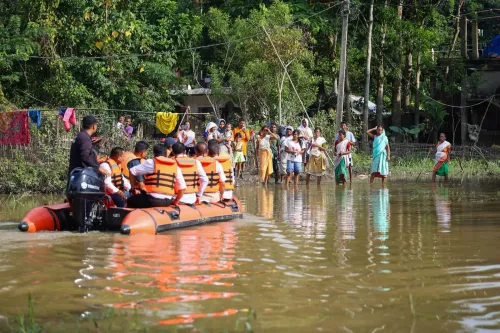
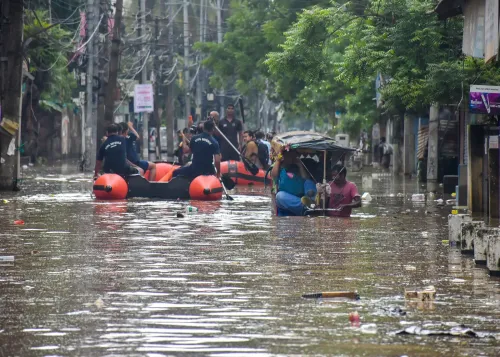
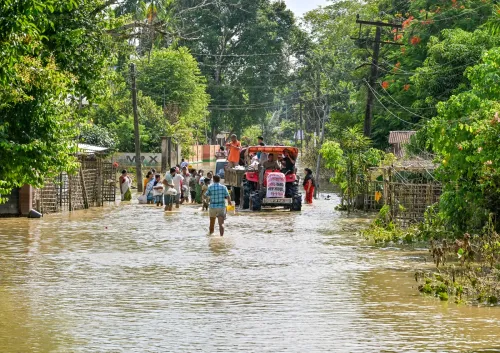
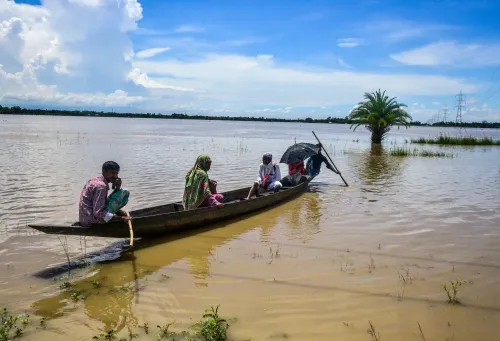
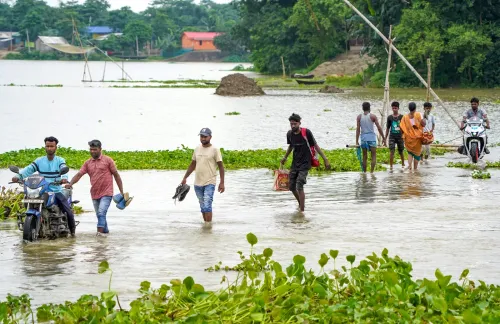
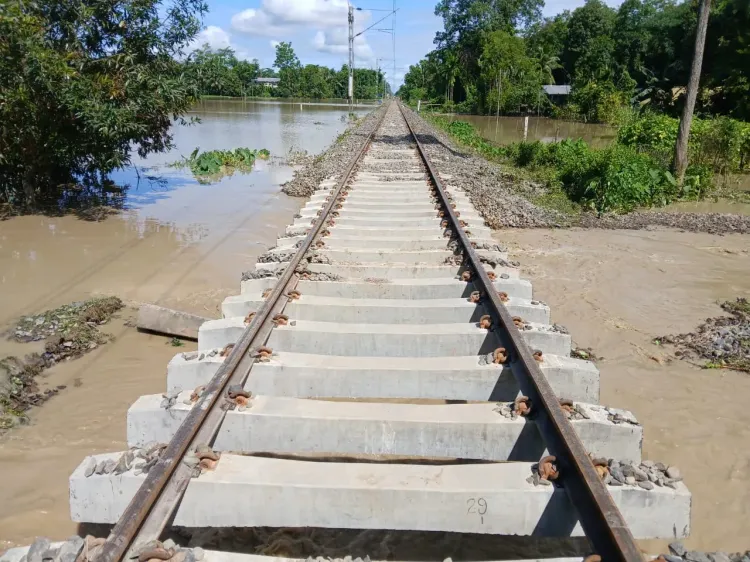
Monsoon floods and landslides in Assam have severely disrupted railway services across parts of the state, with the Northeast Frontier Railway (NFR) deploying over 700 labourers and heavy machinery on a war footing to restore normal operations, officials said on Saturday, 25 July. The crisis comes as more than 11 lakh people across 2,000 villages remain submerged in floodwaters, with the state's overall flood death toll climbing to over 61.
Scale of the Flood Crisis
The flood situation in Assam continues to remain grim, with 1.15 lakh people having taken shelter in relief camps. The worst-affected districts are Sivasagar, Charaideo, and Jorhat in eastern Assam. Major rivers — Dikhou, Disang, and Dhansiri — are all flowing above the danger level, further aggravating conditions on the ground.
This comes amid a broader pattern of annual monsoon devastation in the Northeast. The four-month monsoon window from June to September routinely inflicts extensive damage on railway tracks and related infrastructure through landslides, waterlogging, and soil erosion — a cycle that has yet to see a durable engineering solution.
NFR's Restoration Operations
Kapinjal Kishore Sharma, Chief Public Relations Officer (CPRO) of NFR, said restoration works are being carried out on a war footing under the Tinsukia Division. Multiple sections are under active repair simultaneously:
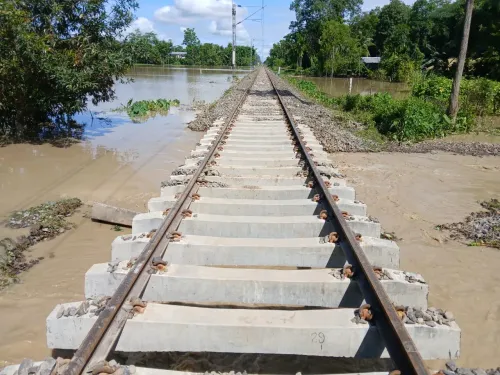
In the Simalguri–Lakwa section, cess protection and formation strengthening are underway, with a ballast rake positioned on-site and boulders being unloaded from wagons. The Simalguri–Namtiali section is seeing simultaneous unloading of stone dust and boulders to facilitate early reopening. In the Amguri–Selenghat section, sandbags, bamboo piling, and rail piling are being used to stabilise damaged areas. The Simalguri–Sibsagar Town section is also seeing bamboo piling and cess protection work, with ballast being mobilised to reinforce the track.
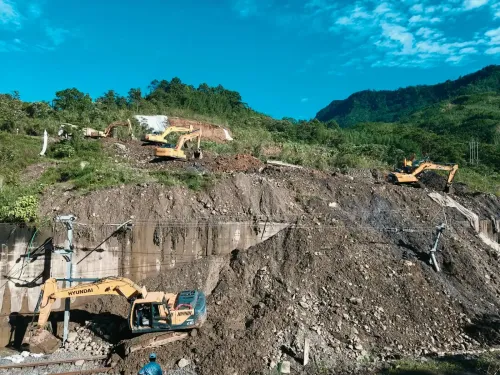
More than 700 labourers, alongside Poclains and JCBs, have been deployed across all affected locations. Materials including ballast, boulders, sandbags, stone dust, and rails are being continuously transported and utilised. Senior officers of the Tinsukia Division are personally monitoring operations to ensure coordination, resource deployment, and safety compliance.
Lumding–Badarpur Hill Section Hit Hard
Track settlement on Line-1 and Line-2 near New Harangajao station has disrupted train operations on the strategically critical Lumding–Badarpur Hill Section. All train movements on this route are currently being operated through Line-3 under strict monitoring.
In the interest of passenger safety, the NFR has suspended passenger train operations through the affected section during night hours from 7 pm to 5 am. Daytime trains are being allowed under regulated conditions with continuous monitoring. As a result, several trains have been rescheduled, cancelled, or regulated along this route.
The Lumding–Badarpur Hill Section passes through the hilly terrain of Dima Hasao district and is the primary rail artery for several Northeastern states. Disruptions here directly impact Tripura, Mizoram, Manipur, and parts of southern Assam, cutting off rail connectivity with the rest of the country and affecting the movement of essential commodities.
Broader Impact on the Northeast
Railway infrastructure across the Northeast is structurally vulnerable to the monsoon season every year. Prolonged disruptions in rail connectivity cause considerable hardship to commuters and freight operators alike. Notably, for landlocked states like Tripura and Manipur, rail is not merely a convenience — it is often the only viable large-scale logistics corridor.
Normal train operations are expected to resume once restoration work is completed safely, though no firm timeline has been announced. The NFR has said it will continue to monitor the situation closely as the monsoon season still has months to run.
Point of View
The same tracks buckle, and the same 700-worker deployments follow every June-to-September cycle. For states like Manipur and Tripura, where rail is the primary logistics artery, this predictable breakdown has real costs in food prices and emergency response capacity. The NFR's 'war footing' language signals urgency, but the deeper question is why a region with this level of structural vulnerability still lacks flood-resilient track engineering on its most critical corridors.
NationPress
24 Oct 2026
Frequently Asked Questions
How many people have been affected by the Assam floods in July 2025?
Over 11 lakh people across more than 2,000 villages have been affected by the ongoing Assam floods. Of these, 1.15 lakh people have taken shelter in relief camps, and the flood death toll has risen to over 61.
Which railway sections in Assam have been disrupted by the floods?
Multiple sections under NFR's Tinsukia Division are affected, including Simalguri–Lakwa, Simalguri–Namtiali, Amguri–Selenghat, and Simalguri–Sibsagar Town. The Lumding–Badarpur Hill Section in Dima Hasao district has also been partially disrupted due to track settlement near New Harangajao station.
Are trains running on the Lumding–Badarpur Hill Section?
Passenger train operations on the Lumding–Badarpur Hill Section are suspended between 7 pm and 5 am for safety reasons. During daytime, trains are allowed to run under regulated conditions via Line-3, with continuous monitoring. Several trains have been rescheduled or cancelled.
How many workers has NFR deployed for flood restoration in Assam?
NFR has deployed more than 700 labourers along with heavy machinery including Poclains and JCBs across all flood-affected sections. Materials such as ballast, boulders, sandbags, stone dust, and rails are being continuously transported to reinforce damaged railway formations.
Which states are affected by the Assam rail disruption?
The disruption to the Lumding–Badarpur Hill Section affects rail connectivity for Tripura, Mizoram, Manipur, and parts of southern Assam. These states depend heavily on this corridor for passenger movement and the transport of essential commodities.