Assam's Khel Maharan 3.0 Crosses 68 Lakh Registrations
Synopsis
Assam's Khel Maharan 3.0 surpassed 68 lakh player registrations by 5 PM on 6 November 2026, with strong rural and urban turnout signalling broad grassroots momentum under the state government's continuing sports expansion drive.
Key Takeaways
68 lakh players had registered for Khel Maharan 3.0 by 5 PM on 6 November 2026 .
The drive is the third edition of Assam's flagship mass sports participation programme under CM Himanta Biswa Sarma .
Participation spans both rural and urban areas, reflecting the scheme's grassroots outreach beyond major towns.
Earlier editions established a pattern of district-level competitions following the registration phase.
The 68-lakh figure represents nearly one in five residents of Assam, signalling strong public uptake.
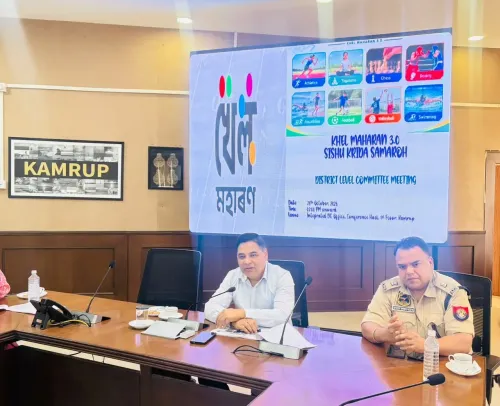
Sixty-eight lakh players — and counting. By 5 PM on 6 November 2026, Assam's mass sports participation drive Khel Maharan 3.0 had logged registrations from across every corner of the state, a number the Chief Minister's Office of Assam described as reflecting 'growing passion for sports across the State.'
What Khel Maharan 3.0 is — and why the numbers matter
Khel Maharan is the Assam government's flagship grassroots sports drive, now in its third edition under Chief Minister Himanta Biswa Sarma, who took office in May 2021. Each successive edition has pushed participation deeper into rural districts, with the explicit goal of talent identification and broadening the state's sports base beyond the traditional urban clusters of Guwahati and a handful of larger towns.
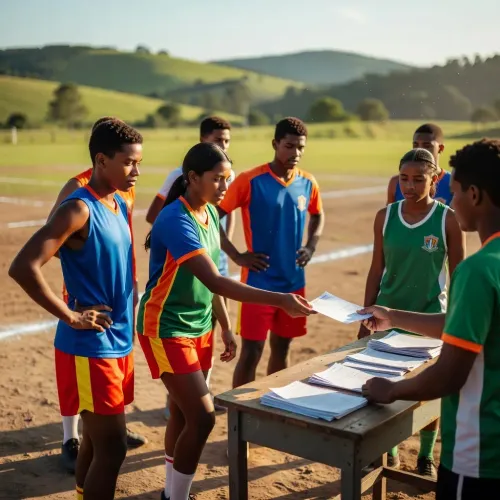
The 68-lakh figure is striking in a state with a population of roughly 3.5 crore — meaning nearly one in five Assamese residents has registered to play. That ratio alone signals something beyond routine government scheme uptake: it points to a genuine grassroots mobilisation, with rural sports clubs and youth athletes accounting for a significant share of sign-ups.
Rural participation — the edition's defining feature
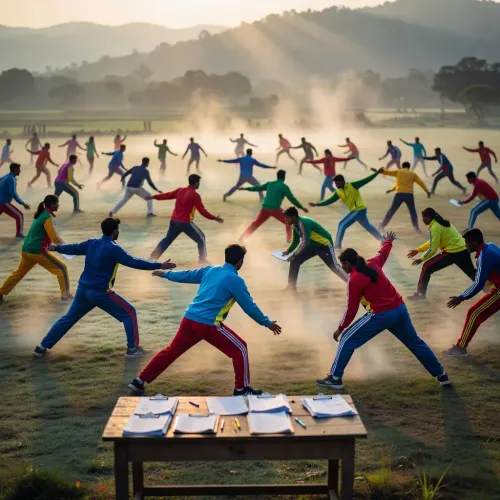
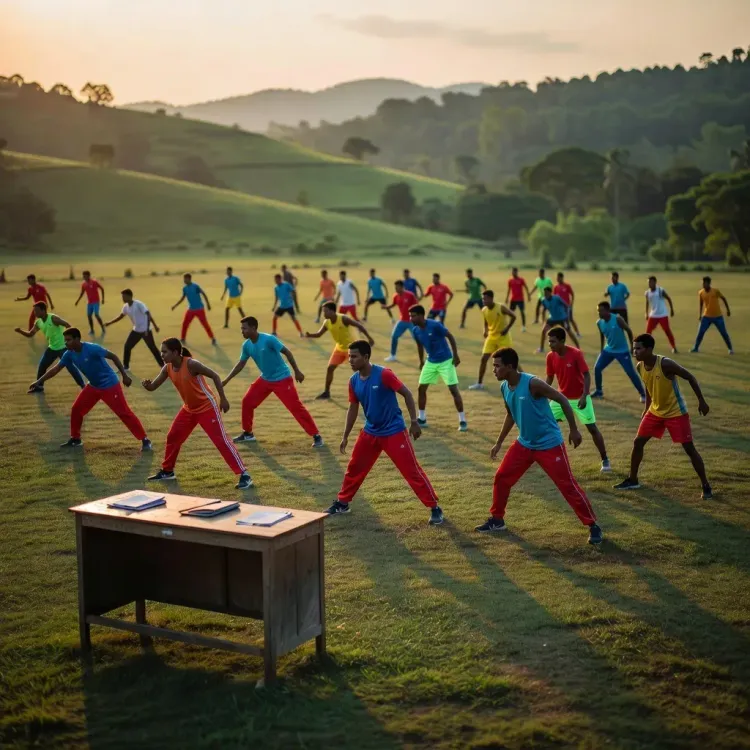
The CMO's post specifically called out 'enthusiastic participation from rural and urban areas,' and that phrasing is deliberate. Earlier editions of Khel Maharan had already begun shifting the programme's centre of gravity away from city-based venues toward block- and village-level competitions. The third edition appears to have deepened that shift, with district-level infrastructure and coaching access increasingly part of the broader state sports policy.
This mirrors inclusion goals seen across northeastern states, where geography has historically made centralised sports development difficult. A registration drive that reaches remote areas doubles as a talent-mapping exercise — giving state sports authorities a live picture of where athletes are, before competitive rounds begin.
What comes next for Khel Maharan 3.0
Registration numbers are only the opening act. The state's pattern from earlier editions suggests that district-level competitions follow the sign-up phase, eventually feeding into a state-level championship. Final registration totals — once the window closes — will set the stage for how those draws are structured and whether Assam announces additional infrastructure spending tied to the drive.
For CM Sarma, the 68-lakh milestone is both a policy data point and a political signal: that sports investment in one of India's northeastern states can generate scale that rivals much larger states. The kicker will be what the state does with that talent pool once the competitions conclude.
Point of View
With scale that could become a replicable model. The consistent expansion across editions — from urban centres toward rural blocks — fits a broader pattern in which Northeast states are increasingly using sports infrastructure as both social-inclusion and political capital. If subsequent competition rounds and talent pipelines are structured well, the drive could feed meaningfully into state and national sporting rosters; if they are not, the registration numbers risk remaining a headline metric. The real policy test arrives when the competitions conclude and the state must decide what to do with the talent it has just mapped.
NationPress
6 Nov 2026
Frequently Asked Questions
What is Khel Maharan 3.0 in Assam?
Khel Maharan 3.0 is the third edition of the Assam government's mass sports participation drive, designed to identify talent and expand grassroots sporting activity across rural and urban areas of the state.
How many players registered for Khel Maharan 3.0?
Over 68 lakh players had registered for Khel Maharan 3.0 by 5 PM on 6 November 2026 , according to the Chief Minister's Office of Assam.
Who started Khel Maharan in Assam?
Khel Maharan was launched under the Assam government led by Chief Minister Himanta Biswa Sarma , who has been in office since May 2021. Multiple editions have been held under his administration.
Does Khel Maharan include rural areas of Assam?
Yes. A defining feature of Khel Maharan 3.0 is its outreach to both rural and urban participants, with the state government specifically highlighting strong registration from rural areas alongside urban centres.
What happens after Khel Maharan 3.0 registration closes?
Based on the pattern from earlier editions, district-level competitions are expected to follow the registration phase, eventually culminating in a state-level championship and potential infrastructure or coaching announcements.