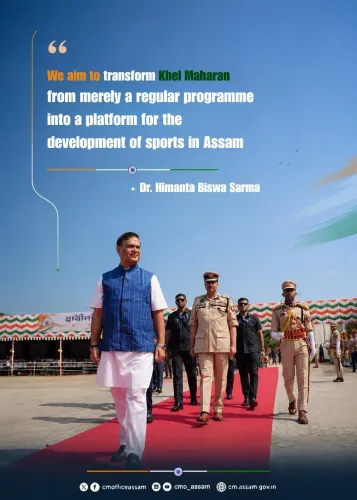
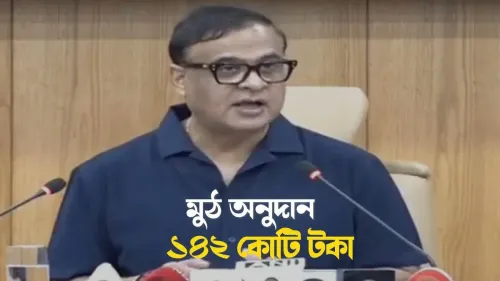
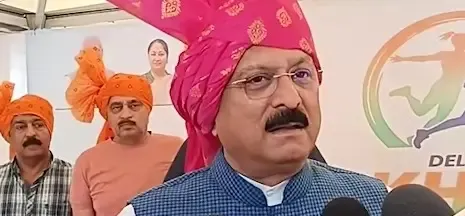
Khel Maharan 3.0 crosses 40 lakh registrations across Assam
Synopsis
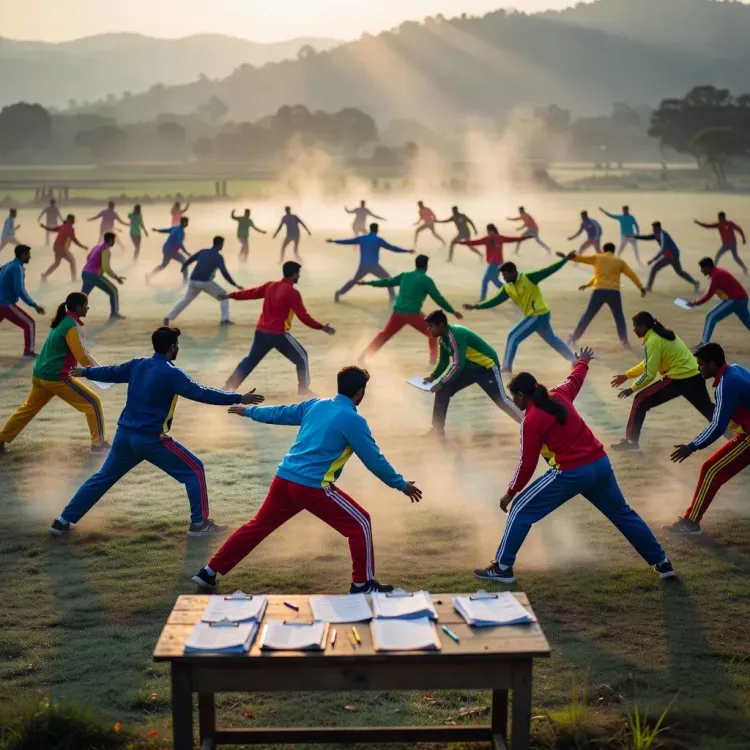
Khel Maharan 3.0 has recorded over 40 lakh registrations from across Assam, the Chief Minister's Office announced on 22 October 2026. The Department of Sports and Youth Welfare is the nodal agency driving the state's largest grassroots multi-discipline sports festival into its third and most expansive edition yet.
Key Takeaways
Over 40 lakh athletes have registered for Khel Maharan 3.0 across Assam as of 22 October 2026 .
The Chief Minister's Office of Assam shared the registration status via its official X account, tagging the Department of Sports and Youth Welfare (@Assam_DSYW) .
Khel Maharan is a recurring multi-discipline state sports competition designed to identify grassroots talent and expand district-level participation.
The Assam government has progressively scaled up registrations across successive editions as part of a broader Northeast sports development strategy.
Competition phases, district-level selections, and potential infrastructure announcements are the key milestones to watch next.
Forty lakh young athletes signing up for a single state sports festival is not a footnote — it is a statement. The Chief Minister's Office of Assam announced on Thursday, 22 October 2026 that Khel Maharan 3.0 has crossed over 40 lakh registrations from across the state, signalling an extraordinary surge in grassroots sporting participation.
40 lakh registrations — what the number actually means
The CMO shared a glimpse of the registration status, tagging the Department of Sports and Youth Welfare, Government of Assam (@Assam_DSYW), the nodal agency driving the programme. Forty lakh is not just a milestone; it represents a cross-district mobilisation of youth that few state-level sports initiatives anywhere in India have matched in raw scale.
The post noted athletes gearing up to 'showcase their talent, passion and sporting spirit' — a signal that the competition phase is now imminent as registrations close in on their peak.
How Khel Maharan built to this scale
Khel Maharan is a recurring multi-discipline sports competition launched by the Assam government to expand district-level participation and identify talent at the grassroots. Earlier editions were specifically designed to push registration numbers upward and widen the competitive base beyond urban centres — a deliberate strategy to bring in athletes from Assam's remote and semi-urban districts.
The Department of Sports and Youth Welfare has served as the implementation engine across all editions, coordinating district-level logistics, outreach, and athlete onboarding. The successive scale-up from one edition to the next reflects both growing institutional capacity and rising youth interest in competitive sport across the state.
Assam's Northeast sports ambitions riding on mass participation
Assam's push through events like Khel Maharan is part of a broader state strategy to raise sporting standards in the Northeast and build a deeper pipeline feeding into national competitions. Large participation numbers are the foundation — the bigger the base, the sharper the eventual talent pool that emerges from district and state selections.
What comes next will matter just as much: district-level heats, state finals, and whether the government backs the momentum with coaching infrastructure and budget allocations. Forty lakh registrations set a high bar — and an equally high expectation for what follows.
Frequently Asked Questions
What is Khel Maharan 3.0?
Khel Maharan 3.0 is the third edition of a state-wide multi-discipline sports competition organised by the Assam government to promote grassroots participation and identify young sporting talent across all districts of the state.
How many registrations has Khel Maharan 3.0 received?
As of 22 October 2026 , Khel Maharan 3.0 has received over 40 lakh registrations from across Assam, according to the Chief Minister's Office.
Which department organises Khel Maharan in Assam?
The Department of Sports and Youth Welfare (DSYW) , Government of Assam, is the nodal agency responsible for organising and implementing Khel Maharan.
Who can participate in Khel Maharan?
Khel Maharan is primarily aimed at young athletes across Assam. The competition is designed to encourage grassroots participation from youth in all districts of the state.
What happens after registration closes for Khel Maharan 3.0?
After registrations, the competition moves into district-level heats and selection rounds, with athletes eventually competing at the state level. Infrastructure support and coaching allocations from the state government are expected to follow.