Assam Launches Blue Valley Cluster for EU Trade in Flavours, AYUSH

Synopsis
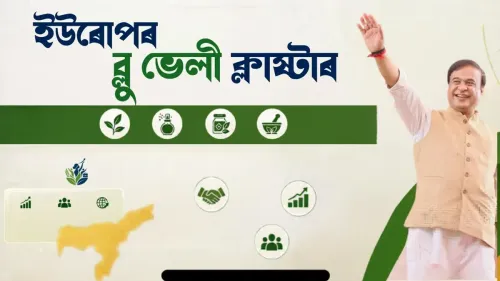
Assam's Chief Minister's Office launched the Blue Valley Cluster on June 10, 2026, to deepen cooperation with Europe in flavours, fragrances, AYUSH and food processing, creating structured trade and investment pathways for the state's natural-product sectors.
Key Takeaways
The Blue Valley Cluster was launched on June 10, 2026 by the Chief Minister's Office of Assam .
The cluster targets four sectors: flavours, fragrances, AYUSH , and food processing .
An EU delegation was present at the launch, indicating formal European institutional engagement.
Assam farmers, food processing MSMEs , and AYUSH exporters are the primary intended beneficiaries.
The initiative aligns with India's broader AYUSH export strategy and ongoing India-EU BTIA negotiations that began in 2007 .
CM Himanta Biswa Sarma has prioritised industrial cluster outreach since assuming office in May 2021 .
The Chief Minister's Office of Assam announced on Wednesday, June 10, 2026, the launch of the Blue Valley Cluster, a dedicated initiative to deepen cooperation between Assam and Europe in the sectors of flavours, fragrances, AYUSH, and food processing — opening new channels for trade, innovation, and investment.
The official post stated that the cluster is aimed at 'unlocking new opportunities for trade, innovation and investment' between the northeastern Indian state and European partners. An EU delegation was present at the launch, signalling early European institutional interest in the initiative.
Context
Assam sits at the heart of India's northeastern biodiversity corridor, with a natural endowment of aromatic and medicinal plants that feeds directly into flavours, fragrances, and traditional medicine supply chains. The state has historically been associated with tea, but successive administrations have worked to diversify its export identity toward higher-value natural-product sectors. The Blue Valley Cluster represents the latest and most structured attempt to anchor that diversification within a formal international partnership framework. The cluster draws on Assam's existing base of AYUSH-aligned producers and food processing micro, small and medium enterprises, positioning them to meet European regulatory standards and access EU consumer markets.Policy Backdrop
India established the Ministry of AYUSH in November 2014 to mainstream traditional medicine systems — Ayurveda, Yoga, Unani, Siddha, and Homeopathy — into both domestic healthcare and international trade strategies. Since then, AYUSH exports have grown steadily, with herbal products and traditional formulations finding demand in European wellness markets. Simultaneously, India and the European Union have maintained a long-running dialogue on a Broad-based Trade and Investment Agreement (BTIA), negotiations for which began in 2007. The agreement covers goods, services, and investment, including processed foods and herbal products — the precise sectors the Blue Valley Cluster targets. Sub-national initiatives such as this cluster have become an increasingly common instrument for Indian states to operationalise broader national trade frameworks at a granular, sector-specific level.Stakeholders and Impact
The cluster is expected to benefit a wide range of actors. Assam's farming communities that cultivate medicinal and aromatic plants stand to gain from formalised European demand. Food processing MSMEs in the state could access investment, technology transfer, and quality-certification support from EU partners. AYUSH exporters are positioned to align their products with European standards, potentially reducing market-entry barriers. For European investors and flavour-and-fragrance companies, the cluster offers a structured gateway into a sourcing region with distinctive botanical assets. The involvement of an EU delegation at the launch suggests that the partnership carries institutional weight on both sides.What's Next
Chief Minister Himanta Biswa Sarma, who has prioritised state-level industrial outreach since taking office in May 2021, is expected to build on the cluster's launch with follow-on investment commitments and pilot projects. Operational guidelines for the cluster's governance and funding structure are anticipated in the coming months. The initiative could also feature in discussions at the next India-EU summit or bilateral trade review meetings, where sub-national success stories in natural-product sectors carry growing diplomatic value. If the Blue Valley Cluster demonstrates measurable export or investment outcomes, it could serve as a replicable template for other northeastern states seeking to engage European markets through niche, biodiversity-linked sectors.Point of View
Fragrances and AYUSH, Assam is monetising a biodiversity advantage that larger industrial states cannot easily replicate. The EU's participation at launch is significant: it suggests the cluster is not merely aspirational but has cleared at least a preliminary threshold of European institutional interest. If investment and export metrics follow, this model could pressure other northeastern states to develop comparable niche-sector clusters.
NationPress
26 Oct 2026
Frequently Asked Questions
What is the Blue Valley Cluster in Assam?
The Blue Valley Cluster is a newly launched initiative by the Government of Assam designed to deepen cooperation with European partners in the sectors of flavours, fragrances, AYUSH and food processing, with the aim of boosting trade, innovation and investment.
Which sectors does the Blue Valley Cluster focus on?
The cluster focuses on four sectors: flavours, fragrances, AYUSH (traditional medicine and wellness products) and food processing.
What is Assam's role in India's AYUSH sector?
Assam's biodiversity-rich landscape supports cultivation of medicinal and aromatic plants that feed directly into AYUSH supply chains. The state is positioning itself as a key sourcing and processing hub for AYUSH exports, particularly to European markets.
How does the Blue Valley Cluster connect to India-EU trade talks?
India and the EU have been negotiating a Broad-based Trade and Investment Agreement since 2007 that covers processed foods and herbal products. The Blue Valley Cluster operationalises those broader negotiations at a state level by creating a structured sector-specific partnership.
Who are the main beneficiaries of the Blue Valley Cluster?
The primary beneficiaries are Assam's farming communities growing medicinal and aromatic plants, food processing MSMEs seeking European investment and technology, and AYUSH exporters looking to align with EU regulatory standards.