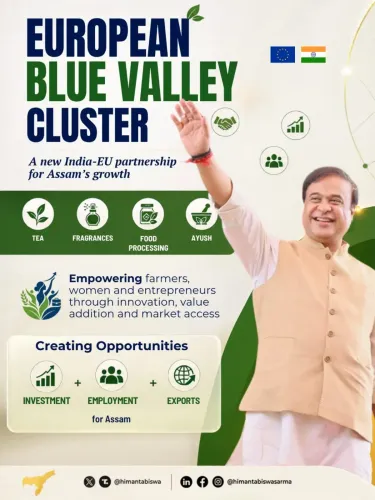
CM Himanta Launches Assam-EU Blue Valley Cluster
Synopsis
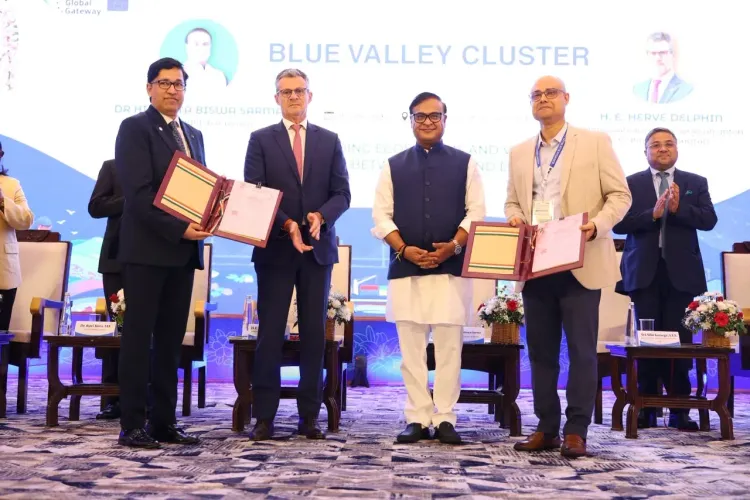
Assam launched the Blue Valley Cluster on 9 June 2026 in partnership with the EU, targeting AYUSH, flavours, fragrances and food processing. An MoU between AIDC and FEBI was also signed to boost investment and B2B linkages between Assam and Europe.
Key Takeaways
The Blue Valley Cluster was launched on 9 June 2026 as a joint Assam-EU initiative covering flavours, fragrances, AYUSH and food processing.
Himanta Biswa Sarma called it a 'landmark initiative' to build value chains connecting India and Europe .
An MoU was signed between the Assam Industrial Development Corporation (AIDC) and the Federation of European Business in India (FEBI) to strengthen investment promotion and B2B/B2G linkages.
The cluster aims to create opportunities for innovation, entrepreneurship, investment and sustainable growth in Assam .
The initiative aligns with Assam's strategy to diversify beyond tea and oil into high-value natural products and traditional medicine.
Multiple EU diplomatic missions, including the EU Delegation to India and Belgium , are involved, indicating broad European institutional backing.
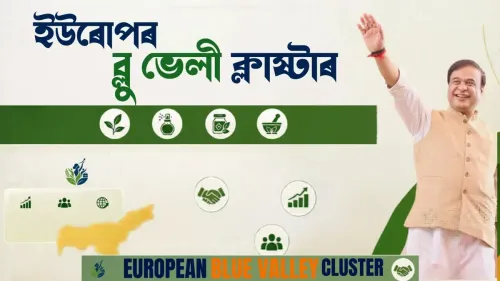
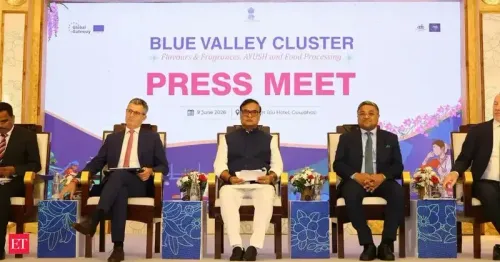
The Chief Minister's Office of Assam announced on Tuesday, 9 June 2026 the launch of the Blue Valley Cluster, a new initiative developed in collaboration with the European Union Delegation to India, aimed at strengthening cooperation in flavours, fragrances, AYUSH and food processing between Assam and Europe.
Context
The Blue Valley Cluster marks what the Chief Minister's Office described as 'a new chapter in Assam-Europe partnership.' Chief Minister Dr. Himanta Biswa Sarma highlighted the initiative as a 'landmark' step that will help build 'robust ecosystems and value chains connecting India and Europe.' The cluster is designed to foster innovation, expand market access and create shared opportunities for growth across both regions.
Alongside the cluster launch, a Memorandum of Understanding was signed between the Assam Industrial Development Corporation (AIDC) and the Federation of European Business in India (FEBI) to strengthen investment promotion and business-to-business as well as business-to-government linkages.
Policy Backdrop
Assam has been actively pursuing targeted cluster-based industrial strategies to diversify its economy beyond traditional sectors such as tea and petroleum. The Blue Valley Cluster represents a deliberate push into high-value natural products and traditional medicine, sectors where the state holds significant raw-material and knowledge advantages.
At the national level, India and the European Union have been engaged in negotiations for a Broad-Based Trade and Investment Agreement since 2007, seeking to expand market access in goods, services and investment. The Blue Valley Cluster fits into a broader pattern of EU-India engagement that increasingly involves sub-national actors, building supply chains in sustainable and knowledge-based industries rather than limiting cooperation to central-government channels.
The AIDC, Assam's nodal agency for industrial infrastructure and public-private partnerships, and FEBI, which represents European companies operating in India, are positioned as the institutional anchors for translating the cluster's ambitions into concrete investment flows and business connections.
Stakeholders and Impact
The initiative is expected to benefit AYUSH practitioners, flavour and fragrance producers, food-processing entrepreneurs and micro, small and medium enterprises across Assam. By connecting these actors to European markets and investors through the FEBI network, the cluster aims to open export channels that have historically been difficult for northeast Indian businesses to access.
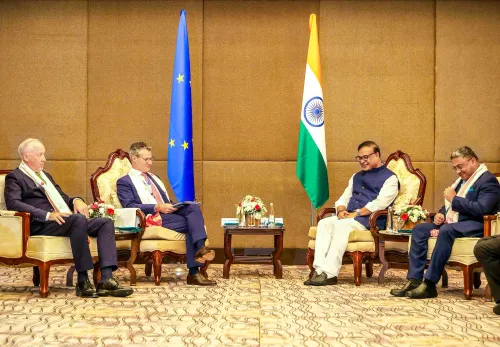
European investors and companies with interests in sustainable, plant-based and traditional-medicine supply chains stand to gain from structured B2B and B2G engagement facilitated by the MoU. The EU Delegation to India, alongside the Belgian Ambassador and other diplomatic representatives tagged in the official post, signals multilateral European interest in the partnership.
What's Next
Attention will now turn to the operational rollout of the Blue Valley Cluster, including the establishment of value chains, matchmaking events between Assam producers and European buyers, and any measurable investment or export outcomes arising from the AIDC-FEBI MoU. The involvement of India's Ministry of External Affairs and multiple EU diplomatic missions suggests the initiative will be tracked at both state and national levels.
If the cluster delivers on its stated goals, it could serve as a replicable model for other northeastern states seeking to forge direct economic partnerships with European institutions, reinforcing India's broader strategy of leveraging state-level diplomacy to attract foreign direct investment into underserved regions.
Point of View
The Sarma government is bypassing the slow pace of central-level trade negotiations and creating direct institutional channels for European investment. This mirrors a wider pattern across Indian states of using sector-specific clusters and bilateral MoUs to attract FDI into areas where national frameworks have yet to deliver. The diplomatic optics — with MEA, the EU Ambassador and the Belgian mission all present — suggest the Centre views this as a model worth replicating in the northeast.
NationPress
26 Oct 2026
Frequently Asked Questions
What is the Blue Valley Cluster in Assam?
The Blue Valley Cluster is a new Assam-EU initiative launched on 9 June 2026 to strengthen cooperation in flavours, fragrances, AYUSH and food processing, aimed at building value chains and investment linkages between Assam and Europe.
What MoU was signed at the Blue Valley Cluster launch?
An MoU was signed between the Assam Industrial Development Corporation (AIDC) and the Federation of European Business in India (FEBI) to strengthen investment promotion and business-to-business and business-to-government linkages.
What is the role of AIDC in Assam's industrial development?
The Assam Industrial Development Corporation (AIDC) is the state's nodal agency for industrial infrastructure, investment promotion and facilitating public-private partnerships in Assam.
How does the Blue Valley Cluster benefit Assam's AYUSH sector?
The cluster is designed to connect Assam's AYUSH producers and entrepreneurs with European markets and investors through structured B2B engagement, helping expand export access for traditional medicine and natural products.
What is FEBI and why is it important for this partnership?
The Federation of European Business in India (FEBI) represents European companies operating in India and supports trade, investment and technology linkages. Its MoU with AIDC provides an institutional framework for channelling European investment into Assam.