CM Himanta launches Assam Compressed Biogas Policy 2026
Synopsis
Assam Chief Minister Himanta Biswa Sarma announced the Assam Compressed Biogas Policy 2026 on 8 August, aiming to convert agricultural and organic waste into clean fuel while boosting rural incomes across the state.
Key Takeaways
Assam Compressed Biogas (CBG) Policy, 2026 announced by Chief Minister Himanta Biswa Sarma on 8 August 2026 .
The policy aims to convert organic and agricultural waste into compressed biogas for use as a clean fuel substitute.
Key beneficiaries identified are rural farmers and biogas producers who can supply feedstock or operate plants.
The initiative aligns with India's central SATAT scheme (launched 2018 ), which promotes CBG production and guarantees offtake through oil marketing companies.
India's broader climate commitment of net-zero emissions by 2070 provides the national policy backdrop for state-level biogas frameworks.
Specific targets, subsidies, and plant commissioning timelines under the Assam policy are yet to be publicly detailed.
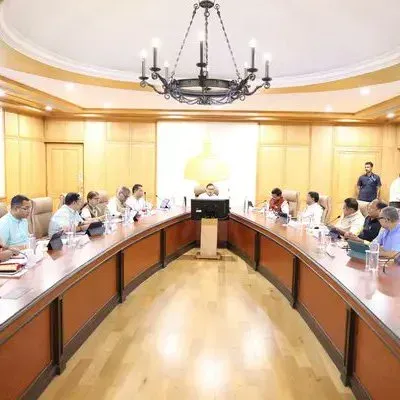
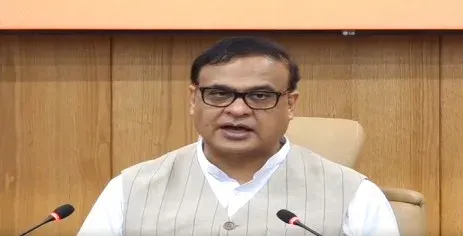
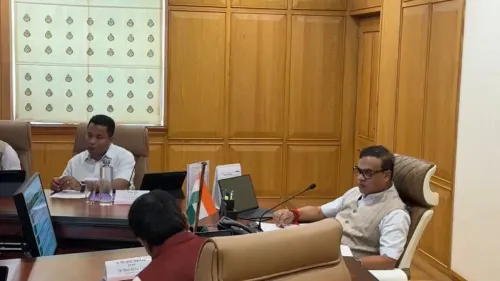
Assam is betting on its own waste to fuel its future. Chief Minister Himanta Biswa Sarma announced the Assam Compressed Biogas (CBG) Policy, 2026 on Saturday, 8 August 2026, framing it as a twin-engine push for cleaner energy and stronger rural livelihoods across the state's agrarian heartland.
From paddy fields to power: what the CBG policy promises
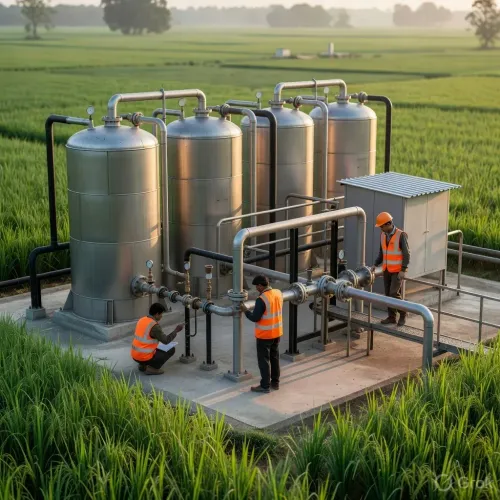
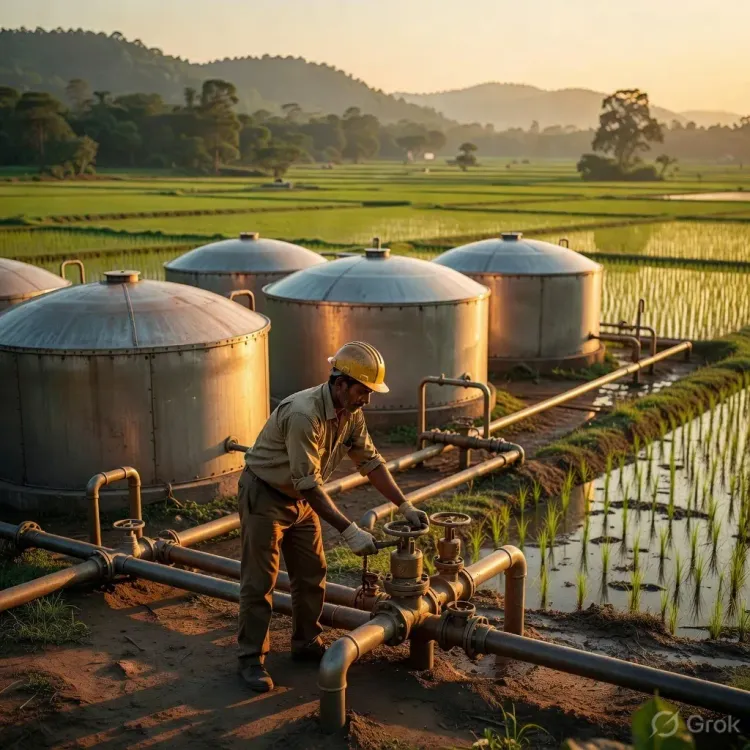
Compressed biogas is produced by breaking down organic waste — crop stubble, cattle dung, municipal solid waste — through anaerobic digestion. The resulting gas is purified, compressed, and can substitute for CNG in transport and industry. For a state like Assam, where agriculture dominates large swathes of the rural economy, the feedstock is abundant and largely untapped.
Sarma positioned the policy as turning that untapped resource into an economic asset. 'Turning waste into wealth and powering a cleaner tomorrow,' he wrote, adding that the framework is 'paving the way for cleaner energy, stronger rural economies and a more sustainable future for generations to come.' The direct beneficiaries are rural farmers and biogas producers who can supply feedstock or operate plants under the policy's framework.
Assam steps into a national bioenergy push
The policy does not emerge in a vacuum. The central government's SATAT (Sustainable Alternative Towards Affordable Transportation) initiative, launched in 2018, was designed precisely to catalyse state-level CBG ecosystems — offering oil marketing companies as guaranteed offtakers and inviting entrepreneurs to set up plants. Several states have since built their own regulatory frameworks to capture SATAT's incentives and direct private investment toward biogas infrastructure.
Assam's move places the northeast firmly within that national arc. The broader logic is straightforward: India imports fossil fuels at scale, generates agricultural waste at scale, and has committed to net-zero emissions by 2070. Biogas bridges all three problems simultaneously — cutting imports, managing stubble, and reducing emissions. A state-level policy gives investors the regulatory certainty they need to commit capital.
What the policy still needs to prove
The announcement sets a direction; the detail will determine the distance. Specific targets for plant capacity, subsidy structures, and timelines for commissioning have not been publicly detailed. Coordination with central ministries for funding and offtake agreements will be the next critical step. The credibility of the policy will ultimately rest on how quickly biogas plants move from gazette notification to ground-level operation in Assam's districts.
A state that has historically depended on fossil fuel supply chains from the mainland now has a formal framework to generate its own clean energy at home. Whether the Assam CBG Policy 2026 becomes a model for the northeast — or a document awaiting implementation — will be answered in the months ahead.
Point of View
It serves a dual political purpose: demonstrating environmental credentials while promising tangible income for the rural constituencies that anchor BJP's base in the northeast. The policy's real test will be implementation speed — India's bioenergy landscape is littered with well-intentioned frameworks that stalled at the plant-commissioning stage. If Assam can show operational plants within a defined timeline, it could position the state as a northeast model for circular-economy energy policy.
NationPress
22 Sept 2026
Frequently Asked Questions
What is the Assam Compressed Biogas Policy 2026?
The Assam Compressed Biogas (CBG) Policy, 2026 is a state government framework announced by Chief Minister Himanta Biswa Sarma to promote the conversion of organic and agricultural waste into compressed biogas, supporting cleaner energy and rural economic growth in Assam.
What is compressed biogas and how is it produced?
Compressed biogas is produced by breaking down organic waste such as crop residue, cattle dung, and municipal solid waste through anaerobic digestion. The resulting gas is purified and compressed, making it a substitute for CNG in transport and industry.
How does the Assam CBG Policy relate to the central government's SATAT scheme?
India's SATAT initiative, launched in 2018, promotes CBG production nationally and offers guaranteed offtake through oil marketing companies. The Assam policy aligns with this central framework, giving investors state-level regulatory certainty to complement central incentives.
Who benefits from the Assam Compressed Biogas Policy?
The primary beneficiaries are rural farmers who can supply organic feedstock and biogas producers or entrepreneurs who set up and operate compressed biogas plants under the policy's framework.
What are the next steps for the Assam CBG Policy 2026?
Key details such as plant capacity targets, subsidy structures, and commissioning timelines are yet to be publicly announced. Coordination with central ministries for funding and offtake agreements will be critical to translating the policy into operational biogas infrastructure.