Assam green tax on older vehicle transfers: Two-wheelers, EVs exempt
Synopsis
Assam Chief Minister Himanta Biswa Sarma has announced a green cess on ownership transfers of older vehicles — targeting the second-hand market for high-emission stock while exempting two-wheelers, three-wheelers, EVs and CNG vehicles. The rate, age threshold, and rollout date are yet to be disclosed, leaving vehicle owners and dealers awaiting a formal notification.
Key Takeaways
Assam CM Himanta Biswa Sarma announced a green cess on older vehicle ownership transfers on 27 October 2026 .
Two-wheelers, three-wheelers, EVs and CNG-powered vehicles are exempt from the levy.
The cess will apply at the point of ownership transfer , not as a blanket annual charge.
Revenue collected will be earmarked for environmental protection and greening initiatives in Assam.
Key details — including the cess rate , vehicle age threshold , and effective date — have not yet been specified.
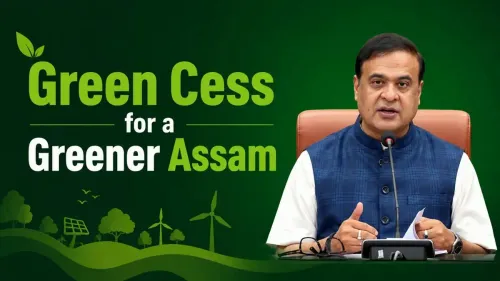
Assam Chief Minister Himanta Biswa Sarma on Tuesday, 27 October 2026, announced that the state government will impose a green cess on the ownership transfer of older vehicles, with proceeds earmarked exclusively for environmental protection and greening initiatives across the state. The measure, shared via a post on social media platform X, marks one of Assam's most direct policy interventions to curb vehicular pollution to date.
What the Green Cess Covers
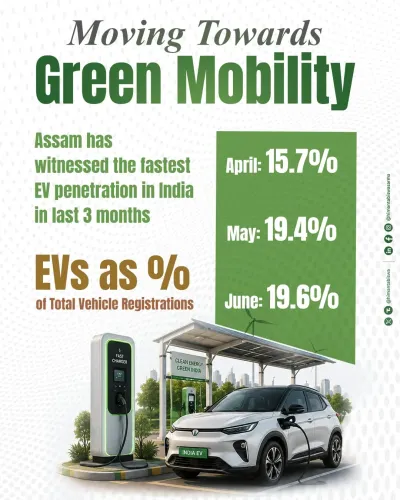
According to an infographic shared by Chief Minister Sarma, the levy will apply specifically to ownership transfers of older vehicles — targeting transactions rather than blanket vehicle usage. Crucially, two-wheelers, three-wheelers, Electric Vehicles (EVs), and Compressed Natural Gas (CNG)-powered vehicles are all exempt from the proposed charge. The exclusion of two- and three-wheelers means a large segment of Assam's daily commuters will not be directly affected.
The Rationale Behind the Levy
The state government has stated the measure is designed to discourage continued use of older, high-emission vehicles and to nudge buyers toward cleaner, newer alternatives. Older vehicles — particularly those equipped with outdated emission-control systems — are disproportionate contributors to urban and peri-urban air pollution. By attaching the cess to ownership transfers rather than annual renewals, Assam is effectively penalising the secondary market for ageing, polluting stock. The exemptions for EVs and CNG vehicles signal a deliberate push toward low-emission mobility options.
What Remains Unspecified
The announcement, however, left several critical details undefined. The exact rate of the green cess, the age threshold that qualifies a vehicle as 'older', and the effective date of the levy were not disclosed. Implementation mechanisms, collection procedures, and the precise breakdown of how the funds will be deployed for greening initiatives also remain to be clarified. The government has indicated that further details are forthcoming.
Broader Context and What It Signals
'A greener Assam is our shared responsibility,' Chief Minister Sarma said in his post, framing the cess as a civic and environmental compact rather than purely a revenue measure. This comes amid mounting nationwide concern over vehicular emissions and an accelerating push — both at the Centre and in several states — to hasten the transition toward cleaner transportation. Assam's approach of targeting the transfer market rather than imposing a routine road tax is notable: it creates a financial friction point precisely where older, polluting vehicles change hands most frequently. Whether the cess rate will be steep enough to meaningfully deter such transfers will depend on the final rate notified by the state government.
All eyes are now on the follow-up notification from the Assam government, which is expected to spell out the rate structure, vehicle age cut-off, and a rollout timeline.
Point of View
Polluting vehicles circulate most. But the announcement's value is almost entirely contingent on the details it withheld: a nominal cess will be symbolic at best, while an aggressive one could push transfers into informal channels. The blanket exemption for two- and three-wheelers, which form the bulk of Assam's vehicle population and contribute substantially to urban emissions, is a political concession that somewhat undercuts the environmental logic. The real test will come when the state notifies the rate and age threshold — and whether enforcement mechanisms are credible enough to actually shift buyer behaviour.
NationPress
27 Oct 2026
Frequently Asked Questions
What is the Assam green cess on vehicle ownership transfer?
It is a proposed levy announced by Assam Chief Minister Himanta Biswa Sarma on 27 October 2026, to be charged at the time of ownership transfer of older vehicles. The proceeds are earmarked for environmental protection and greening initiatives in the state.
Which vehicles are exempt from the Assam green cess?
Two-wheelers, three-wheelers, Electric Vehicles (EVs), and Compressed Natural Gas (CNG)-powered vehicles are all exempt from the proposed green cess, according to the infographic shared by Chief Minister Sarma.
What is the rate and effective date of the Assam green cess?
The exact rate of the cess, the age threshold that classifies a vehicle as 'older', and the date from which it will take effect have not yet been announced. The government has indicated that further details will be provided.
Why is Assam imposing a green cess on older vehicle transfers?
The state government says the measure is intended to discourage the use of older, more polluting vehicles and encourage the adoption of newer, lower-emission alternatives. Older vehicles with outdated emission-control systems contribute disproportionately to air pollution.
How will the funds from the green cess be used?
According to the announcement, all revenue collected through the green cess will be directed toward environmental protection and greening initiatives in Assam. Specific details on how the funds will be allocated or managed are yet to be disclosed.