CM Himanta Links Assam to India's EV Push, Cites Savings for Families
Synopsis
Assam Chief Minister Himanta Biswa Sarma on 8 July 2026 publicly backed India's electric vehicle transition, stating it will reduce crude oil imports, improve environmental outcomes, and deliver daily savings to middle-class families, while pledging Assam's continued commitment to national goals.
Key Takeaways
CM Himanta Biswa Sarma reaffirmed Assam's alignment with India's national EV adoption agenda on 8 July 2026 .
He cited three key benefits: lower crude oil imports, improved environmental outcomes, and household savings for middle-class families.
India's EV push is anchored by the FAME scheme (launched 2015 ) and the National Electric Mobility Mission Plan (launched 2013 ).
Reducing crude oil imports addresses a structural pressure on India's current account balance.
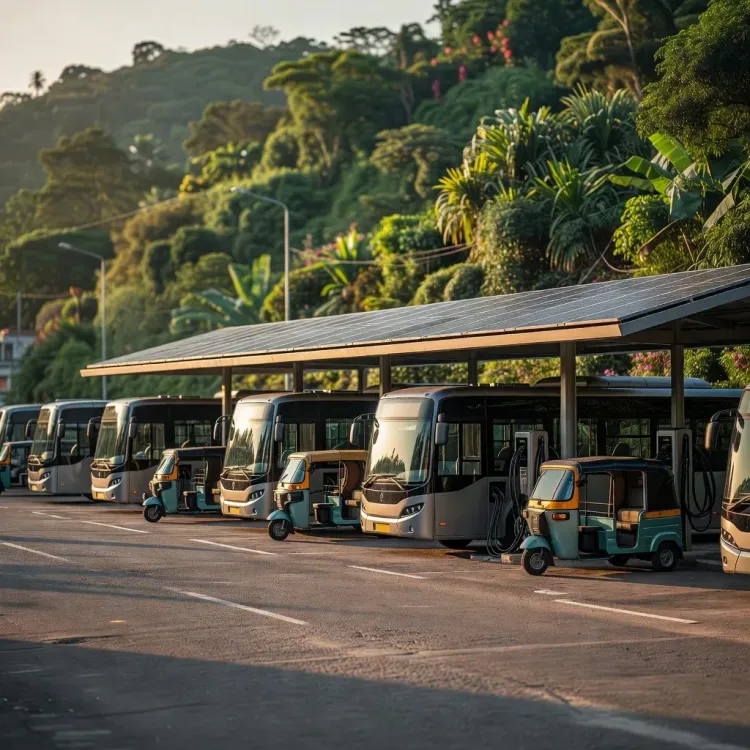
Northeastern states, including Assam , are being integrated into national EV frameworks covering charging infrastructure and fleet electrification.
The statement signals likely coordination among NEDA -aligned states on sustainable mobility policy.
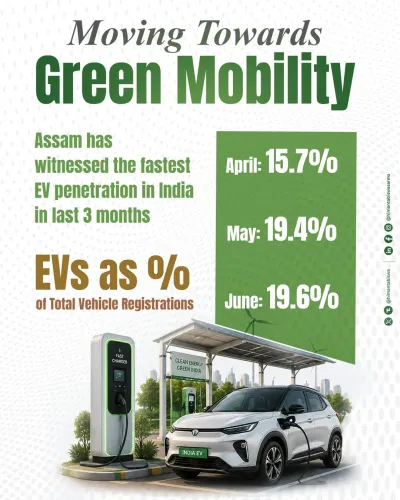
Assam Chief Minister Himanta Biswa Sarma on Wednesday, 8 July 2026, reaffirmed the state's commitment to India's electric vehicle transition, saying the ongoing shift would reduce crude oil imports, improve environmental outcomes, and help middle-class families save on daily expenses.
Context
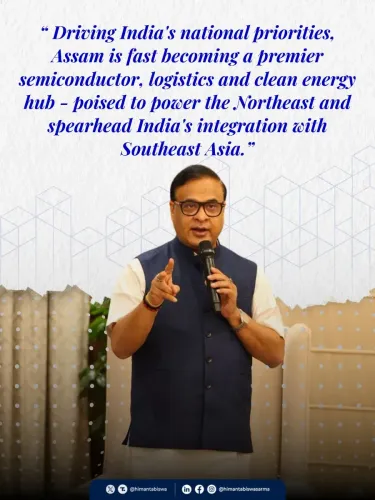
Responding to a post on X, CM Sarma framed Assam's participation in the EV transition as a contribution to a larger national ambition. 'This shift, aligned with the nation's ambitious plan for widespread EV adoption, will lower crude oil imports, improve environmental outcomes and enable middle class families to save more on their daily expenses,' he wrote, adding that 'Assam remains steadfast in contributing to larger national goals.'
The statement positions the northeastern state as an active partner in India's sustainable mobility agenda rather than a passive beneficiary of central schemes.
Policy Backdrop
India's push for electric mobility dates to the National Electric Mobility Mission Plan launched in 2013, which set out to reduce the country's dependence on imported crude oil and cut vehicular emissions. The Faster Adoption and Manufacturing of Electric Vehicles (FAME) scheme, introduced in 2015, has since served as the principal central-government instrument for accelerating EV uptake through demand incentives and infrastructure support.
India imports a substantial share of its crude oil requirements, making the import bill a persistent pressure on the current account. Widespread EV adoption is widely seen as a structural lever to ease that burden while simultaneously helping India meet its climate commitments under the Paris Agreement.
Northeastern states, including Assam, have been encouraged through coordinated central-state mechanisms to integrate with national EV frameworks, covering charging infrastructure, fleet electrification and consumer subsidies.
Stakeholders and Impact
Middle-class families are the most directly cited beneficiaries in Sarma's statement. Fuel costs constitute a significant share of household transport expenditure, and a shift to electric mobility — where running costs per kilometre are materially lower — could translate into tangible monthly savings.
State transport departments and fleet operators stand to benefit from electrification of public and last-mile transport. For Assam, a state with a large rural hinterland and growing urban centres such as Guwahati, expanding EV access also carries implications for air quality and energy security at the regional level.
On the environmental side, reduced dependence on petroleum-based fuels would contribute to lower tailpipe emissions, supporting both national climate targets and local air-quality goals across the Northeast.
What's Next
Attention will now turn to the rollout of specific state-level EV policies in Assam — covering subsidies, charging network expansion and fleet mandates — that would give operational shape to the commitment CM Sarma has articulated. At the national level, parliamentary discussions on updated EV targets and potential extensions to the FAME scheme are expected to set the broader incentive framework within which state initiatives will operate.
Sarma's public alignment with the central EV agenda also signals that the North-East Democratic Alliance (NEDA) states are likely to present a coordinated front on sustainable mobility, reinforcing the BJP-led coalition's policy narrative ahead of any future legislative or budgetary debates on green transport.
Point of View
He bridges technocratic policy language with voter-facing economics, a rhetorical pattern consistent with how BJP-governed states have framed central scheme participation. The emphasis on Assam being 'steadfast' also implicitly counters any perception that the Northeast is a laggard in national development programmes. Taken together, the post reinforces the NEDA convenor's role as a bridge between Delhi's policy ambitions and the region's ground realities.
NationPress
7 Oct 2026
Frequently Asked Questions
What did Assam CM Himanta Biswa Sarma say about electric vehicles?
CM Sarma said the shift to electric vehicles aligns with India's national EV plan and will lower crude oil imports, improve environmental outcomes, and help middle-class families save on daily expenses, while affirming Assam's commitment to national goals.
How does EV adoption help reduce India's crude oil imports?
Electric vehicles run on electricity rather than petroleum, directly reducing demand for petrol and diesel. Since India imports a large share of its crude oil, widespread EV adoption can meaningfully shrink the import bill and ease pressure on the current account.
What is the FAME scheme and how does it relate to Assam?
The Faster Adoption and Manufacturing of Electric Vehicles (FAME) scheme, launched by the central government in 2015, provides demand incentives and infrastructure support to accelerate EV uptake. Northeastern states like Assam are encouraged to align state policies with this framework.
How will electric vehicles benefit middle-class families in Assam?
Electric vehicles have significantly lower running costs per kilometre compared to petrol or diesel vehicles. For middle-class families, this can translate into reduced monthly fuel expenditure, which is the direct saving CM Sarma referenced in his post.
What is NEDA and what is CM Himanta Biswa Sarma's role in it?
The North-East Democratic Alliance (NEDA) is a BJP-led political coalition of parties governing northeastern states. CM Himanta Biswa Sarma serves as its convenor, making him a key coordinator of policy and political alignment across the region.