CM Himanta Links India-EU Roadmap to Assam's Growth
Synopsis
Assam Chief Minister Himanta Biswa Sarma on June 9, 2026 declared that the new India-EU roadmap covering trade, technology and connectivity will benefit Assam immediately, framing the development as a dividend of Prime Minister Modi's diplomatic leadership.
Key Takeaways
Assam CM Himanta Biswa Sarma announced on June 9, 2026 that the India-EU roadmap will benefit Assam 'starting today.' The roadmap covers trade, investment, technology, innovation, connectivity and security between India and the 27-nation EU bloc .
Sarma credited Prime Minister Narendra Modi 's leadership for the bilateral achievement.
India and the EU have maintained a strategic partnership since 2004 , with the India-EU Trade and Technology Council launched in 2022 .
Assam's tea, handloom, bamboo and agro-processed export sectors are among the most likely immediate beneficiaries.
As NEDA convenor , Sarma's framing of the roadmap carries regional significance for the wider Northeast .
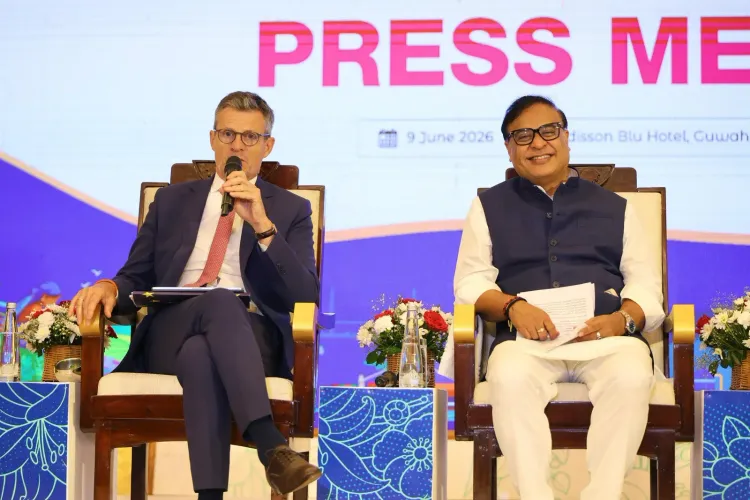
Assam Chief Minister Himanta Biswa Sarma on Tuesday, June 9, 2026, declared that India and the European Union have established an ambitious roadmap spanning trade, investment, technology, innovation, connectivity and security — and that Assam stands to 'tremendously benefit from it, starting today,' crediting the initiative to Prime Minister Narendra Modi.
Context
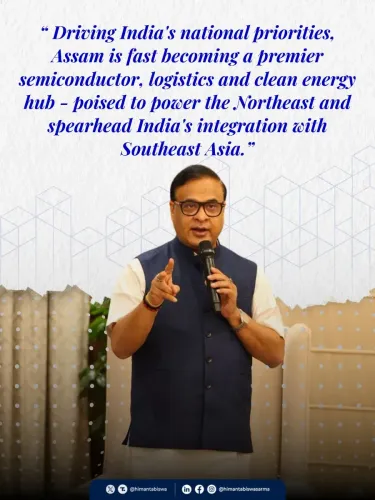
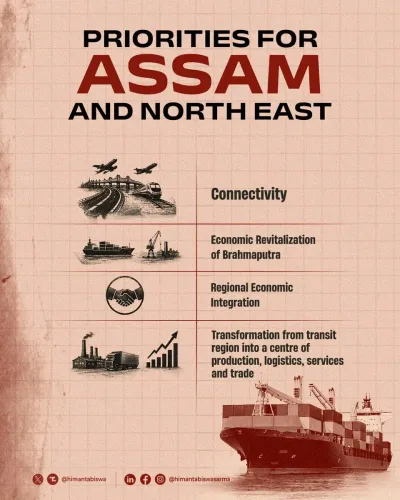
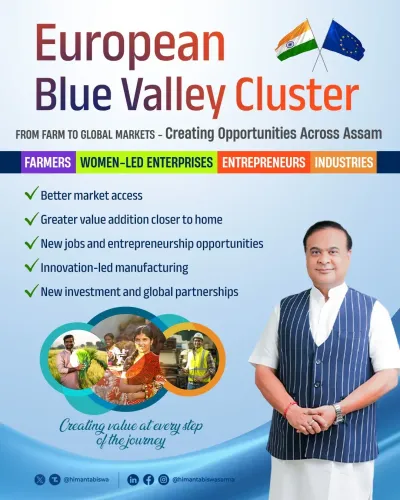
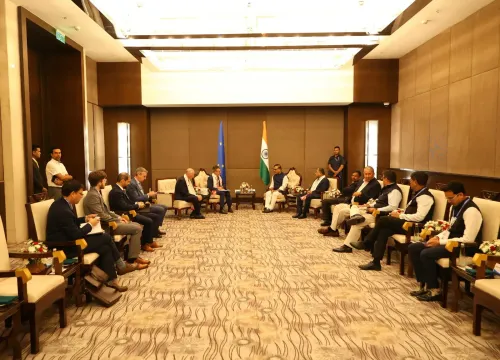
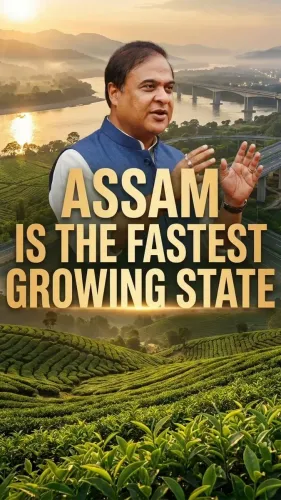
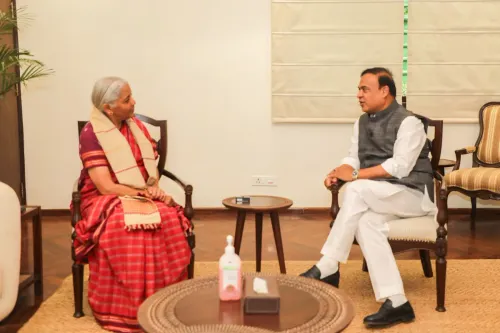
Sarma posted a thread on X outlining how the newly articulated India-EU roadmap translates into concrete opportunities for Assam and the broader Northeast. The post, accompanied by four images, signals the Assam government's intent to actively position the state as a beneficiary of national-level foreign-policy gains. Sarma explicitly framed the development as a product of Modi's leadership, consistent with the BJP's practice of anchoring state development narratives within the central government's diplomatic achievements.
The Chief Minister's use of the word 'starting today' suggests an immediate operational dimension — likely the formal announcement or activation of specific project components — rather than a distant policy aspiration. The thread format indicates a detailed breakdown of sector-wise benefits was shared alongside the post.
Policy Backdrop
India and the European Union have maintained a strategic partnership since 2004. A landmark India-EU Strategic Partnership: A Roadmap to 2025 was adopted at the India-EU Summit of July 2020, laying out cooperation targets across trade, climate, digital governance and connectivity. Building on that, the India-EU Trade and Technology Council was launched in 2022 to deepen collaboration on supply-chain resilience, emerging technologies and regulatory harmonisation.
India's broader multi-alignment foreign policy has consistently sought to diversify economic and technological partnerships, with the EU emerging as a key pillar alongside engagements with the United States, Japan and the Gulf. Northeastern states have been progressively integrated into these frameworks through improved logistics corridors, the Act East Policy, and targeted investment promotion initiatives.
Stakeholders and Impact
Assam's business community, agricultural exporters and the wider Northeast export ecosystem stand as the most immediate stakeholders. The state produces significant volumes of tea, handloom textiles, bamboo products and agro-processed goods that could find expanded market access within the EU's 27-nation bloc under a strengthened trade framework. Improved connectivity provisions could also reduce logistics costs that have historically disadvantaged landlocked northeastern exporters.
From a geopolitical standpoint, Sarma's role as convenor of the North-East Democratic Alliance (NEDA) gives his articulation of these benefits a regional resonance beyond Assam alone. Any investment forums or bilateral business dialogues that follow could draw participation from multiple northeastern states, amplifying the cumulative economic impact.
What's Next
Attention will now turn to state-level project announcements that give substance to the roadmap's promises for Assam. Scheduled Assam-EU business forums, sector-specific investment proposals and connectivity project timelines will be key indicators of whether the diplomatic framework translates into on-ground economic activity. Sarma's thread is expected to detail specific domains — likely tea, textiles, clean energy or digital infrastructure — where engagement is already underway.
If the roadmap delivers measurable investment flows and market-access gains for the Northeast, it could strengthen the political argument that central foreign policy directly uplifts peripheral states, a narrative the BJP is likely to deploy ahead of upcoming state electoral cycles.
Point of View
He reinforces the BJP's centralised credit-claiming model while simultaneously asserting Assam's proactive posture within India's foreign-policy architecture. The 'starting today' framing is significant: it raises accountability stakes, as stakeholders will now watch for concrete deliverables. This fits a broader pattern in which northeastern chief ministers use India's Act East and multi-alignment frameworks as proof points for regional progress, particularly ahead of electoral cycles.
NationPress
21 Sept 2026
Frequently Asked Questions
What is the India-EU roadmap that Assam CM Himanta Sarma mentioned?
The India-EU roadmap is an ambitious bilateral framework covering trade, investment, technology, innovation, connectivity and security agreed upon between India and the 27-nation European Union. India and the EU have maintained a strategic partnership since 2004, with a formal roadmap adopted in 2020 and a Trade and Technology Council launched in 2022.
How will Assam benefit from the India-EU roadmap?
Chief Minister Sarma stated that Assam stands to 'tremendously benefit' from the roadmap starting June 9, 2026. Potential gains include expanded EU market access for Assam's tea, handloom and agro-processed goods, improved connectivity reducing logistics costs, and increased foreign investment in the state.
What is the India-EU Trade and Technology Council?
The India-EU Trade and Technology Council was launched in 2022 to advance cooperation between India and the European Union on trade, emerging technologies and security. It builds on the 2020 India-EU Strategic Partnership Roadmap and focuses on supply-chain resilience and regulatory harmonisation.
What is NEDA and what role does Himanta Biswa Sarma play in it?
NEDA, the North-East Democratic Alliance, is a BJP-led political coalition of parties governing northeastern Indian states. Himanta Biswa Sarma serves as its convenor, giving him a regional leadership role that extends beyond Assam to influence policy and political alignment across the Northeast.
What sectors in Assam could gain from India-EU trade cooperation?
Assam's key export sectors — including tea, handloom textiles, bamboo products and agro-processed goods — are most likely to benefit from improved EU market access. Connectivity and infrastructure provisions under the roadmap could also lower logistics costs for northeastern exporters.