Assam Budget 2026: State Tightens GST Net on Forest Royalty

Synopsis
Assam's 2026 budget formalises a three-department coordination mechanism among Finance (Taxation), Mines and Minerals, and Forest to improve GST collection on forest royalty and curb evasion, extending a pattern seen in mineral-rich states since the 2017 GST rollout.
Key Takeaways
The Government of Assam has formalised coordination among the Finance (Taxation) , Mines and Minerals , and Forest Departments as part of Assam Budget 2026 .
The primary objectives are improving GST collection on forest royalty and curbing tax evasion in the extractive sector.
The reform targets forest contractors and mining lessees whose royalty-linked transactions have historically been difficult to cross-verify for GST compliance.
The approach mirrors inter-departmental data integration models adopted in other mineral-rich Indian states since the July 2017 GST rollout.
No tax rate changes are involved; the focus is on administrative enforcement and data-sharing to widen the existing tax base.
Rollout of joint inspection protocols and mid-year revenue figures will be key indicators of the mechanism's effectiveness.
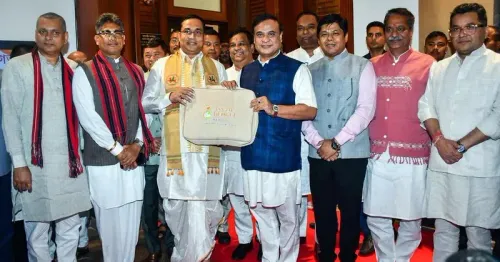
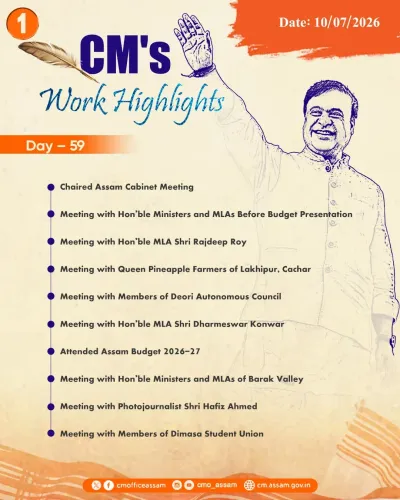
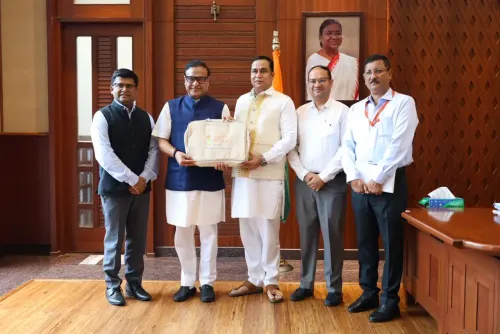
The Chief Minister's Office of Assam, on Friday, 10 July 2026, announced a key highlight of the Assam Budget 2026: the state government has strengthened coordination among the Finance (Taxation), Mines and Minerals, and Forest Departments to improve GST collection on forest royalty and curb tax evasion.
Context
The announcement, shared under the hashtag #AssamBudget2026, signals a structural administrative reform rather than a rate change. By aligning three departments that previously operated in silos, the state aims to close a long-standing gap in indirect tax compliance within the extractive and forest sectors. The move reflects a deliberate shift toward data-sharing and joint enforcement as the primary tools for revenue augmentation.
Policy Backdrop
GST was rolled out across India in July 2017, subsuming a web of central and state levies into a unified indirect tax framework. Despite the consolidation, transactions linked to forest royalties and mineral extraction have remained a persistent compliance challenge for states, because royalty payments are determined by departments outside the tax administration chain. Assam budgets since 2017 have repeatedly emphasised tightening enforcement in these sectors to boost the state's own-tax revenue without altering rates.
The coordination model now formalised in Assam Budget 2026 mirrors approaches adopted in other mineral-rich Indian states, where inter-departmental data integration after the GST rollout has been used to capture royalty-linked transactions that previously escaped the tax net. The central government has also encouraged such base-widening measures at the GST Council level as a preferred alternative to rate increases.
Stakeholders and Impact
The reform directly affects forest contractors, mining lessees, and state tax officials operating in Assam. Contractors and lessees who pay royalties to the Forest and Mines and Minerals Departments will now face cross-verified scrutiny from the Finance (Taxation) Department, reducing the scope for under-reporting taxable turnover. For state tax officials, the coordination framework is expected to provide real-time transaction data that was previously inaccessible across departmental boundaries.
The broader implication is for Assam's own-tax revenue base. Forest royalties represent a recurring revenue stream tied to the state's significant timber and non-timber forest produce sector. Improving GST compliance on these transactions, even incrementally, can meaningfully contribute to the state's fiscal position without requiring legislative changes.
What's Next
Observers will watch for the rollout of joint inspection protocols or shared databases between the three departments, as well as any mid-year GST revenue figures released by the Government of Assam that reflect the impact of the new coordination mechanism. Under Chief Minister Himanta Biswa Sarma, Assam has consistently positioned revenue administration reform as central to its fiscal strategy, and this inter-departmental alignment could serve as a template for other states grappling with similar compliance gaps in their extractive sectors. A wider adoption of this model may also draw attention at future GST Council discussions on base-widening measures.
Point of View
The state is betting that data convergence alone can unlock meaningful revenue — a fiscally conservative but operationally demanding strategy. Under Chief Minister Himanta Biswa Sarma, Assam has consistently framed revenue administration reform as a non-negotiable pillar of its fiscal consolidation, and this announcement reinforces that arc. If the mechanism delivers measurable results, it could gain traction as a replicable model at the GST Council, where base-widening without rate changes is a politically easier sell for the Centre and states alike.
NationPress
8 Oct 2026
Frequently Asked Questions
What is the Assam Budget 2026 GST forest royalty reform?
The Assam Budget 2026 formalises coordination among the Finance (Taxation), Mines and Minerals, and Forest Departments to improve GST collection on forest royalty payments and reduce tax evasion by cross-verifying transaction data across departments.
Why is GST collected on forest royalty in Assam?
Forest royalty is a payment made by contractors for the right to harvest timber and other forest produce. Under India's GST framework, such transactions attract indirect tax, and the state government is responsible for ensuring compliance among lessees and contractors.
How does inter-departmental coordination help curb GST evasion?
When the Finance (Taxation), Mines and Minerals, and Forest Departments share data, tax officials can cross-check royalty payments recorded by one department against GST returns filed by contractors, making under-reporting significantly harder to conceal.
Who is affected by Assam's new GST coordination mechanism?
Forest contractors and mining lessees operating in Assam are most directly affected, as their royalty-linked transactions will now face coordinated scrutiny from three state departments simultaneously.
Is this approach unique to Assam?
No. Several mineral-rich Indian states have adopted similar inter-departmental data integration models since the GST rollout in July 2017 to capture extractive-sector transactions that previously escaped the tax net.