CM Himanta's Assam Marks World Food Safety Day 2026
Synopsis
On World Food Safety Day 2026, the Chief Minister's Office of Assam reaffirmed the state's commitment to safe, clean and healthy food under CM Dr. Himanta Biswa Sarma, aligning with the WHO-FAO observance and signalling continued focus on FSSAI-backed food safety enforcement across the state's farm-to-table supply chain.
Key Takeaways
The Chief Minister's Office of Assam observed World Food Safety Day on 7 June 2026 , under the leadership of CM Dr.
Himanta Biswa Sarma .
World Food Safety Day is an annual observance established by WHO and FAO in 2019 to strengthen food safety systems globally.
The state's commitment covers the full supply chain — from farmers and processors to street vendors and end consumers .
India's food safety framework is anchored by the Food Safety and Standards Act, 2006 and enforced by FSSAI .
Assam has been progressively aligning with FSSAI norms amid concerns over adulteration and supply-chain hygiene in the northeastern region.
State-level action plans, laboratory upgrades and licensing drives for 2026-27 are being watched as indicators of follow-through.
The Chief Minister's Office of Assam on Sunday, 7 June 2026 marked World Food Safety Day with a public reaffirmation of the state's commitment to safe, clean and healthy food for all citizens, crediting the observance to the leadership of Chief Minister Dr. Himanta Biswa Sarma.
Context
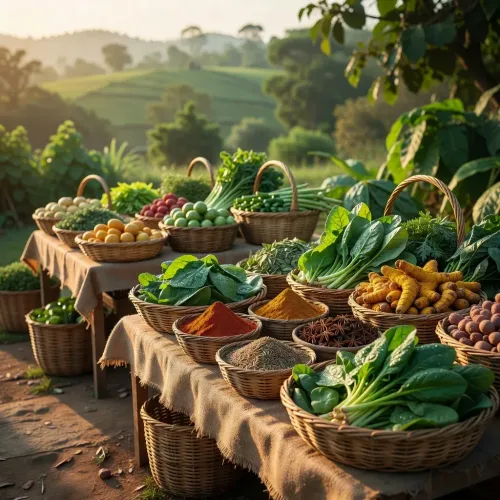
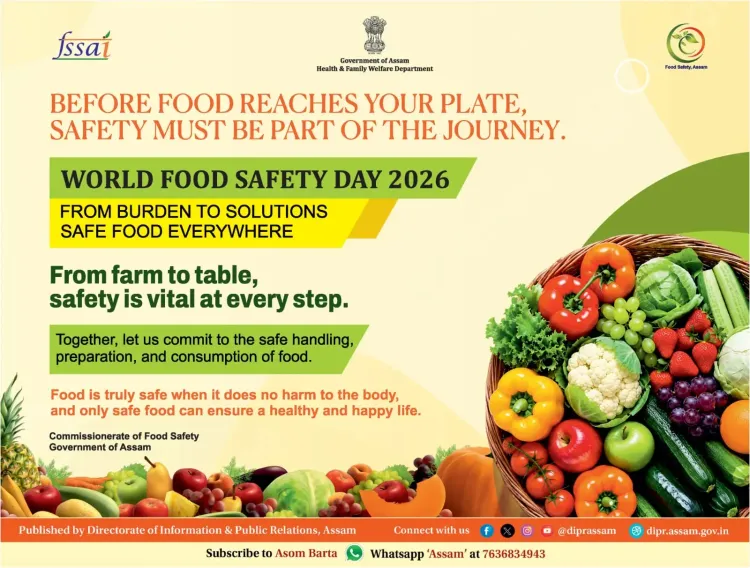
World Food Safety Day is observed every year on 7 June, a date established jointly by the World Health Organization (WHO) and the Food and Agriculture Organization (FAO) in 2019 to draw global attention to the importance of food safety across the entire supply chain. The CMO's post captured the spirit of the occasion with the line: 'From farm to table, every step matters, because safe food is the foundation of a healthy life.' The message was amplified in coordination with @foodsafetyassam, the state's dedicated food safety handle.
Policy Backdrop
India's food safety architecture rests on the Food Safety and Standards Act, 2006, which created the Food Safety and Standards Authority of India (FSSAI) as the apex statutory body for setting science-based standards and overseeing enforcement across all states and union territories. Assam, a predominantly agriculture-based northeastern state, has in recent years aligned its regulatory machinery more closely with FSSAI norms amid growing concerns over adulteration and supply-chain hygiene. The state's participation in the annual global observance signals its intent to stay in step with both central regulatory frameworks and international health priorities.
Indian states routinely use international health days as platforms to launch or amplify awareness campaigns, and Assam fits a broader pattern of northeastern states investing in food safety enforcement — from licensing drives to laboratory infrastructure upgrades — to protect consumers at every node of the food supply chain.
Stakeholders and Impact
The commitment to safe food touches a wide cross-section of Assam's population: smallholder farmers who form the base of the supply chain, food processors and packagers in the middle, and street vendors and consumers at the point of consumption. For farming communities, stronger food safety standards can mean better market access and reduced rejection of produce; for consumers, particularly in semi-urban and rural areas, it translates directly into lower exposure to adulterated or contaminated food. Street vendors — a significant part of Assam's informal food economy — stand to benefit from awareness programmes that help them meet basic hygiene benchmarks without prohibitive compliance costs.
What's Next
Observers will watch for state-level follow-through in the form of updated FSSAI licensing drives, upgrades to food-testing laboratories, and any new Assam-specific food safety action plan for 2026-27. The involvement of @foodsafetyassam in the day's communications suggests coordinated outreach is already under way. As food safety concerns increasingly intersect with public health priorities at the national level, Assam's visible commitment on World Food Safety Day positions the state as an active participant in India's broader regulatory push — and sets a benchmark for accountability in the months ahead.
Point of View
Public reaffirmations of this kind carry political weight beyond symbolism, especially as consumer awareness of adulteration rises. The coordination with the dedicated @foodsafetyassam handle suggests institutional capacity is being built, not just communicated. Whether the observance translates into measurable enforcement outcomes in 2026-27 will be the real test of the state's stated commitment.
NationPress
19 Sept 2026
Frequently Asked Questions
When is World Food Safety Day observed?
World Food Safety Day is observed every year on 7 June. It was established jointly by WHO and FAO in 2019 to promote food safety awareness across global supply chains.
What did Assam do on World Food Safety Day 2026?
On 7 June 2026, the Chief Minister's Office of Assam marked World Food Safety Day by reaffirming the state's commitment to safe, clean and healthy food for all citizens under CM Dr. Himanta Biswa Sarma.
Who is responsible for food safety standards in India?
The Food Safety and Standards Authority of India (FSSAI), established under the Food Safety and Standards Act 2006, is the apex statutory body responsible for setting and enforcing food safety standards across India.
Why is food safety important in Assam?
Assam has an agriculture-based economy and a large informal food sector. Strengthening food safety enforcement helps protect consumers from adulteration, improves market access for farmers, and aligns the state with national FSSAI standards.
What is the 'farm to table' concept in food safety?
'Farm to table' refers to the entire food supply chain — from cultivation and harvesting through processing, transportation and retail to the consumer's plate. Food safety at every step of this chain is essential to prevent contamination and adulteration.