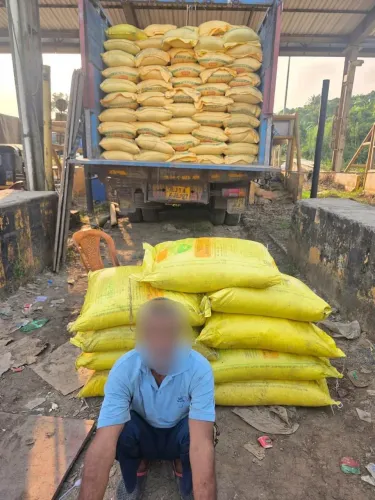
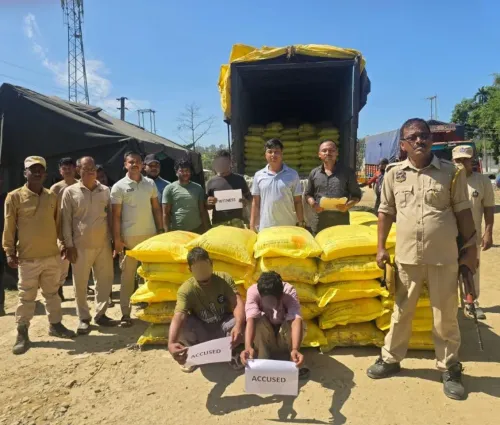
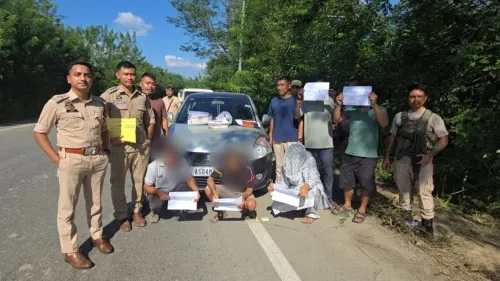
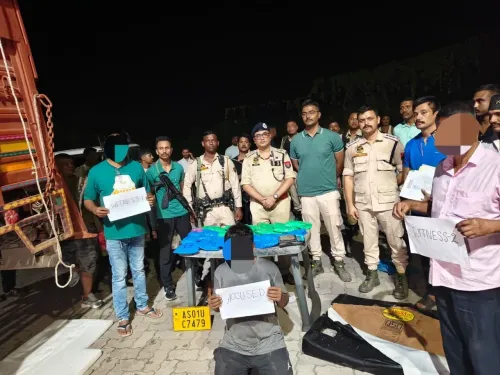
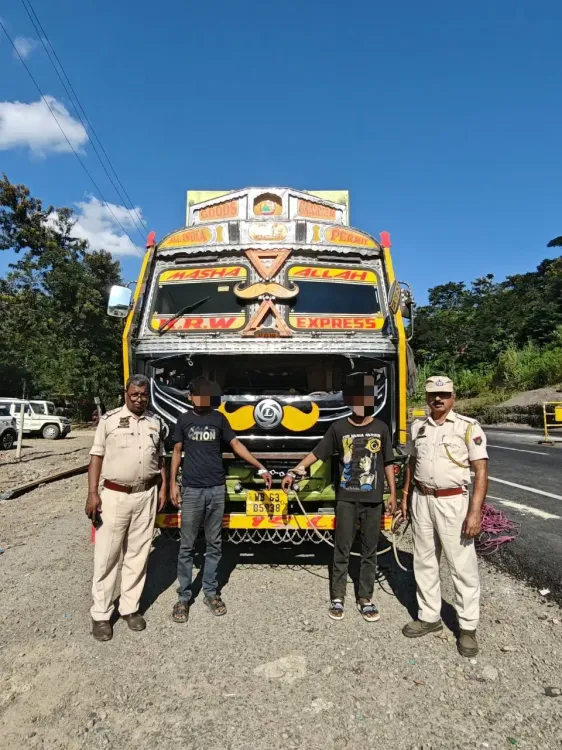
Assam Police seize 700 bags of urea near Harangajao
Synopsis
Assam Police intercepted a truck at Harangajao and recovered 700 bags of subsidised urea concealed under rice bags on 26 October 2026. The driver and helper were arrested. CM Himanta Biswa Sarma appreciated the police for their swift action, highlighting the state's ongoing effort to protect the subsidised fertiliser supply chain for farmers.
Key Takeaways
700 bags of urea were recovered from a truck intercepted at Harangajao, Dima Hasao district, Assam on 26 October 2026 .
The urea was concealed beneath rice bags in the truck, a classic misdirection tactic used by smugglers.
Both the driver and helper of the truck were apprehended; investigation is underway.
CM Dr Himanta Biswa Sarma publicly commended Assam Police for acting on secret intelligence and making the interception.
The seizure highlights the ongoing diversion of government-subsidised fertiliser away from farmers in northeast India.
Investigators are expected to trace the urea's origin and probe the broader smuggling network behind the consignment.
A truck carrying 700 bags of subsidised urea concealed beneath a layer of rice bags was intercepted at Harangajao in Assam on the morning of Monday, 26 October 2026, after police acted on secret intelligence — a haul that lays bare how state-subsidised fertiliser can vanish from the fields it was meant for and into the black market.
The Chief Minister's Office of Assam confirmed the seizure, stating that both the driver and the helper of the truck have been apprehended and that 'necessary action has been initiated.' Chief Minister Dr Himanta Biswa Sarma publicly appreciated Assam Police for their 'alertness and prompt action.'
The Harangajao intercept: rice on top, urea below
Harangajao, a town in the hilly Dima Hasao district, sits along interior road corridors that connect the plains to the hills — routes that smugglers have historically exploited for exactly this kind of concealment. Stacking urea bags beneath rice is a classic misdirection: a surface check shows a food commodity, while the contraband travels beneath it.
The scale matters. 700 bags of urea represents a significant quantity of a fertiliser that the central government sells at a heavily subsidised rate specifically to keep input costs manageable for farmers. When that supply is diverted, real cultivators face shortages, pay inflated open-market prices, or lose a crop cycle — the damage is concrete and immediate.
Why subsidised urea keeps disappearing
Northeast India has seen periodic seizures of diverted fertiliser, and the pattern is consistent: the subsidy gap between the official price and the open-market or cross-border rate creates a reliable profit margin for traffickers. Assam Police have conducted interceptions at interior checkpoints before, but seizures of this volume signal organised movement — not opportunistic small-scale diversion.
The investigation is now expected to probe the supply chain behind this consignment: where the urea originated, who arranged the truck, and whether a broader network is at work. Investigators will likely trace the fertiliser's point of purchase or allocation to determine how far up the chain the diversion began.
CM Sarma's message to the force
Dr Himanta Biswa Sarma, who has consistently positioned his administration as tough on smuggling and black-market supply chains, used the moment to publicly recognise the police team responsible. The public appreciation serves a dual purpose — it rewards the unit and signals to potential traffickers that intelligence networks in the region are active and effective.
The two accused are in custody. The next step is establishing the destination of the contraband and the criminal network behind it — answers that will determine whether this intercept is the end of a supply chain or merely a node in a larger one.
Point of View
Meaning one truck intercept, however large, addresses a symptom rather than the incentive behind it. The investigation's reach — how far up the supply chain it goes — will be the real test of whether this is a network takedown or an isolated catch. For farmers in the Northeast, consistent enforcement at interior checkpoints is the only near-term safeguard until pricing reforms reduce the arbitrage that makes fertiliser smuggling profitable.
NationPress
26 Oct 2026
Frequently Asked Questions
Where was the urea smuggling truck intercepted in Assam?
The truck was intercepted at Harangajao , a town in Dima Hasao district , Assam, on the morning of 26 October 2026 .
How much urea was seized in the Harangajao interception?
700 bags of urea were recovered, hidden beneath rice bags to evade detection during checks.
Why is urea smuggled in Assam and northeast India?
Subsidised urea is sold at a controlled government price far below the open market or cross-border rate, creating a profit incentive to divert it from farmers into black-market channels.
What action has been taken against those arrested?
The driver and helper of the truck have been apprehended and 'necessary action has been initiated,' according to the Chief Minister's Office of Assam . An investigation is ongoing.
What did CM Himanta Biswa Sarma say about the urea seizure?
CM Dr Himanta Biswa Sarma appreciated Assam Police for their alertness and prompt action after they acted on secret intelligence to make the interception.