Assam CM Office Highlights School Transformation Drive
Synopsis
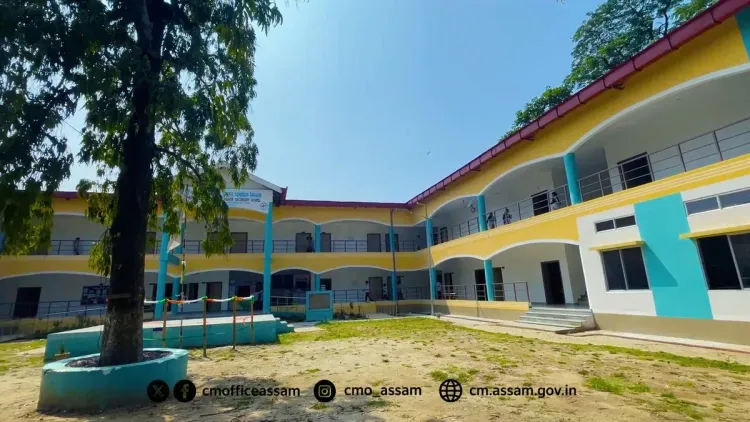
The Chief Minister's Office of Assam released a video on September 29, 2026, documenting upgraded school infrastructure across the state. The initiative targets dropout reduction through improved facilities, aligning with the National Education Policy 2020 and Assam's broader human capital development goals.
Key Takeaways
The Chief Minister's Office of Assam shared a video on September 29, 2026 highlighting school infrastructure upgrades across the state.
The government links improved physical amenities directly to a stronger learning environment and reduced dropout rates.
The initiative aligns with the National Education Policy 2020 , which prioritises school modernisation nationwide.
Assam's push mirrors similar infrastructure drives in other Indian states aimed at improving enrollment and retention.
The next accountability moment will be the state's education outcome reports and upcoming assembly budget allocations for school upgrades.
Classrooms are getting brighter, corridors less empty, and dropout numbers — at least by intent — are heading in the right direction. The Chief Minister's Office of Assam on Tuesday, September 29, 2026, shared a video documenting the sweeping physical transformation underway in schools across the northeastern state, framing upgraded infrastructure as a direct lever for keeping children in school.
What the video shows: a state-wide infrastructure push
The post describes 'improved infrastructure and modern amenities across schools' as the engine of change — better learning environments designed not just to attract students but to retain them. While the specific schools featured in the video cannot be independently verified, the broader programme reflects a sustained state commitment to upgrading physical facilities as a foundation for education quality.
The framing is deliberate: infrastructure first, outcomes second. The government is making the case that a child who walks into a school with functioning toilets, proper classrooms, and basic amenities is a child far less likely to walk away for good.
Assam's dropout challenge and the national policy backdrop
Assam has long grappled with school dropout rates — particularly in rural and remote communities — driven by a mix of poverty, distance, and inadequate facilities. The state's infrastructure drive sits squarely within the framework of the National Education Policy 2020, which explicitly prioritises school modernisation as a precondition for improving enrollment and retention metrics nationwide.
Assam is not alone in this playbook. Several Indian states have launched parallel facility-upgrade drives, all tracked against national dropout-reduction benchmarks. What distinguishes Assam's current push is the deliberate public documentation — using video to make the transformation visible and accountable to citizens, parents, and policymakers alike.
What rural families and students stand to gain
For the students and families at the centre of this effort — particularly in Assam's rural belt — the stakes are concrete and immediate. A functional school building reduces the friction that pushes families toward pulling children out of education. Modern amenities, especially for girls, are consistently linked in education research to improved attendance and completion rates.
The next real test will come when the state releases its education outcome reports or tables fresh budget allocations for school upgrades in upcoming assembly sessions. Numbers on enrollment, retention, and learning levels will determine whether the transformation on camera translates into transformation on paper.
Assam is building the classrooms. Now it has to fill — and keep — them.
Point of View
States that can demonstrate infrastructure progress early are better positioned to claim credit for eventual outcome improvements, even if the causal link takes years to establish. The real test for Assam's leadership will be whether rising facility standards translate into measurable retention data — something the next round of state education reports will either confirm or complicate.
NationPress
29 Sept 2026
Frequently Asked Questions
What is the Assam government doing to improve schools?
The Assam government is upgrading school infrastructure with modern amenities across the state, aiming to improve the learning environment and reduce student dropout rates, as highlighted in a video shared by the Chief Minister's Office on September 29, 2026.
How does school infrastructure affect dropout rates in Assam?
Better facilities — functional classrooms, toilets, and basic amenities — reduce the friction that leads families to pull children out of school, particularly in rural areas. The Assam government is betting that improved infrastructure will directly support higher retention rates.
How does Assam's school drive connect to the National Education Policy 2020?
The National Education Policy 2020 explicitly prioritises school infrastructure modernisation as a foundation for improving enrollment and learning outcomes. Assam's ongoing facility upgrades are aligned with this national framework.
Which students benefit most from Assam's school transformation programme?
Students in rural and remote communities across Assam stand to benefit most, as inadequate facilities have historically been a key driver of dropout rates in those areas.
When will we know if Assam's school upgrades are working?
The clearest signal will come from the state's next education outcome reports and from budget allocations for school infrastructure in upcoming Assam assembly sessions, which will show whether enrollment and retention metrics are improving.