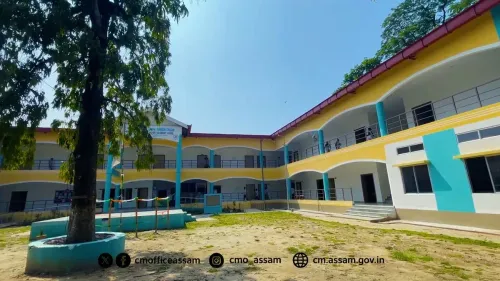
Assam govt schools near 100% infrastructure saturation: CM Sarma
Synopsis
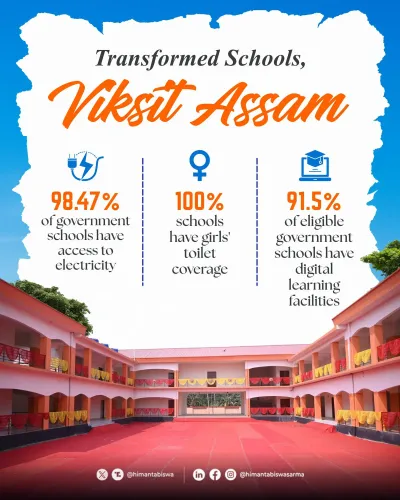
Assam is within striking distance of full school infrastructure saturation — 98.47% of government schools now have electricity, 100% have girls' toilets, and 91.5% have digital learning tools. CM Sarma's 'Viksit Assam' framing signals this is as much a political milestone as an administrative one, with the final gaps in rural connectivity now the last frontier.
Key Takeaways
Assam CM Himanta Biswa Sarma on 7 July shared data on government school infrastructure progress via a post on X .
98.47 per cent of government schools in Assam now have access to electricity .
100 per cent of eligible schools have achieved coverage of girls' toilets .
91.5 per cent of eligible government schools have been equipped with digital learning facilities .
The government is targeting 100 per cent saturation across all infrastructure metrics, with a focus on rural and remote schools.
Assam Chief Minister Himanta Biswa Sarma on Tuesday, 7 July declared that the state's government school infrastructure overhaul is now plainly visible on the ground, with key metrics approaching full saturation. Sharing an infographic titled 'Transformed Schools, Viksit Assam' on social media platform X, Sarma said the government is now zeroing in on the remaining gaps to achieve 100 per cent coverage across all state-run schools.
Key Infrastructure Milestones
According to data released by the Assam state government, 98.47 per cent of government schools in the state now have access to electricity — a significant leap from earlier baseline figures. The government also claimed that 100 per cent of eligible schools have been equipped with girls' toilets, a measure aimed at improving sanitation and boosting enrolment and retention of girl students.
On the digital front, 91.5 per cent of eligible government schools have been provided with digital learning facilities, reflecting a sustained push to integrate technology into classroom instruction across the state.
What the Chief Minister Said
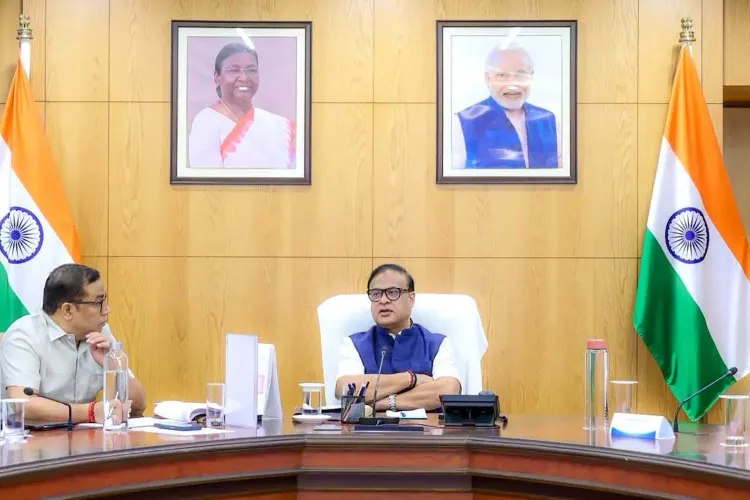
In his post on X, Sarma wrote that 'facts matter' and that the transformation of Assam's schools is already visible. 'With almost every school now equipped with essential infrastructure, they are zeroing in on the remaining gaps to reach 100 per cent saturation,' he stated. He framed these achievements as part of the government's broader vision of building a 'Viksit Assam' through sustained investment in education.
Focus on Rural and Remote Areas
Officials said that efforts are continuing to extend electricity connectivity, digital infrastructure, and other essential facilities to the schools that remain outside current coverage. The emphasis, according to the government, is on ensuring that rural and remote institutions are not left behind as the state pushes toward full saturation.
Over the past several years, the Assam government has rolled out multiple initiatives to modernise school infrastructure, raise teaching standards, and widen access to quality education — particularly in geographically underserved areas.
What Comes Next
The Education Department is expected to continue its push to close the remaining gaps — particularly the 1.53 per cent of schools still without electricity and the roughly 8.5 per cent yet to receive digital learning tools. Officials indicated that prescribed standards will be the benchmark for every government school before the saturation drive is declared complete.
Point of View
But the framing of 'near saturation' deserves scrutiny. The gap between 91.5 per cent digital coverage and 100 per cent is not trivial in a state with thousands of schools — many in remote, connectivity-challenged terrain. Girls' toilet coverage reaching 100 per cent is a genuine milestone and one that research consistently links to improved female retention rates. The harder question is whether digital infrastructure translates into actual learning outcomes, or remains a hardware metric. Assam's push is commendable, but saturation in access does not automatically mean saturation in quality.
NationPress
6 Oct 2026
Frequently Asked Questions
What infrastructure milestones has Assam achieved in government schools?
According to state government data shared on 7 July 2025, 98.47 per cent of Assam's government schools now have electricity, 100 per cent have girls' toilets, and 91.5 per cent of eligible schools have digital learning facilities. The government is targeting full saturation across all metrics.
What is the 'Viksit Assam' education initiative?
'Viksit Assam' is the Assam government's broader development vision, under which sustained investment in school infrastructure — including electricity, sanitation, and digital tools — is being pursued. CM Sarma has framed the school transformation drive as a key pillar of this vision.
Why does girls' toilet coverage in schools matter?
Achieving 100 per cent girls' toilet coverage in government schools is significant because research consistently shows that adequate sanitation facilities improve enrolment and retention rates for girl students, particularly at the secondary level. Assam's government cited this as a key goal of the drive.
Which schools still lack infrastructure in Assam?
According to the data, approximately 1.53 per cent of government schools still lack electricity connectivity, and around 8.5 per cent of eligible schools are yet to receive digital learning facilities. Officials said efforts are ongoing to cover these remaining institutions, with a focus on rural and remote areas.
How has Assam improved school infrastructure in recent years?
The Assam government has rolled out multiple initiatives over the past several years to modernise school infrastructure, improve teaching standards, and expand digital education. The current drive focuses on closing the last remaining gaps to achieve 100 per cent saturation across all government schools.