Dr. Jitendra Singh: Atal Setu to Transform Basohli Tourism
Synopsis
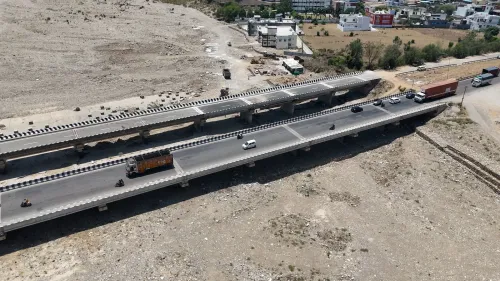
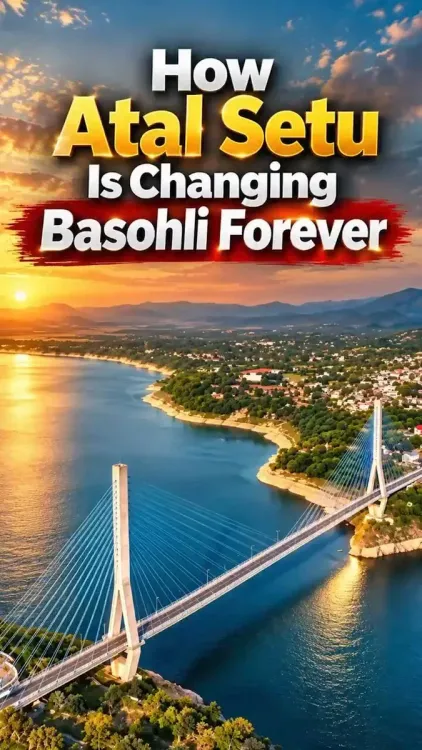
Union Minister Dr. Jitendra Singh has spotlighted the Atal Setu Bridge in Basohli, Kathua as a connectivity breakthrough poised to unlock tourism, attract filmmakers, and generate local employment in Jammu and Kashmir, with a proposed riverfront development set to amplify the region's economic potential.
Key Takeaways
Atal Setu Bridge in Basohli, Kathua district, J&K is being positioned as a major connectivity upgrade for the region.
Jitendra Singh highlighted its appeal to both tourists and filmmakers on October 16, 2026 .
A proposed riverfront development in Basohli is expected to further amplify tourism and economic activity.
The project fits a post- 2019 reorganisation pattern of central government-accelerated bridge and road projects in remote J&K districts.
Stated outcomes include local employment generation and economic growth acceleration for Basohli residents.
The bridge continues a naming tradition honouring former PM Atal Bihari Vajpayee in J&K infrastructure projects.
A bridge is doing more than spanning a river in Basohli, Kathua district, Jammu and Kashmir — it is reshaping the economic horizon of an entire town. Union Science and Technology Minister Dr. Jitendra Singh on Friday, October 16, 2026, highlighted how the Atal Setu Bridge is emerging as a connectivity game-changer, drawing tourists and filmmakers alike to one of J&K's most scenic but long-underserved regions.
Atal Setu and the Basohli Connectivity Breakthrough
Dr. Singh described the bridge as 'emerging as a game-changer for connectivity in Basohli,' pointing to its dual promise: enhanced tourist access and a compelling backdrop for film production. The Atal Setu Bridge — named in the tradition of infrastructure projects honouring former Prime Minister Atal Bihari Vajpayee — directly addresses a structural gap that has historically limited Basohli's economic participation despite its dramatic riverine landscapes.
Basohli sits on the banks of the Ravi river in Kathua district, a stretch of Jammu and Kashmir that boasts striking natural scenery but has lacked the road and bridge infrastructure to convert that geography into sustained economic activity. The bridge changes that equation fundamentally.
Riverfront Development and the Film-Tourism Angle
Beyond the bridge itself, Dr. Singh pointed to a proposed riverfront development as the next multiplier — a project that, if executed, would position Basohli alongside better-known J&K destinations competing for domestic and international visitors. The minister also flagged the region's appeal specifically for filmmakers, a signal that the government sees film tourism — a proven economic lever in Himachal Pradesh and Kashmir Valley — as a viable pathway for Basohli.
Film-linked tourism creates a replicable demand loop: a single production scouts a location, footage reaches a national audience, visitors follow. Basohli's 'breathtaking landscapes,' as Dr. Singh described them, provide the raw material; Atal Setu now provides the access.
J&K's Post-2019 Infrastructure Push and What Basohli Represents
The bridge is part of a broader pattern. After the reorganisation of Jammu and Kashmir in 2019, the central government accelerated road and bridge projects in remote districts, framing connectivity as the foundation for economic integration of areas previously isolated by terrain and underinvestment. Kathua district, as a border district, carries additional strategic weight in that calculus.
Dr. Singh's post signals that Basohli is now being positioned not merely as a beneficiary of infrastructure spend but as an active node in J&K's tourism and employment network — one where local employment generation and economic growth acceleration are explicitly named outcomes, not afterthoughts.
The riverfront development's rollout and any formal state tourism department announcements on Basohli will be the next indicators of whether the bridge's promise translates into measurable change on the ground.
Point of View
Reinforcing BJP's lineage claim on J&K development. The deliberate mention of filmmakers alongside tourists signals a sophisticated two-track tourism pitch — cinematic visibility driving footfall — that mirrors playbooks used successfully in other Himalayan states. The real test will be whether the riverfront development moves from proposal to execution, and whether employment gains reach Basohli's resident population rather than migrant labour.
NationPress
16 Oct 2026
Frequently Asked Questions
What is the Atal Setu Bridge in Basohli?
The Atal Setu Bridge is a connectivity infrastructure project in Basohli, Kathua district, Jammu and Kashmir, named after former Prime Minister Atal Bihari Vajpayee. It is designed to improve access to the town and open it up for tourism and economic development.
Why is Basohli being promoted as a tourist destination?
Basohli in Kathua district, J&K, is known for its scenic riverine landscapes along the Ravi river. The Atal Setu Bridge improves connectivity to the area, and a proposed riverfront development is expected to further boost its appeal to visitors and filmmakers.
What did Dr. Jitendra Singh say about Basohli?
On October 16, 2026, Union Minister Dr. Jitendra Singh stated that the Atal Setu Bridge is emerging as a game-changer for Basohli's connectivity, enhancing its tourism appeal, attracting filmmakers, and setting the stage for local employment generation and economic growth.
What is the proposed riverfront development in Basohli?
The riverfront development is a proposed project in Basohli aimed at leveraging its scenic location for tourism infrastructure. Specific details and timelines have not been officially confirmed yet.
How does the Atal Setu Bridge fit into J&K's development plans?
After Jammu and Kashmir's reorganisation in 2019, the central government accelerated road and bridge projects in remote districts to integrate them economically. The Atal Setu Bridge in Kathua is part of this broader connectivity push targeting tourism and employment.