CM Himanta flags Bishnuram Medhi Setu to boost Sualkuchi silk hub

Synopsis
Assam Chief Minister Himanta Biswa Sarma has highlighted the upcoming Bishnuram Medhi Setu as a transformative link for Sualkuchi, Assam's GI-tagged silk-weaving hub, promising new trade, tourism, and market-access opportunities for thousands of artisan households.
Key Takeaways
Assam CM Himanta Biswa Sarma announced on 7 July 2026 that the Bishnuram Medhi Setu will better connect Sualkuchi to the state's economic network.
Sualkuchi produces GI-tagged Muga , Eri , and Pat silk and is known as the 'Manchester of the East.' The bridge is named after former Assam Chief Minister Bishnuram Medhi , who served from 1950 to 1957 .
The project is expected to expand trade, tourism, and market access for thousands of silk-weaving households in Kamrup district .
The initiative aligns with the state's post-2021 push for Brahmaputra crossings and fits within central frameworks like Bharatmala and the Act East Policy .
Analysts will watch for construction milestones, cost disclosures, and any linked silk cluster upgradation or tourism circuit announcement.
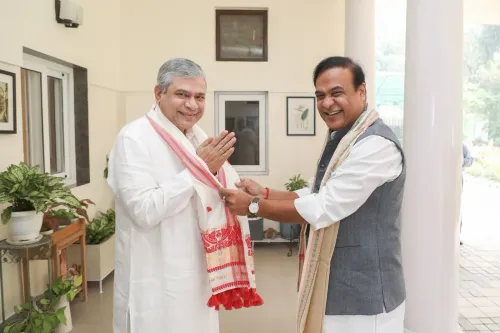
Assam Chief Minister Himanta Biswa Sarma on Tuesday, 7 July 2026, announced that the upcoming Bishnuram Medhi Setu will bring Sualkuchi — the state's foremost silk-weaving centre — into closer alignment with Assam's broader economic network, promising expanded avenues for trade, tourism, and market access.
Context
Sualkuchi, situated on the north bank of the Brahmaputra in Kamrup district, is widely regarded as the 'Manchester of the East' for its production of Muga, Eri, and Pat silk varieties, all of which carry Geographical Indication (GI) tags. Despite its reputation, the town's relative geographic isolation has historically constrained the reach of its weavers to wider markets. The Chief Minister framed the bridge project with a direct equation: 'Connectivity = Prosperity.'
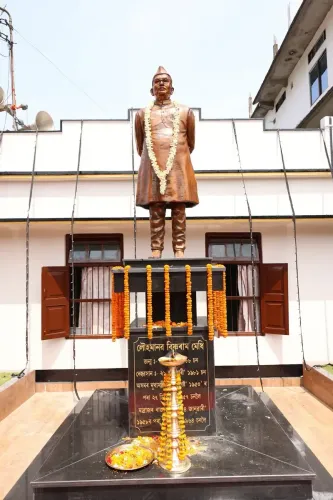
The Bishnuram Medhi Setu is named after Bishnuram Medhi, who served as Assam's Chief Minister from 1950 to 1957, making the infrastructure project a tribute to one of the state's founding administrative figures while serving a contemporary economic purpose.
Policy Backdrop
Since 2021, the Assam government has announced a series of bridge and road corridor projects aimed at improving district-level connectivity across the state, with several targeting crossings over or near the Brahmaputra. These initiatives sit within a broader national framework: the Bharatmala Pariyojana and the Act East Policy have together channelled significant central funds into Northeast India's transport grid, with the explicit goal of reducing logistics costs and integrating remote economic clusters.
The handloom and silk sector is a designated state priority, employing thousands of weavers and contributing to exports of traditional fabrics. Central and state schemes running since 2015 under the Ministry of Textiles have targeted handloom clusters for upgradation, and improved road access is considered a prerequisite for such cluster development to translate into market gains.
Stakeholders and Impact
Sualkuchi's silk-weaving community — comprising thousands of artisan households — stands to be the most direct beneficiary of reduced travel and logistics friction. Better road connectivity would lower the cost of transporting raw materials into the town and finished fabrics out to wholesale markets in Guwahati and beyond, potentially improving margins for small weavers who currently depend on intermediaries.
The tourism dimension is equally significant: Sualkuchi already attracts visitors interested in handloom heritage, and a new bridge could anchor it within a wider Kamrup district tourism circuit, linking it to pilgrimage and cultural sites on both banks of the Brahmaputra. Local traders and hospitality businesses are among those likely to see secondary gains from increased footfall.
What's Next
Observers will watch for formal construction milestones, a detailed project cost disclosure, and any accompanying announcement of a dedicated silk cluster upgradation package to complement the physical infrastructure. A tourism circuit notification covering the Kamrup corridor would signal that the government intends to treat the bridge as the anchor of a multi-sector development push rather than a standalone connectivity project.
If the bridge delivers on its stated promise, it could become a replicable model for how Assam integrates craft-economy villages into the state's growth story — using transport infrastructure as the first lever in a sequence of interventions spanning textiles, tourism, and trade.
Point of View
The government layers historical legitimacy onto a contemporary connectivity agenda, strengthening its cultural narrative in the Brahmaputra valley. For the BJP in Assam, visible infrastructure linked to artisan livelihoods also carries electoral weight in weaver-dominant constituencies ahead of future state polls. The real test, however, will be whether physical connectivity is followed by the cluster development, credit access, and marketing support that silk weavers need to fully capture the value the bridge is meant to unlock.
NationPress
6 Oct 2026
Frequently Asked Questions
What is the Bishnuram Medhi Setu in Assam?
The Bishnuram Medhi Setu is an upcoming bridge project in Assam named after former Chief Minister Bishnuram Medhi (1950-1957). It is intended to improve road connectivity to Sualkuchi, the state's primary silk-weaving centre in Kamrup district.
Why is Sualkuchi famous in Assam?
Sualkuchi is known as the 'Manchester of the East' and is Assam's foremost handloom silk hub. It produces Muga, Eri, and Pat silk varieties, all of which carry Geographical Indication (GI) tags recognising their regional authenticity.
How will the new bridge help Sualkuchi's weavers?
Better road connectivity is expected to lower logistics costs for raw materials and finished fabrics, reduce dependence on intermediaries, and open Sualkuchi to a larger tourism footfall, collectively improving income opportunities for artisan households.
Who was Bishnuram Medhi?
Bishnuram Medhi served as the Chief Minister of Assam from 1950 to 1957, making him one of the state's earliest post-independence leaders. The upcoming bridge has been named in his honour.
What broader policy framework does the Assam bridge project fit into?
The project aligns with the Assam government's post-2021 push for Brahmaputra crossings and district connectivity, and fits within central frameworks such as Bharatmala Pariyojana and the Act East Policy, which aim to reduce logistics costs across Northeast India.