Is There an Attempt to Mislead the Nation Regarding MGNREGA?
Click to start listening
Synopsis
Union Minister Shivraj Singh Chouhan strongly critiques opposition attempts to misinform the public about the government's rural job scheme. He emphasizes the advancements of the new VB-G RAM G Bill, which guarantees more employment days and aims to uplift rural livelihoods. This significant legislation highlights the government's commitment to sustainable development and social protection.
Key Takeaways
- The VB-G RAM G Bill guarantees 125 days of employment.
- It enhances provisions for unemployment allowances.
- The legislation emphasizes the creation of durable assets.
- It aims to develop self-sufficient villages.
- Technology is integrated for transparency and governance.
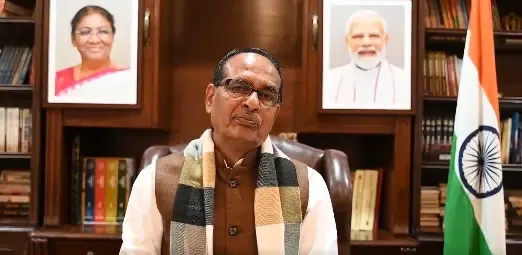
New Delhi, Dec 21 (NationPress) Union Minister of Agriculture and Farmers Welfare Shivraj Singh Chouhan on Sunday condemned opposition leaders for attempting to mislead the public regarding the government’s premier rural employment initiative.
"There is a deliberate effort to mislead the nation concerning MGNREGA, disseminating misinformation," he stated in a video message shared on social media.
“The reality is that the Viksit Bharat G RAM G Bill represents an advancement over MGNREGA. Workers now enjoy a legal guarantee of 125 days of employment instead of the previous 100 days. We have enhanced provisions for unemployment benefits, and if wages are delayed, additional compensation will be granted," emphasized the Union Minister.
He noted that the government has increased funding for the rural job scheme and aims to foster self-sufficient villages to realize the goal of a Viksit Bharat through Viksit Village.
Chouhan asserted that the Bill is advantageous for the impoverished and promotes development.
On Saturday, Prime Minister Narendra Modi strongly supported the recently enacted Viksit Bharat-Guarantee for Rozgar and Ajeevika Mission (Gramin) Bill, 2025 (VB-G RAM G), which supersedes the Mahatma Gandhi National Rural Employment Guarantee Act (MGNREGA).
In a post on his X handle, PM Modi shared and endorsed an article written by Chouhan, published in a major daily, titled "New job law is not a retreat from social protection. It aims to reform."
Encouraging citizens to read the article, the Prime Minister stated: "In this essential read, Union Minister Shivraj Singh Chouhan outlines how the VB-G RAM G Bill seeks to transform rural livelihoods by enhancing employment guarantees, incorporating local planning, balancing worker security with agricultural productivity, converging schemes, bolstering frontline capabilities, and modernizing governance. He stresses that the Bill does not represent a retreat from social protection but rather its renewal."
The VB-G RAM G Bill, which was approved by Parliament earlier this week amidst intense debates and opposition protests, raises the statutory guarantee of wage employment from 100 to 125 days for each rural household annually.
This legislation also introduces an unemployment allowance if work is not available within 15 days, eliminates certain disqualification provisions from the previous law, and emphasizes the creation of durable assets in areas such as water security, rural infrastructure, and climate resilience.
In his article, Minister Chouhan tackles significant criticisms of the Bill, contending that fears regarding the dilution of the scheme's demand-driven nature are baseless, as the legislation explicitly requires the government to provide a minimum of 125 days of work.
He asserted that the integration of technology, including biometric authentication and real-time monitoring, is intended as a mechanism for transparency rather than exclusion, backed by social audits and grievance redress systems.
As the scheme gears up for implementation in April 2026, the government views VB-G RAM G as a contemporary evolution aligned with the Viksit Bharat 2047 vision, aimed at delivering enforceable rights, accountability, and sustainable development.
Point of View
It is crucial for all stakeholders to engage in constructive dialogue rather than misinformation. The focus should remain on the welfare of rural communities and the sustainable development goals set forth for the future.
NationPress
21/12/2025
Frequently Asked Questions
What is the VB-G RAM G Bill?
The VB-G RAM G Bill is a recently enacted legislation that replaces MGNREGA, increasing the employment guarantee from 100 to 125 days per rural household annually.
How does the new bill benefit rural workers?
The new bill provides a legal guarantee of 125 days of work, strengthens provisions for unemployment allowances, and ensures additional compensation for delayed wages.
What is the goal of the Viksit Bharat initiative?
The Viksit Bharat initiative aims to develop self-sufficient villages and promote sustainable rural development by enhancing livelihoods and employment opportunities.
What technological advancements are included in the VB-G RAM G Bill?
The bill incorporates technology for transparency, including biometric authentication and real-time monitoring, supported by social audits and grievance redress mechanisms.
When is the VB-G RAM G scheme set to roll out?
The VB-G RAM G scheme is scheduled for rollout in April 2026.