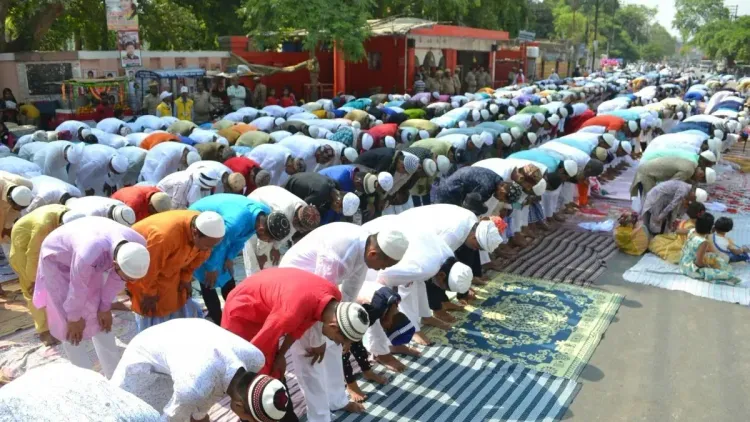
Bakrid namaz shifts to Brigade Parade Ground from Red Road in Kolkata
Synopsis
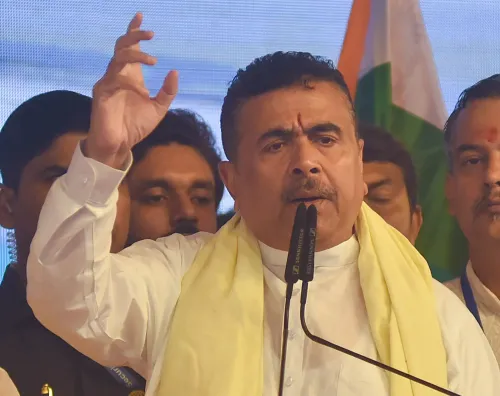
For the first time in decades, Bakrid namaz in Kolkata was not held on Red Road — a tradition that outlasted both the Left Front and TMC governments. The shift to Brigade Parade Ground reflects the new Suvendu Adhikari government's firm stance against religious gatherings on public roads, closing a chapter on a practice that was as much political symbolism as it was religious observance.
Key Takeaways
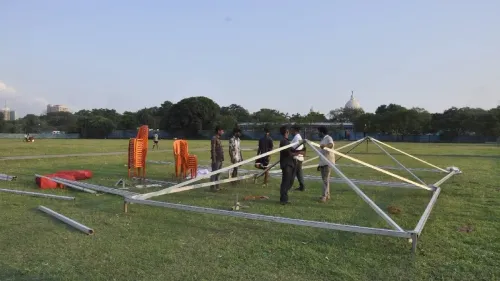
Bakrid namaz was held at Brigade Parade Ground in Kolkata on 29 May 2025 , replacing the traditional Red Road venue for the first time in years.
The change follows Chief Minister Suvendu Adhikari 's announcement that the new West Bengal government will not allow religious gatherings on public roads.
The Red Road tradition dated back to the Left Front era ( 1977 ) and continued under TMC rule until 2026 .
The Eastern Command of the Indian Army , which administers Red Road , had already asked the Khilafat Committee last year to find an alternative venue on security grounds.
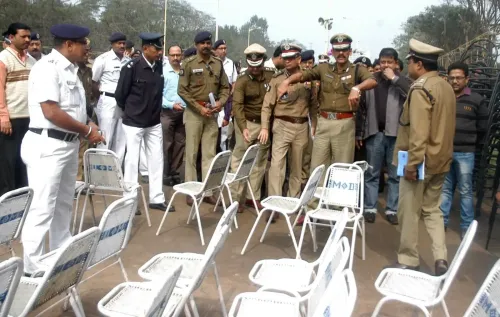
Kolkata Police deployed additional personnel and used drones for aerial surveillance across the city during the prayers.
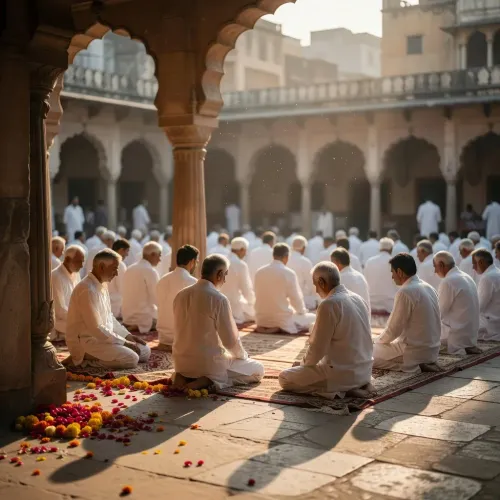
Kolkata saw a significant shift in Eid al-Adha (Bakrid) prayer arrangements on Thursday, 29 May 2025, with the congregational namaz held at Brigade Parade Ground instead of the traditional Red Road venue — marking the first such change in years. The move ends a decades-old practice that had been followed under both the Left Front and the All India Trinamool Congress (TMC) governments.
A Break from Decades of Tradition
For decades, Red Road in central Kolkata served as the site for congregational prayers twice a year — during Eid ul-Fitr and Eid al-Adha. The practice dates back to the Left Front era (1977–2011) and continued under TMC rule (2011–2026), during which former Chief Minister Mamata Banerjee regularly attended the Red Road gatherings. Critics had long argued that holding prayers on open roads caused significant traffic disruptions in central Kolkata.
New Government's Stance on Road Gatherings
After being sworn in as Chief Minister of West Bengal, Suvendu Adhikari announced that his government would not permit religious gatherings on public roads, citing inconvenience to commuters caused by traffic congestion. The shift of Bakrid namaz to Brigade Parade Ground on Thursday was a direct consequence of that policy. Notably, this year, no Bakrid namaz was reportedly organised on open roads anywhere in Kolkata.
Army's Role and Last Year's Precedent
The transition had been foreshadowed last year, when the office of the Eastern Command of the Indian Army — which holds administrative authority over Red Road — asked the Khilafat Committee to identify an alternative venue for Eid namaz, citing security concerns. Mamata Banerjee had at the time said she would attempt to persuade the Eastern Command to grant permission, but her government's defeat in the state polls ended that effort, paving the way for the Brigade Parade Ground arrangement.
Security Arrangements Across the City
Kolkata Police deployed extensive security across the city on the occasion, with additional personnel stationed near mosques and other sensitive locations. Drones were used for aerial surveillance, and security was particularly tight around Brigade Parade Ground and its adjacent areas to ensure law and order was maintained throughout the prayers.
What This Signals Going Forward
The shift is widely seen as a marker of the new political order in West Bengal, with the Adhikari government drawing a clear line on the use of public roads for religious events. Whether the Brigade Parade Ground arrangement becomes the permanent alternative or further changes follow will likely depend on negotiations between religious bodies, the Indian Army, and the state administration in the months ahead.
Point of View
Left and TMC alike, used as a visible gesture of minority outreach. Suvendu Adhikari's blanket ban on road gatherings for religious events is constitutionally defensible on public-order grounds, but it will inevitably be read through a communal lens in a politically charged West Bengal. The more telling detail is the Indian Army's own request last year for an alternative venue — suggesting the Red Road arrangement had become untenable on security grounds regardless of which party held power. The real question is whether Brigade Parade Ground becomes a dignified, well-resourced permanent venue, or a grudging fallback that signals exclusion rather than accommodation.
NationPress
26 Sept 2026
Frequently Asked Questions
Why was Bakrid namaz shifted from Red Road to Brigade Parade Ground in Kolkata?
The shift was the result of two converging factors: Chief Minister Suvendu Adhikari's policy banning religious gatherings on public roads, and the Indian Army's Eastern Command having already asked the Khilafat Committee last year to find an alternative to Red Road on security grounds. The new West Bengal government's stance made the Brigade Parade Ground the venue for the 2025 Bakrid namaz.
How long had Bakrid namaz been held on Red Road in Kolkata?
The Red Road tradition for Eid prayers dates back to the Left Front government's tenure beginning in 1977 and continued uninterrupted through the TMC's rule from 2011 to 2026 — spanning nearly five decades. Former Chief Minister Mamata Banerjee regularly attended these gatherings during her time in office.
What is Suvendu Adhikari's stated policy on religious gatherings on roads?
After taking oath as Chief Minister of West Bengal, Suvendu Adhikari announced that his government would not permit any religious gathering on public roads, citing the traffic congestion and public inconvenience such events cause. Thursday's Bakrid arrangements in Kolkata were the first visible implementation of that policy.
What role did the Indian Army play in the venue change?
The Eastern Command of the Indian Army, which holds administrative authority over Red Road, had last year requested the Khilafat Committee to arrange an alternative venue for Eid namaz, citing security concerns. That request, combined with the change in state government, led to Brigade Parade Ground being used this year.
What security measures were in place for Bakrid in Kolkata this year?
Kolkata Police deployed additional personnel across the city, with particular focus on Brigade Parade Ground and areas around mosques. Drones were used for aerial surveillance to maintain law and order throughout the Bakrid prayers.