Mamata Banerjee Extends Eid-ul-Adha Greetings to All
Synopsis
West Bengal Chief Minister Mamata Banerjee extended heartfelt Eid-ul-Adha greetings on 28 May 2026, wishing hope, peace, and happiness to all. The message reflects her consistent practice of public interfaith outreach, a hallmark of TMC governance in a religiously diverse state.
Key Takeaways
Mamata Banerjee posted Eid-ul-Adha greetings on 28 May 2026 via her official X account.
She wished 'hope, peace and happiness to one and all' on the occasion.
West Bengal has a large Muslim population, making interfaith messaging politically and socially significant.
Banerjee has issued festival greetings across religious communities consistently since taking office in 2011 .
The message aligns with the All India Trinamool Congress party's emphasis on communal harmony and minority engagement.
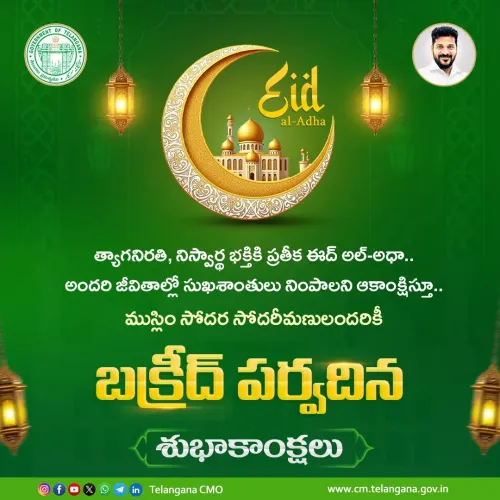
West Bengal Chief Minister Mamata Banerjee extended her greetings on the occasion of Eid-ul-Adha on Thursday, 28 May 2026, wishing hope, peace, and happiness to people across communities.
Context
In her post on X, Banerjee wrote: 'Heartfelt greetings on Eid-ul-Adha. May this occasion bring hope, peace and happiness to one and all.' The message was addressed broadly, reflecting an inclusive tone characteristic of her public communications on major religious occasions.
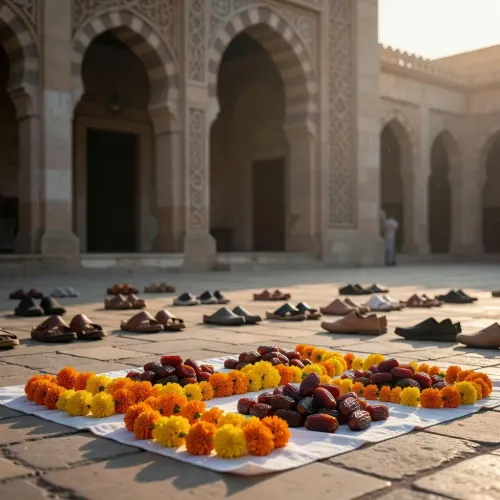
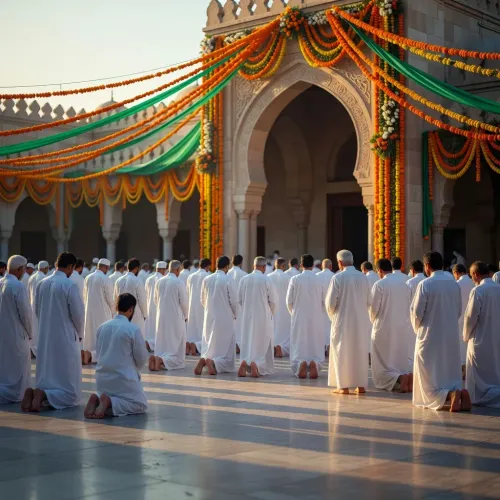
Eid-ul-Adha, the Islamic festival of sacrifice, is observed by Muslims worldwide through prayers, animal sacrifice, and acts of charity. It is one of the most significant festivals on the Islamic calendar and is widely celebrated across West Bengal, which has a substantial Muslim population.
Policy Backdrop
Since assuming office as Chief Minister in 2011, Banerjee has consistently issued public greetings on major religious festivals — including Eid, Durga Puja, Christmas, and others — as part of a sustained effort to signal inclusive governance in a religiously diverse state.
This practice aligns with the All India Trinamool Congress (TMC) party's broader emphasis on communal harmony and minority outreach, which has been a defining feature of the party's political identity since its founding. West Bengal's electoral landscape, where Muslim voters constitute a significant share of the electorate, lends additional political weight to such gestures.
Stakeholders and Impact
The message is directed at West Bengal's Muslim community as well as residents across the state and the country at large. Festival greetings from sitting chief ministers carry symbolic significance, reinforcing a government's stated commitment to secular and inclusive values.
The TMC's engagement with religious minorities through consistent public communication has been noted as part of a wider strategy that combines symbolic gestures with targeted welfare outreach. Opposition parties in the state have at times characterised such messaging as electoral positioning, while the ruling dispensation frames it as a reflection of constitutional values of pluralism.
What's Next
Political observers will watch for any follow-up announcements from the West Bengal government regarding welfare schemes or community programmes tied to the festival season. As state-level electoral cycles and national debates on secularism continue to evolve, Banerjee's pattern of interfaith outreach is likely to remain a consistent feature of TMC's public communication strategy.
Point of View
Such messages carry weight beyond the ceremonial. The consistency of this outreach — spanning over a decade and across all major faiths — suggests a deliberate governance philosophy of visible pluralism. Whether viewed as principled secularism or strategic minority politics, the practice has demonstrably shaped TMC's identity as a party of inclusive symbolism.
NationPress
11 Oct 2026
Frequently Asked Questions
Why did Mamata Banerjee post Eid-ul-Adha greetings?
Mamata Banerjee posted Eid-ul-Adha greetings as part of her consistent practice of publicly acknowledging major religious festivals, reflecting her government's stated commitment to inclusive and secular governance in West Bengal.
What is Eid-ul-Adha?
Eid-ul-Adha is the Islamic festival of sacrifice, observed by Muslims through prayers, animal sacrifice, and acts of charity. It is one of the two most important festivals in Islam.
Does Mamata Banerjee regularly greet people on religious festivals?
Yes, since becoming Chief Minister of West Bengal in 2011, Mamata Banerjee has consistently issued public greetings on major religious festivals across faiths, including Eid, Durga Puja, and Christmas.
What is the Muslim population in West Bengal?
West Bengal has one of the largest Muslim populations among Indian states, making interfaith outreach a significant aspect of state-level politics and governance.
What party does Mamata Banerjee lead?
Mamata Banerjee is the founder-chairperson of the All India Trinamool Congress (TMC), the ruling party in West Bengal.