Gujarat tribal village Balethi to become forest conservation Centre of Excellence
Synopsis
Balethi, a tribal village in Gujarat's Surat district, reversed near-total forest loss caused by three 1980s droughts through a community patrol system and cooperative model — and it's now inspiring a state-wide rollout. A Centre of Excellence in the village will train 7,500 JFM members across Gujarat, turning one village's survival story into a policy template for 2,500 committees.
Key Takeaways
Balethi village in Mandvi taluka, Surat district is being developed as a Centre of Excellence for community forest conservation.
Around 7,500 members of Joint Forest Management committees will be trained over five years .
The village revived its forests after three drought years between 1986 and 1988 , using 15 patrolling teams and 162 biogas plants .
The model earned the Indira Priyadarshini Vrikshamitra Award in 1998 and a cash prize of ₹50,000 .
Economic gains include monthly milk output of 12,000–13,000 litres , sevenfold increase in fodder, and bamboo revenue exceeding ₹17.7 lakh .
The Balethi model has reportedly inspired more than 65 villages in Mandvi taluka to adopt forest protection.
A tribal village in Surat district, Gujarat, that reversed near-total deforestation caused by three consecutive droughts in the 1980s, is set to become a national model for community-led forest restoration. Balethi village in Mandvi taluka has been selected as the site for a Centre of Excellence in forest conservation, with approximately 7,500 members of Joint Forest Management (JFM) committees expected to receive structured training over the next five years.
How the Centre of Excellence Will Work
The proposed centre will be housed in Balethi's historic school building, following a joint proposal submitted by village residents and the state Forest Department. Once operational, it aims to extend Balethi's forest regeneration model to 2,500 of Gujarat's 3,414 JFM committees statewide. Officials confirmed the project is being advanced under the guidance of Forest and Environment Minister Arjun Modhwadia and Minister of State Pravin Mali.
The Story Behind Balethi's Forest Revival
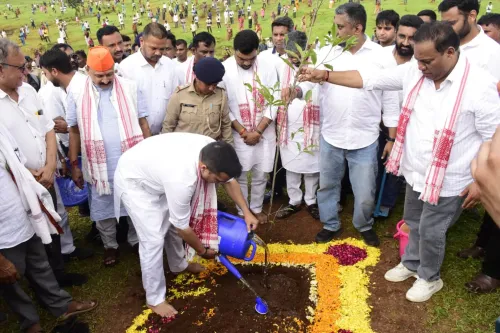
Balethi's transformation began between 1986 and 1988, when three successive drought years stripped the surrounding forests bare. Village elders Jagudada and Kishor Chaudhary mobilised residents to collectively take responsibility for forest protection and regeneration — a grassroots response that predated formal JFM policy frameworks in India.
The community formed 15 patrolling teams, with one member drawn from every household to monitor and guard the forest. Forest produce — including grass, timber, and bamboo — was distributed equally among members, directly linking conservation outcomes to household livelihoods. The village also worked to reduce pressure on the forest by building alternatives: residents constructed 162 biogas plants and four check dams.
The effort was formalised when the initiative was registered as the Forest Regeneration and Village Development Cooperative Society Limited, which secured a Certificate of Rights covering 229 hectares of forest land. Conservation is today being carried forward by Vinaybhai Chaudhary, president of the Balethi Forest Regeneration and Village Development Committee.
National Recognition and Economic Gains
Balethi's model drew national attention in 1998, when the village received the Indira Priyadarshini Vrikshamitra Award in New Delhi from the then Union Minister of Forests, along with a cash prize of ₹50,000 and a certificate of appreciation.
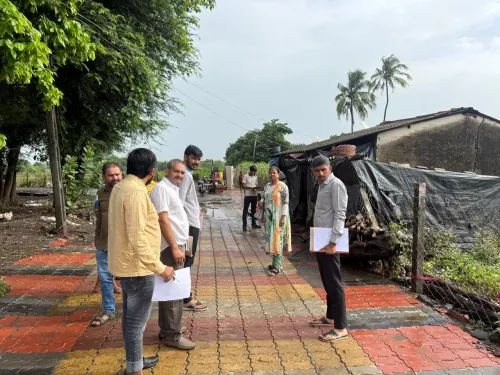
The forest revival has delivered measurable economic dividends, according to the state government. Monthly milk production in the village rose to roughly 12,000–13,000 litres, fodder production increased sevenfold, and bamboo sales generated revenue exceeding ₹17.7 lakh. The Forest Department has separately completed infrastructure works worth more than ₹59.4 lakh in the village, covering drinking water pipelines, roads, and sewing classes.
A Model That Has Spread to 65 Villages
Balethi's approach has reportedly inspired more than 65 villages across Mandvi taluka, including Amarkui and Vankal, to adopt community-based forest protection. The proposed Centre of Excellence seeks to systematise what until now has been organic replication — giving Gujarat's broader JFM network a formal learning infrastructure rooted in a proven, lived experiment.
The initiative signals a broader policy shift toward recognising community-led conservation as a replicable template, not merely an isolated success story.
Point of View
Biogas plants, equitable produce sharing — outlasted many government-designed schemes. The real question now is whether formalising it as a Centre of Excellence will preserve what made it work: genuine local ownership. Institutional replication often smooths away the rough edges — the social contracts, the peer accountability — that actually drive behaviour change. Gujarat's JFM network is large, but scale and depth rarely travel together.
NationPress
19 Oct 2026
Frequently Asked Questions
What is the Balethi Centre of Excellence for forest conservation?
It is a proposed training centre in Balethi village, Mandvi taluka, Surat district, Gujarat, to be housed in the village's historic school building. The centre will train approximately 7,500 Joint Forest Management committee members over five years, spreading Balethi's community-led forest regeneration model to 2,500 of Gujarat's 3,414 JFM committees.
How did Balethi village revive its forests?
Following three consecutive droughts between 1986 and 1988 that devastated nearby forests, village elders Jagudada and Kishor Chaudhary organised residents into 15 patrolling teams — one member per household — to protect and regenerate the forest. The community also built 162 biogas plants and four check dams to reduce dependence on forest resources, and formalised the effort as a registered cooperative society covering 229 hectares.
What national recognition has Balethi received?
Balethi was awarded the Indira Priyadarshini Vrikshamitra Award in 1998 by the then Union Minister of Forests in New Delhi, along with a cash prize of ₹50,000 and a certificate of appreciation.
What economic benefits has forest revival brought to Balethi?
Monthly milk production rose to around 12,000–13,000 litres, fodder production increased sevenfold, and bamboo sales generated revenue exceeding ₹17.7 lakh. The Forest Department has also completed infrastructure works worth more than ₹59.4 lakh in the village, including drinking water pipelines and roads.
How many villages has the Balethi model inspired?
The Balethi model has reportedly inspired more than 65 villages in Mandvi taluka, including Amarkui and Vankal, to adopt community-based forest protection practices.