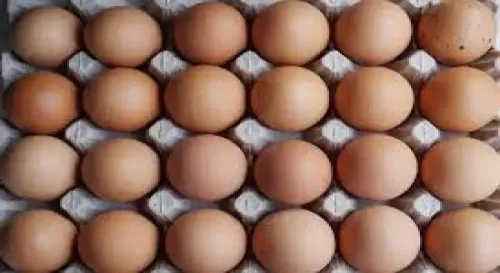
Bangladesh broken egg demand surges in Sirajganj as egg prices spike
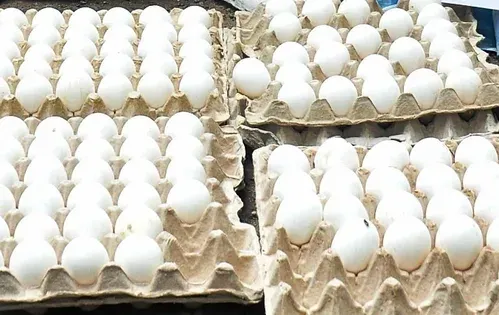
Synopsis
In Raiganj, Bangladesh, cracked eggs — once thrown away or eaten by shopkeepers — are now a hot commodity. As whole-egg prices climb to Tk 48–50, low-income buyers are snapping up broken shells for Tk 8 each, inadvertently creating a new price tier in the local egg market. It is a small story with a sharp economic edge.
Key Takeaways
Demand for broken-shell eggs has surged in Raiganj upazila , Sirajganj district , Bangladesh , according to Prothom Alo .
Broken egg prices have risen from Tk 5–6 to Tk 8 per piece as demand climbs.
Whole chicken eggs now cost Tk 48–50 for farm-bred variety, up from Tk 36–38 for four pieces.
One Raiganj shopkeeper's daily sales dropped from 3,000–3,500 eggs to about 2,000 eggs following the price rise.
Low-income buyers, including daily labourers and families with school-going children, are driving the shift to broken eggs for affordable nutrition.
Traders are now setting aside cracked stock separately, adding Tk 2–3 per egg to its price.
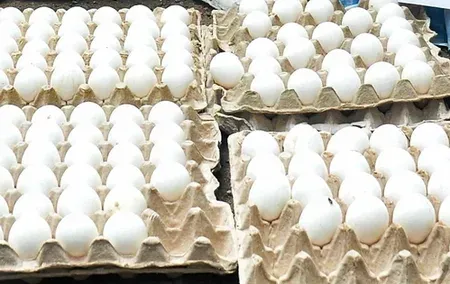
In an unusual economic signal from Bangladesh, buyers in the Raiganj upazila of Sirajganj district in Rajshahi division have been purchasing eggs with cracked or broken shells in growing numbers, according to a report by Dhaka's Bengali-language daily Prothom Alo published on Tuesday, 19 May. The shift, driven by a sharp rise in whole-egg prices, has turned a product once discarded or consumed by sellers into a sought-after budget alternative.
How Prices Have Shifted
Broken eggs, which previously traded at Bangladesh Taka 5–6 per piece, have climbed to Tk 8 each, according to the report. Meanwhile, the price of four whole chicken eggs has risen from Tk 36–38 to approximately Tk 50. Farm-bred chicken eggs are currently being sold at Tk 48–50, duck eggs at Tk 60–65, and 'golden' chicken eggs also at Tk 60–65 across various markets in Raiganj upazila, the newspaper noted.
Impact on Egg Sales
The price surge has visibly dented overall demand. One shopkeeper in one of Raiganj town's largest markets told Prothom Alo that his daily egg sales have fallen from 3,000–3,500 pieces to roughly 2,000 pieces. Traders have responded by setting aside cracked stock separately for budget-conscious buyers, reportedly adding Tk 2–3 to each broken egg's price.
What Buyers Are Saying
'I'm buying these since the price of (whole) eggs is high. It saves us some money,' an unnamed buyer told the newspaper. Another said: 'I have a daughter in school. If the (remaining in a broken) egg is fried with rice, she can have a meal. The price of good eggs is high, so I buy broken ones.' A labourer added: 'I have never bought broken eggs before. These now cost almost the same as it was earlier for proper eggs.'
Traders Puzzled by Egg Price Spike
Egg trader Jahangir Alam told Prothom Alo: 'We also don't understand why the price of eggs has suddenly increased. Sales have decreased due to this. Many people are now asking for broken eggs.' A school teacher cited in the report noted that eggs retain full nutritional value regardless of shell condition, which reportedly reinforces their appeal among low-income households seeking affordable protein. In some cases, customers with no broken eggs available have reportedly asked sellers to keep damaged stock aside for later collection.
Broader Context
The development reflects a wider pattern of food-price stress in parts of Bangladesh, where low-income households are adapting purchasing behaviour to manage rising costs of staple proteins. Notably, what was once considered waste — broken eggs typically discarded or eaten by shopkeepers' families — has now acquired market value, illustrating how price pressure can reshape consumer behaviour at the margins. Whether the spike in whole-egg prices is seasonal, supply-driven, or linked to broader inflationary trends was not addressed in the report.
Point of View
It is a reliable indicator that protein affordability has crossed a stress threshold for low-income households. Bangladesh has faced persistent food inflation pressure, and the egg market in Sirajganj is behaving like a canary in that coal mine. What the report does not answer — and what matters — is whether the whole-egg price spike is localised, seasonal, or part of a broader supply disruption. That gap is where the real story lies.
NationPress
19 Sept 2026
Frequently Asked Questions
Why are people in Bangladesh buying broken eggs?
Buyers in Raiganj upazila, Sirajganj, are purchasing broken-shell eggs because whole eggs have become significantly more expensive, with farm-bred chicken eggs now selling at Tk 48–50. Broken eggs offer the same nutritional value at a lower price, making them attractive to low-income households, according to a Prothom Alo report.
How much do broken eggs cost in Sirajganj now?
Broken eggs in Raiganj upazila are now selling for Tk 8 each, up from Tk 5–6 previously. Traders have raised prices by Tk 2–3 per piece in response to rising demand from budget-conscious buyers.
What are current egg prices in Raiganj, Bangladesh?
According to the Prothom Alo report, farm-bred chicken eggs are selling at Tk 48–50, duck eggs at Tk 60–65, and 'golden' chicken eggs at Tk 60–65 across Raiganj upazila markets. Four whole chicken eggs that earlier cost Tk 36–38 now cost around Tk 50.
Who is driving demand for broken eggs in Bangladesh?
Low-income groups — including daily labourers and families with school-going children — are the primary buyers, according to the report. Buyers cited cost savings and the nutritional equivalence of broken eggs as reasons for the switch.
Have egg traders explained the price rise?
Egg trader Jahangir Alam told Prothom Alo: 'We also don't understand why the price of eggs has suddenly increased.' The report did not identify a specific cause for the overall egg price spike, and traders described the increase as sudden and unexplained.