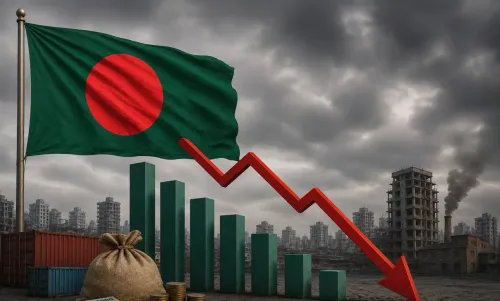
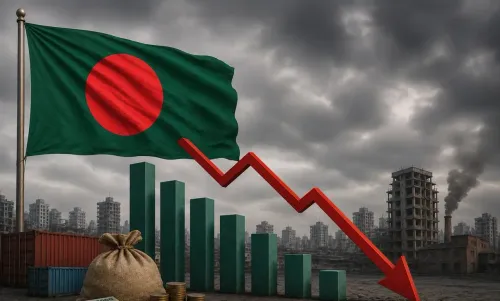
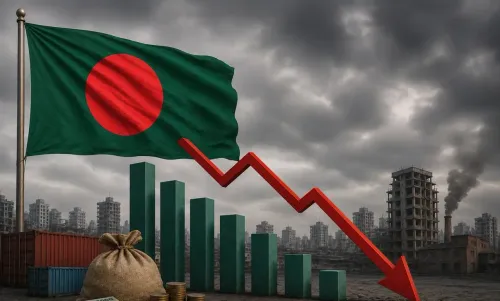
Bangladesh inflation set to rise in winter on oil prices, farm costs
Synopsis
Bangladesh is heading into winter with a perfect storm of cost-push pressures: global oil prices have nearly doubled farm input costs, rural indebtedness has hit 51%, and GDP growth has slowed to 3.4% — far below the government's 6.5% target. Economists warn that vulnerable households may be forced to sell assets or borrow just to eat, and that the official poverty count is missing them entirely.
Key Takeaways
Bangladesh faces a fresh inflation wave this winter driven by higher global oil prices and rising agricultural input costs, with production costs reportedly nearly doubling .
Rural indebtedness stands at 51 per cent , compared with 32 per cent in metropolitan cities and 40 per cent in other urban areas.
AKM Enamul Haque of BIDS warned that policymakers should not assume economic conditions will improve soon and called for a review of the public food distribution system.
Sayema Haque Bidisha of the University of Dhaka urged minimum-wage coverage to extend beyond the garment sector to informal workers.
World Bank data shows Bangladesh's growth slowed to 3.4 per cent in FY2025-26 and is expected to remain flat in FY27 , well below the 6.5 per cent government target.
Economists warn vulnerable households may sell assets including gold and jewellery or take on debt to cover basic expenses.
Bangladesh is facing a renewed inflation threat this winter, as higher global oil prices and surging agricultural production costs are expected to push up food prices, according to a new report. Economists cited in the report have urged stronger social protection frameworks, improved market oversight and more equitable growth distribution to shield vulnerable households from a fresh wave of rising living costs.
What Is Driving the Concern
Rising global oil prices have sharply increased the cost of fertilisers, pesticides and other farm inputs, with production costs reportedly nearly doubling, according to AKM Enamul Haque, Director General of the Bangladesh Institute of Development Studies (BIDS). Speaking at a discussion organised by a civil society platform, Haque said policymakers must not assume economic conditions will stabilise soon and should brace for further deterioration.
He called for a comprehensive review of the public food distribution system, particularly to address seasonal income uncertainty in rural areas. Haque also flagged structural market problems, cautioning that a price commission alone would be ineffective unless supply chains functioned properly.
Rural Households Bearing the Brunt
Citing official data, Haque noted that indebtedness has reached 51 per cent in rural areas, significantly higher than 32 per cent in metropolitan cities and 40 per cent in other urban areas. Economists warned that vulnerable households may resort to selling assets — including gold and jewellery — or borrowing money to meet daily expenses, even as their hardship often goes unrecorded in official poverty figures.
'If our system is too focused on urban areas, we may fail to reach rural households facing greater income uncertainty and financial pressure,' Haque reportedly said.
Inclusive Growth and Wage Protection
Sayema Haque Bidisha, Professor of Economics at the University of Dhaka, argued that economic growth must translate into reduced inequality to be meaningful. 'If growth does not reduce inequality and is not inclusive, it cannot ensure food security or deliver its benefits to ordinary people,' she said. She also called for minimum-wage arrangements to extend beyond the garment sector to cover workers in the informal economy — a large and structurally exposed segment of Bangladesh's labour force.
Broader Economic Pressures
The inflation warning comes alongside a separate report describing Bangladesh's economy as confronting three interconnected crises: slowing growth, a widening trade deficit, and severe banking-sector weaknesses. According to World Bank data, Bangladesh's economic growth slowed to 3.4 per cent in fiscal year 2025-26 and is expected to remain flat in FY27 — well below the government's target of 6.5 per cent. This combination of fiscal fragility and cost-push inflation pressures presents a compounding challenge for policymakers heading into the winter months.
What Needs to Happen Next
Economists are calling for urgent supply-chain reforms, expanded social protection nets and a reassessment of how food distribution reaches rural communities. With global energy markets remaining volatile and domestic agricultural costs elevated, the window to act before food price pressures intensify is narrowing.
Point of View
A trade deficit and a fragile banking sector. The 51% rural indebtedness figure signals that the shock-absorber capacity of the most exposed households is already near exhaustion. The gap between the government's 6.5% growth target and the World Bank's 3.4% actual — with flat growth projected for FY27 — points to a credibility problem for fiscal planning. If food prices surge this winter while formal safety nets remain urban-biased, a significant portion of the rural poor will fall through without appearing in headline poverty statistics. That invisibility is arguably the most dangerous risk here.
NationPress
31 Oct 2026
Frequently Asked Questions
Why is Bangladesh facing fresh inflation risks this winter?
Bangladesh faces renewed inflation pressure this winter because rising global oil prices have sharply increased the cost of farm inputs such as fertilisers and pesticides, reportedly nearly doubling agricultural production costs. This is expected to push up food prices at a time when household finances are already strained.
How indebted are rural households in Bangladesh?
According to official data cited by BIDS Director General AKM Enamul Haque, indebtedness in rural Bangladesh stands at 51 per cent — significantly higher than 32 per cent in metropolitan cities and 40 per cent in other urban areas. Economists warn that this leaves rural households with little buffer against rising food costs.
What is Bangladesh's current economic growth rate?
World Bank data shows Bangladesh's economy grew at just 3.4 per cent in fiscal year 2025-26, well below the government's target of 6.5 per cent, and growth is expected to remain flat in FY27. The country is also contending with a widening trade deficit and banking-sector weaknesses.
What do economists recommend to protect vulnerable households?
Economists are calling for stronger social protection nets, improved market oversight, supply-chain reforms, and a review of the public food distribution system to ensure it reaches rural households. They also urge minimum-wage frameworks to be extended beyond the garment sector to informal workers.
Who is most at risk from the expected food price rise in Bangladesh?
Rural households with seasonal income uncertainty are considered most at risk, particularly those already carrying high debt loads. Economists warn these households may be forced to sell assets such as gold and jewellery or borrow money to cover basic daily expenses, and that their hardship often goes uncaptured in official poverty data.