Bangladesh middle class squeezed as inflation hits 9.21%, energy bills surge
Synopsis
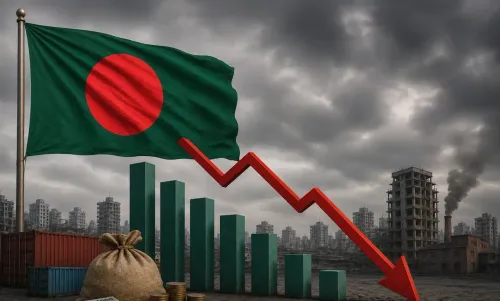
Bangladesh's middle class is being hollowed out — not by a single shock, but by a slow accumulation of pressures. With headline inflation at 9.21%, energy bills defying consumption logic, and food prices up sharply across meat, fish, and vegetables, the financial cushion that defined middle-class life in Dhaka is eroding faster than incomes can recover.
Key Takeaways
Bangladesh Bank reported average headline inflation at 9.21 per cent in the fourth quarter of fiscal year 2025-26 , driven primarily by energy costs.
Food inflation rose to 8.7 per cent in June , up from 7.71 per cent in December and 8.24 per cent in March .
The government raised fuel, power, and LPG prices following the Iran war that began in February .
Dhaka resident Rezwana Rahman saw her electricity bill exceed Tk 3,000 despite lower consumption than the previous month.
The Centre for Policy Dialogue (CPD) had warned in June that higher power tariffs would worsen Bangladesh's inflationary environment.
Middle-class families are cutting discretionary spending, deferring healthcare and education, and borrowing to maintain basic living standards.
Bangladesh's middle-class households are facing a deepening cost-of-living crisis, as persistently high inflation, surging energy tariffs, and stagnant real wages steadily erode purchasing power and household savings, according to a report by The Daily Star. For families that once managed routine expenses while setting aside modest savings each month, that financial buffer is rapidly disappearing.
The Strain on Household Budgets
The squeeze is forcing many families to cut discretionary spending, delay healthcare and education outlays, trade down to cheaper goods, or take on debt simply to sustain basic living standards. The pattern reflects a broader structural shift: households that once sat comfortably above subsistence are now navigating month-to-month financial stress.
The experience of Rezwana Rahman, a resident of Dhaka's Mohammadpur area, illustrates the pressure. After a relatively cooler July — during which her family used their lone air conditioner sparingly — she expected the electricity bill for her two-bedroom flat to stay below Tk 2,000. Instead, the bill came in above Tk 3,000.
Notably, the spike occurred despite lower actual consumption compared with May, when a fortnight-long gas outage had compelled the family to run both an air conditioner and an induction stove simultaneously — and yet that month's bill had been around Tk 2,000. The contradiction left Rahman struggling to understand how her household budget could absorb further increases in essential costs.
Energy Price Hikes Add to the Burden
The electricity bill anomaly is not an isolated incident. Following the Iran war that began in February, the government raised prices of fuel, power, and liquefied petroleum gas (LPG), compounding pressure on households already contending with elevated food and transport costs.
The Centre for Policy Dialogue (CPD) had flagged the risk as early as June, warning that higher power tariffs risked worsening Bangladesh's already severe inflationary environment. Those warnings have since been borne out by official data.
Inflation Data Confirms the Pressure
In its quarterly Inflation Dynamics in Bangladesh report for the fourth quarter of fiscal year 2025-26, Bangladesh Bank identified energy inflation as the primary driver of average headline inflation, which rose to 9.21 per cent. The central bank's findings validate what middle-class households have been experiencing on the ground.
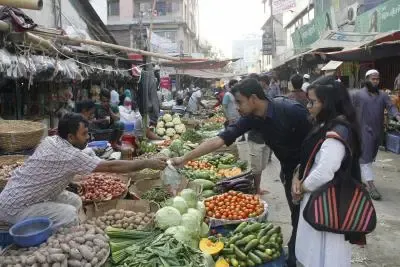
Food prices have compounded the crisis. Food inflation accelerated to 8.7 per cent in June, up from 7.71 per cent in December last year and 8.24 per cent in March. The rise was driven by sharp increases in prices of meat, fish, fruits, vegetables, and spices, according to the report.
Who Is Most Affected
The middle class — broadly defined as salaried urban households that depend on fixed incomes — bears a disproportionate share of this burden. Unlike the very poor, they typically do not qualify for government subsidy programmes; unlike the affluent, they lack the financial reserves to absorb sustained price shocks. This structural vulnerability means that prolonged inflation effectively hollows out the middle-income segment over time.
With energy tariffs unlikely to reverse in the near term and food price pressures persisting into the current quarter, Bangladesh's middle-class households face continued financial strain through the remainder of 2025-26.
Point of View
Imported food price pressures, and a central bank still catching up to the inflation curve is structural, not cyclical. The middle class is the least-protected cohort in this scenario: too affluent for subsidies, too income-constrained to self-insure. If real wages continue to lag headline inflation through the remainder of FY26, the consumption-led growth model that Bangladesh has relied on faces a genuine demand-side reckoning.
NationPress
1 Oct 2026
Frequently Asked Questions
Why is Bangladesh's middle class facing a financial crisis in 2025?
Bangladesh's middle-class households are being squeezed by a combination of high headline inflation at 9.21 per cent, government-imposed energy price hikes following the Iran war, and rising food prices — all against a backdrop of stagnant real incomes. The result is that families who once saved each month are now cutting spending or borrowing to cover basic costs.
What is driving inflation in Bangladesh in 2025-26?
According to Bangladesh Bank's quarterly Inflation Dynamics report for the fourth quarter of fiscal year 2025-26, energy inflation is the primary driver of the 9.21 per cent headline inflation figure. Food inflation has also accelerated, reaching 8.7 per cent in June, pushed up by rising prices of meat, fish, fruits, vegetables, and spices.
How have energy price hikes affected Bangladeshi households?
Following the Iran war that began in February, the government raised prices of fuel, power, and LPG, adding to household costs already elevated by food and transport inflation. Some residents, like Dhaka's Rezwana Rahman, have seen electricity bills rise despite lower actual consumption, suggesting tariff structures are amplifying the impact beyond usage levels.
What did the Centre for Policy Dialogue warn about Bangladesh's inflation?
The Centre for Policy Dialogue (CPD) warned in June that higher power tariffs would worsen Bangladesh's already severe inflationary environment. That warning has since been confirmed by Bangladesh Bank data showing energy as the leading driver of headline inflation in the fourth quarter of FY2025-26.
Who is most vulnerable to Bangladesh's cost-of-living crisis?
Middle-class salaried households in urban areas like Dhaka are among the most vulnerable — they do not qualify for government subsidy programmes available to lower-income groups, yet lack the financial reserves to absorb sustained price shocks. This structural gap is forcing many to delay healthcare, cut education spending, or take on debt.