Installments become Pakistan's middle-class survival strategy amid inflation
Synopsis
Pakistan's middle class isn't just struggling — it's restructuring its finances around debt. From air-conditioners to Qurbani animals, installment plans and BNPL schemes have quietly become the default survival mechanism for urban households where salaries run out before the month does.
Key Takeaways
Pakistan's urban middle class is increasingly dependent on installment plans and Buy Now, Pay Later (BNPL) schemes as inflation erodes savings.
Goods financed in monthly tranches now include air-conditioners, phones, laptops, motorcycles, furniture , and even Qurbani animals .
Karachi student Areeb Javed says a phone priced at Rs 80,000 may cost more by the time traditional saving allows a purchase — making installments the rational choice.
Freelancer Yousuf Ahmed in Lahore uses credit plans as a buffer against irregular client payments.
Economists warn the BNPL surge reflects structurally shrinking financial resilience, not just a behavioural shift in spending.
Pakistan's urban middle class is increasingly turning to installment plans and Buy Now, Pay Later (BNPL) schemes as a financial lifeline, with stagnant wages and persistent inflation making upfront purchases feel out of reach for millions of households, according to reports from Karachi and Lahore.
A Household Under Pressure
In Karachi, a homemaker named Hina describes her family's monthly routine as a budgeting battle. Despite promising themselves an air-conditioner last year, rising school fees, fuel costs, and grocery bills quietly erased their savings before a single rupee could be set aside. Her husband now browses AC prices on shopping apps, comparing installment options the family is still unsure they can afford.
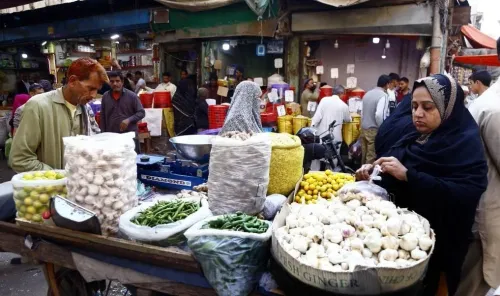
The pattern is familiar across Pakistan's salaried households: salaries arrive, bills are cleared, and within days families begin calculating how to stretch whatever remains. By the final week of the month, many resort to borrowing from friends, deferring payments, or running credit tabs at neighbourhood kiryana stores.
What People Are Buying on Credit
The range of goods being financed in monthly tranches has expanded well beyond electronics. Air-conditioners, mobile phones, laptops, motorcycles, furniture, footwear, and even Qurbani animals are now routinely purchased through instalment arrangements. For many buyers, the smaller monthly outgo feels psychologically manageable even when the total cost is higher.
Areeb Javed, a university student in Karachi, said he has bought his phone, sneakers, and gaming accessories through monthly payment plans. 'If I try to save, I end up using the money,' he said. 'Installments force me to be disciplined.' He also noted that inflation can outpace saving: 'If I save for months for a phone worth Rs 80,000, the price may increase again by the time I can buy it.'
Irregular Incomes Drive the Shift
The trend is not limited to salaried workers. Yousuf Ahmed, a web designer in Lahore, said that delayed client payments make large upfront purchases feel financially risky. For freelancers and gig workers with uneven cash flow, instalment plans have become a buffer against income uncertainty rather than a consumption luxury.
What Economists Say
Economists cited in reports argue that the rapid spread of BNPL services signals something deeper than a shift in shopping habits. It reflects the shrinking financial resilience of Pakistan's urban middle class, where stagnant incomes and sustained inflation are steadily eroding the capacity to save. Critics argue that while installment schemes offer short-term relief, they can also lock households into recurring debt obligations that leave little room for genuine financial recovery.
The Broader Picture
Pakistan has faced multi-year inflationary pressure, with consumer prices rising sharply across food, energy, and transport — the three categories that dominate household budgets. The normalisation of credit-based consumption among the middle class, analysts suggest, is a structural indicator of how far real purchasing power has declined. Whether BNPL platforms expand access or deepen financial fragility will depend on how regulators and lenders manage default risk going forward.
Point of View
It means the buffer between income and necessity has effectively disappeared. Pakistan's policymakers have repeatedly targeted inflation without addressing the wage stagnation that makes every price rise disproportionately painful for the salaried middle class. The risk now is that a generation of urban households is building its financial life on revolving short-term credit, which works until it doesn't — and when it doesn't, the defaults will be diffuse, household-level, and invisible to aggregate data until the damage is done.
NationPress
16 Oct 2026
Frequently Asked Questions
Why are Pakistanis increasingly using installment plans for everyday purchases?
Stagnant wages and persistent inflation have made upfront purchases unaffordable for much of Pakistan's urban middle class. Installment plans and BNPL schemes allow households to spread costs over months, making items like air-conditioners, phones, and furniture feel financially accessible even when savings are depleted.
What kinds of goods are being bought on installments in Pakistan?
The range spans electronics such as mobile phones and laptops, home appliances like air-conditioners, motorcycles, furniture, footwear, and even Qurbani animals for religious observance. Essentially, any significant household expenditure is now a candidate for monthly financing.
Who is most affected by this financial squeeze?
Pakistan's salaried urban middle class bears the brunt, but freelancers and gig workers with irregular incomes are equally exposed. For both groups, delayed or uncertain income combined with rising prices makes large upfront spending feel genuinely risky.
What do economists say about the rise of BNPL in Pakistan?
Economists argue the trend signals shrinking financial resilience rather than a simple shift in consumer behaviour. Stagnant incomes and sustained inflation are eroding the middle class's ability to save, and critics warn that widespread reliance on short-term credit could deepen household debt burdens over time.
How does inflation make traditional saving impractical for Pakistani consumers?
As Karachi student Areeb Javed explained, saving for months toward a purchase worth Rs 80,000 carries the risk that the price will rise further before the target is reached. In a high-inflation environment, installments effectively lock in today's price, making credit a hedge against further cost increases.