Barak Valley Set for a Tight Race in Assam Elections on April 9
Synopsis
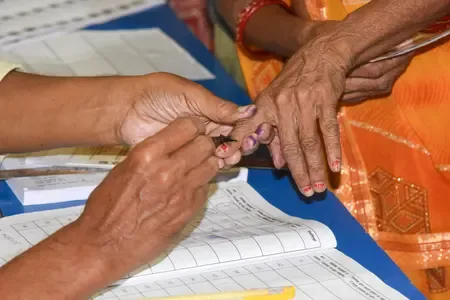
Discover the brewing political tension in Assam’s Barak Valley as the state gears up for elections on April 9. With the BJP aiming for a significant seat gain, the region is poised for a competitive showdown. Who will emerge victorious? Find out what’s at stake.
Key Takeaways
Barak Valley is crucial for the BJP's electoral strategy in Assam.
The BJP aims for significant gains in the upcoming assembly elections.
Opposition parties are gearing up to challenge the ruling party's dominance.
The political dynamics in Barak Valley may impact the overall results.
Final results will be revealed on May 4, 2024.
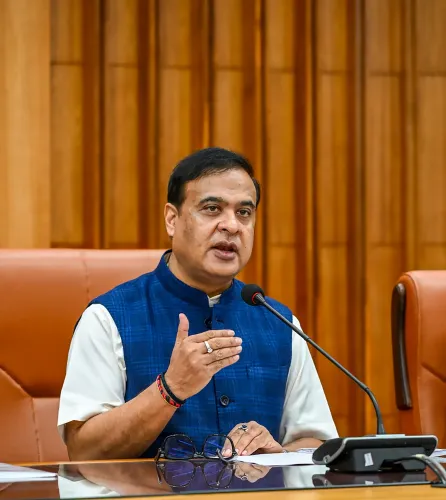
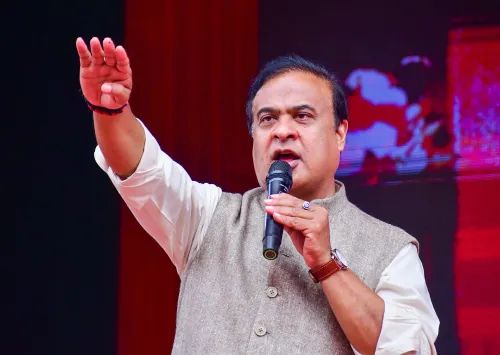
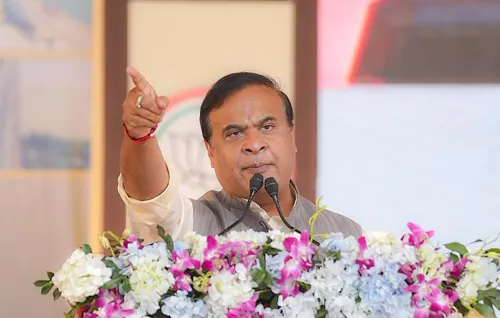
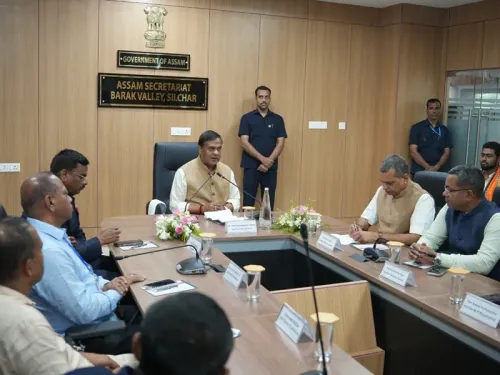
New Delhi, April 4 (NationPress) Assam's Chief Minister Himanta Biswa Sarma has highlighted the significance of Barak Valley in the state's electoral landscape, emphasizing its crucial role in the ruling Bharatiya Janata Party (BJP) aiming to secure between 90 and 100 seats in the Assam Assembly, which has a total of 126 members.
Back in 2016, the BJP ended the Congress' 15-year reign, marking its political emergence in the Northeast and establishing a government in Assam with the backing of its allies. However, since taking office, the party has consistently hovered around 60 seats, failing to reach the majority on its own.
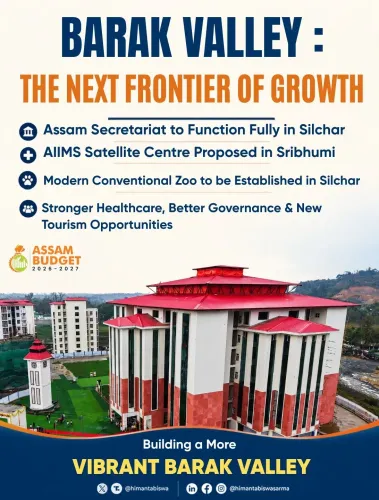
As the Assam elections approach on April 9, Barak Valley stands out as a significant region gearing up for an intense political showdown.
During the 2024 Lok Sabha elections, the BJP successfully retained both Karimganj and Silchar parliamentary seats, defeating candidates from the All India United Democratic Front (AIUDF) and Congress, respectively, in 2019. The party also led in four out of six assembly segments within the Karimganj Lok Sabha constituency and in six of the seven constituencies that form Silchar.
Notably, the 2024 Lok Sabha elections followed a delimitation process carried out by the Election Commission in the state.
This forthcoming assembly election marks the first state poll post-reorganization. Prior to the delimitation, the Congress and AIUDF dominated the area. According to the latest Census from 2011, Hindus accounted for over 18 lakh of the total population exceeding 36 lakh, while Muslims numbered around 17 lakh, Christians stood at approximately 58,000, and others represented the remainder.
The population breakdown revealed that Hindus made up 50%, Muslims 48.1%, Christians 1.6%, and others 0.3%. In 2011, Hindus were the majority in Cachar, constituting about 60%, with Muslims at around 38%. In Silchar, these figures were 72% and 26.4%, respectively.
Conversely, in Hailakandi district, Muslims represented 60.3%, and in Karimganj (now Sribhumi), they made up 56.3%. Interestingly, both Hailakandi and Karimganj towns had Hindu majorities, with percentages of 67.3% and about 86.6%, respectively, as per the 2011 Census.
The Chief Minister expresses confidence in the BJP securing the Hailakandi assembly seat, despite the Opposition Congress claiming an uptick in support for its coalition.
In the rural elections held last year, the BJP emerged as a formidable political force in Barak Valley, achieving significant victories in Cachar and Sribhumi districts, while sharing an equal number of Zila Parishad seats in Hailakandi. A major challenge for both the ruling and opposition factions lies in potential fragmentation of their voter base.
Although a religious polarization could favor the ruling party, Sarma has urged caution to avoid vote-splitting. Should independent candidates manage to draw away even a small portion of votes, it could benefit the opposition bloc.
On the flip side, the Congress and AIUDF, contesting independently this time, may also find themselves affected if minority votes are divided. The final verdict will unfold when the results are declared on May 4.
Point of View
The political landscape in Barak Valley is becoming increasingly competitive. While the BJP aims to solidify its power, the opposition parties are not backing down, setting the stage for an intriguing electoral battle.
NationPress
11 Oct 2026
Frequently Asked Questions
When are the Assam elections scheduled?
The Assam elections are scheduled for April 9.
What is the BJP's target for seats in the Assam Assembly?
The BJP aims to secure between 90 and 100 seats in the Assam Assembly.
Which parties are contesting in the Barak Valley region?
The main parties contesting are the BJP, Congress, and AIUDF.
What is the significance of Barak Valley in the elections?
Barak Valley is a vital region that could influence the overall outcome of the elections.
When will the results of the elections be announced?
The election results will be announced on May 4.