CM Himanta Pledges Assam Secretariat in Silchar, Barak Push
Synopsis
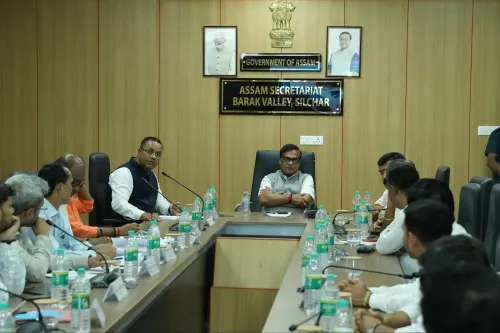
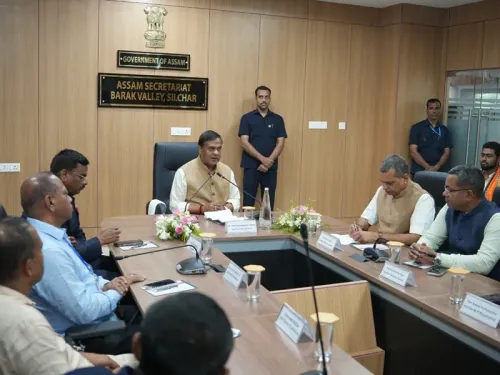
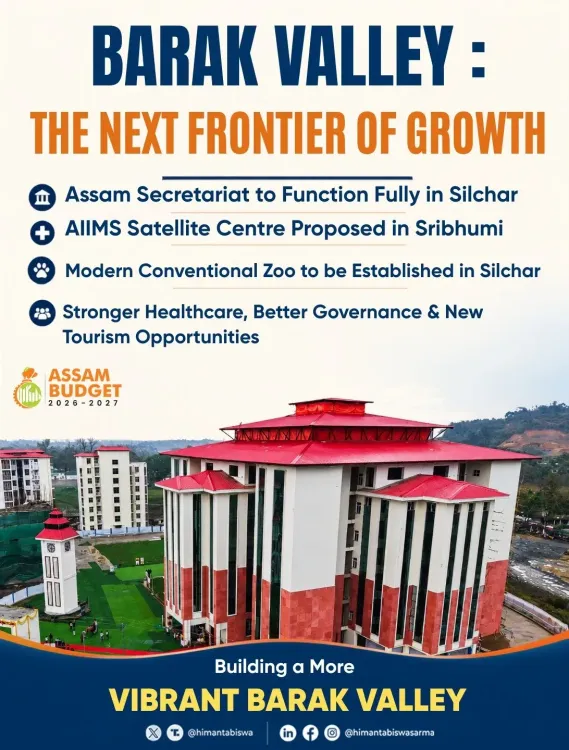
Assam Chief Minister Himanta Biswa Sarma announced on 10 July 2026 that the Assam Secretariat will soon begin full operations in Silchar, with broader development initiatives planned for Barak Valley under the Assam Budget 2026 framework, addressing long-standing demands for greater administrative presence in southern Assam.
Key Takeaways
CM Himanta Biswa Sarma announced on 10 July 2026 that Barak Valley will be developed as a key driver of the Assam Growth Story.
The Assam Secretariat will 'soon' begin full operations in Silchar , the principal city of Barak Valley.
The announcement was made under the #AssamBudget2026 hashtag, indicating dedicated budget provisions are expected.
Barak Valley comprises three districts — Cachar , Karimganj , and Hailakandi — with a distinct identity from the Brahmaputra Valley.
The move addresses long-standing demands for decentralisation of state administration away from Guwahati .
Specific timelines and the full scope of secretariat operations in Silchar are yet to be disclosed by the state government.
Assam Chief Minister Himanta Biswa Sarma on Friday, 10 July 2026 announced that the state government is committed to developing Barak Valley as a key driver of the Assam Growth Story, with the Assam Secretariat set to begin full operations in Silchar alongside a broader package of development initiatives for the region.
Context
Posting on X under the hashtag #AssamBudget2026, CM Sarma stated: 'We are committed to developing Barak Valley as a key driver of the Assam Growth Story. The Assam Secretariat will soon start full operations in Silchar and other major development avenues have been planned for the region.' The announcement signals that the 2026 state budget cycle will carry specific allocations and administrative measures targeting the southern Assam region.
Barak Valley — comprising the districts of Cachar, Karimganj, and Hailakandi — has a distinct linguistic and cultural identity from the Brahmaputra Valley and has historically sought a stronger administrative presence closer to its residents. Silchar is the principal urban centre and commercial hub of the valley.
Policy Backdrop
Successive Assam governments have periodically announced special development packages for Barak Valley to address long-standing complaints of regional imbalance relative to Guwahati and the Brahmaputra belt. The move to extend secretariat functions to Silchar is part of a broader trend of decentralising select state administrative operations to improve service delivery in peripheral districts.
The BJP-led state government under CM Sarma, in office since 2021, has repeatedly cited regionally inclusive growth as a priority for the Northeast. Tying the Barak announcement to #AssamBudget2026 suggests that dedicated budget lines and project timelines are expected to accompany the commitment.
Stakeholders and Impact
Residents across Cachar, Karimganj, and Hailakandi districts stand to benefit most directly, as a functioning secretariat presence in Silchar would reduce the need to travel to Guwahati for state-level administrative matters. Business communities and local civic bodies in Barak Valley have long advocated for such a measure as a prerequisite for attracting investment to the region.
State officials and civil servants will also be affected, as operationalising a second secretariat hub requires staffing, infrastructure, and inter-departmental coordination. The broader development avenues referenced by CM Sarma — though not itemised in the post — are expected to span infrastructure, connectivity, and economic initiatives under the Assam Budget 2026 framework.
What's Next
The immediate marker to watch is the formal operational launch of secretariat functions in Silchar and the specific budget outlays announced under Assam Budget 2026. The state government has not yet disclosed a precise timeline or the full scope of departments that will be represented in the Silchar secretariat.
If the commitment translates into a functioning administrative hub, it would represent one of the most significant structural steps toward decentralisation in Assam in recent years, with potential ripple effects on how other underserved regions of the state press their own claims for greater administrative proximity.
Point of View
And tying it to the budget cycle gives it a fiscal anchor that past promises often lacked. For CM Sarma, who functions as the BJP's chief strategist in the Northeast as NEDA convenor, visibly delivering on Barak Valley's aspirations ahead of future electoral cycles consolidates the party's hold on a region where it has invested heavily. The decentralisation move also fits a wider pattern of the state government using administrative restructuring — rather than just financial transfers — to signal inclusive governance. Whether the secretariat hub materialises on schedule will be a credibility test that opposition parties and civil society in Barak Valley are likely to monitor closely.
NationPress
9 Oct 2026
Frequently Asked Questions
What did Himanta Biswa Sarma announce for Barak Valley?
CM Himanta Biswa Sarma announced on 10 July 2026 that the Assam Secretariat will soon begin full operations in Silchar and that major development avenues have been planned for Barak Valley as part of Assam Budget 2026.
Where will the Assam Secretariat open a new office?
The Assam Secretariat is set to begin full operations in Silchar, the principal city of Barak Valley in southern Assam.
What is Barak Valley and why is it significant?
Barak Valley is a southern Assam region comprising Cachar, Karimganj, and Hailakandi districts. It has a distinct linguistic and cultural identity and has long sought greater administrative and developmental attention from the state government.
What is Assam Budget 2026 and what does it mean for Barak Valley?
Assam Budget 2026 is the state's annual financial plan for the year 2026. CM Sarma's announcement under the #AssamBudget2026 hashtag indicates that specific budget allocations for Barak Valley development are expected alongside the secretariat move.
Has Assam previously promised development for Barak Valley?
Yes, successive Assam governments have periodically announced special development packages for Barak Valley to address regional imbalance, though the commitment to establish secretariat operations in Silchar is among the more structurally significant steps announced in recent years.