Barapullah Phase-III final deck slab cast after decade of delays
Synopsis
After nearly a decade of missed deadlines, land disputes, and cost overruns, the final deck slab of Delhi's Barapullah Phase-III corridor was cast on 22 June — physically bridging the Yamuna at last. At ₹1,635 crore and counting, the project still needs finishing works before it opens, but the structural connection is now real.
Key Takeaways
The final deck slab of Barapullah Phase-III was cast on 22 June , connecting both ends of the corridor across the Yamuna River .
The project was approved in 2014 , initiated in 2015 , and originally due for completion in 2017 .
Revised project cost stands at approximately ₹1,635 crore , reflecting years of cost escalation.
The final slab involved 175 cubic metres of concrete; cumulative concrete used has crossed 4.5 lakh cubic metres .
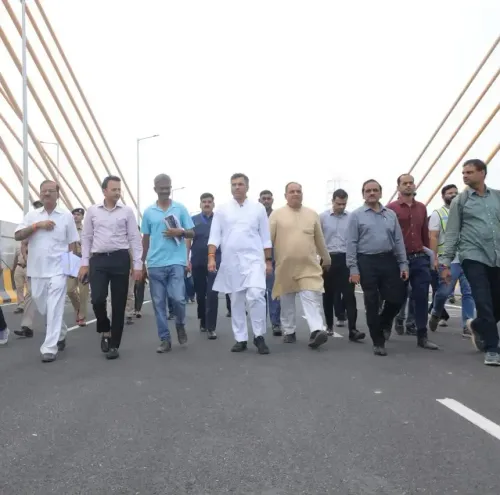
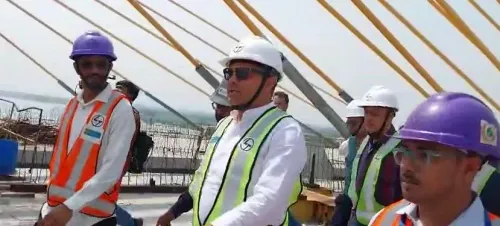
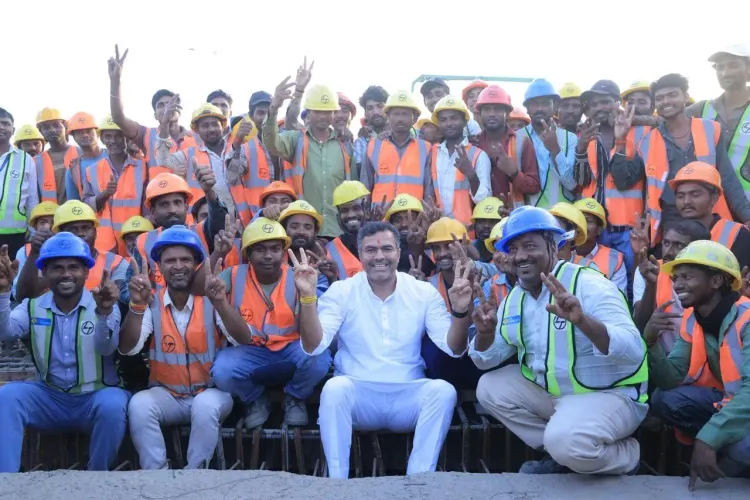
PWD Minister Parvesh Sahib Singh addressed workers at the site, crediting continuous government monitoring for breaking the deadlock.
Once operational, the corridor will provide largely signal-free travel from Mayur Vihar to AIIMS and South Delhi .
The final deck slab of the long-delayed Barapullah Phase-III elevated corridor was successfully cast on Monday, 22 June, physically connecting both ends of the structure across the Yamuna River and bringing one of Delhi's most protracted infrastructure projects to the threshold of completion, according to officials. The milestone closes a chapter that began with the project's approval in 2014 and stretched nearly a decade past its original 2017 deadline.
A Decade in the Making
Approved in 2014 and initiated in 2015, the Barapullah Phase-III corridor was originally targeted for completion in 2017. Instead, it became a byword for infrastructure stagnation in the capital — stalled by a seven-year land acquisition dispute, delayed environmental clearances, technical challenges associated with building across the Yamuna floodplain, and prolonged administrative hurdles. The revised project cost now stands at approximately ₹1,635 crore, reflecting significant escalation from the original estimate.
What Monday's Milestone Involved
The final slab casting on Monday involved approximately 175 cubic metres of concrete. With this pour, the project has crossed a cumulative total of nearly 4.5 lakh cubic metres of concrete — an engineering scale that underscores the corridor's ambition as one of Delhi's largest elevated road structures. Crucially, the slab now physically links the two banks of the Yamuna through the corridor's superstructure, a connection many observers had feared would remain indefinitely incomplete.
What the PWD Minister Said
Public Works Department (PWD) Minister Parvesh Sahib Singh addressed workers at the site, saying: 'Today is not just about concrete and steel. Today is about completing a promise that Delhi had been waiting for over a decade. This final slab represents the determination of hundreds of workers and engineers who refused to let this project remain unfinished.'
Singh added that after the formation of the present government, Barapullah Phase-III was identified as a priority project and monitored continuously at the highest level. 'For years, Delhiites saw deadlines come and go. After our government came to power, we decided that this project could not be allowed to remain stuck any longer. I have personally visited the site multiple times, reviewed progress regularly and worked with officials to remove bottlenecks. Today's milestone is the result of that collective effort,' he said.
Impact on Delhi Commuters
Once operational, the corridor is expected to transform connectivity between East Delhi and South Delhi. Commuters travelling from Mayur Vihar and adjoining areas towards Sarai Kale Khan, AIIMS, and South Delhi will benefit from largely signal-free movement, significantly cutting travel time and easing congestion at major bottlenecks including NH-24, the DND Flyway, Ring Road, and Sarai Kale Khan interchange.
What Comes Next
The casting of the final deck slab marks a structural completion milestone, but finishing works, road surfacing, safety installations, and regulatory clearances remain before the corridor can be opened to traffic. The project's journey from this point to inauguration will be closely watched, given the history of missed timelines. With the physical structure now connected, pressure will mount on authorities to deliver a firm operational date.
Point of View
It is, because the project's eight-year overrun made every milestone suspect. The ₹1,635 crore revised cost is itself a story of compounding failure: land acquisition that dragged on for seven years, environmental approvals that moved at bureaucratic pace, and an elevated corridor that sat half-finished over a floodplain while Delhi's traffic worsened around it. The current government's claim of credit is politically understandable, but the structural completion is still not an operational opening. Until commuters from Mayur Vihar can actually drive to AIIMS without signal stops, the project remains unfinished business — and Delhi's infrastructure credibility gap remains open.
NationPress
21 Sept 2026
Frequently Asked Questions
What is the Barapullah Phase-III corridor?
Barapullah Phase-III is an elevated road corridor in Delhi designed to provide signal-free connectivity between East Delhi — specifically Mayur Vihar — and South Delhi, passing through Sarai Kale Khan and connecting to AIIMS. Approved in 2014 and initiated in 2015, it has been one of the city's most delayed infrastructure projects.
Why was Barapullah Phase-III so delayed?
The project faced a combination of a seven-year land acquisition dispute, delayed environmental clearances, technical challenges from constructing across the Yamuna floodplain, and prolonged administrative hurdles. What was originally due for completion in 2017 remained unfinished for nearly a decade.
What is the revised cost of Barapullah Phase-III?
The revised project cost stands at approximately ₹1,635 crore, significantly higher than the original estimate due to years of delays, scope changes, and cost escalation.
What does the final deck slab casting mean for the project?
The casting of the final deck slab on 22 June physically connects both ends of the corridor across the Yamuna River, marking a key structural milestone. However, finishing works, road surfacing, safety installations, and regulatory clearances are still required before the corridor can open to traffic.
Who will benefit from Barapullah Phase-III once it opens?
Commuters travelling from Mayur Vihar and adjoining East Delhi areas towards Sarai Kale Khan, AIIMS, and South Delhi will benefit most, with largely signal-free movement expected to cut travel time and ease congestion at NH-24, the DND Flyway, Ring Road, and Sarai Kale Khan interchange.