Eastern Railway launches 7-day safety drive after Behrampore level crossing accident kills 5
Synopsis
Five people, including three schoolchildren, died at a non-interlocked level crossing in Behrampore when a gateman allegedly kept the gate open as a train approached. Eastern Railway's seven-day safety drive has now put a spotlight on roughly 60 such vulnerable crossings still operating without electronic safeguards across its network — and the question of why their conversion is still incomplete.
Key Takeaways
Eastern Railway launched a seven-day special safety drive on 18 July at all non-interlocked level crossing gates across its network.
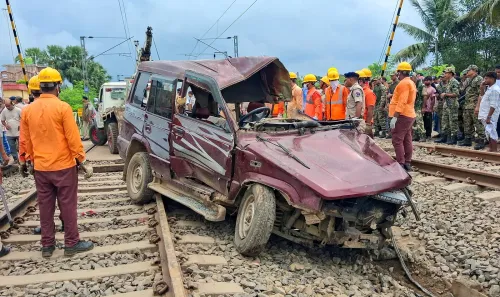
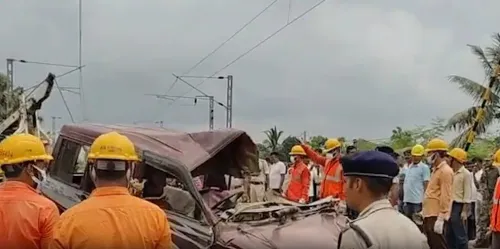
The drive follows a 18 July accident at Behrampore, Murshidabad , where a train struck a school van, killing five people including three schoolchildren .
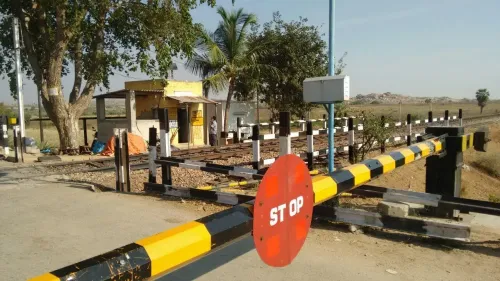
The gate between Karnasubarna and Khagraghat Road stations was non-interlocked , relying solely on verbal communication with no electronic verification of gate status.
The gateman has been arrested ; officials allege he allowed vehicles to cross until the train was nearly at the gate.
Eastern Railway has approximately 60 non-interlocked LC gates in its network; conversion to interlocked gates is ongoing but no deadline has been announced.
Eastern Railway (ER) launched a seven-day special safety drive across all non-interlocked level crossing (LC) gates in its network on 18 July, days after a fatal accident at Behrampore in Murshidabad district, West Bengal, claimed five lives — including three schoolchildren. The drive targets a systemic vulnerability that officials say directly contributed to Friday's tragedy.
How the Accident Happened
Early on Friday morning, a school van was crossing the LC gate located between Karnasubarna and Khagraghat Road stations when a train struck it along with other vehicles at the crossing. The gate in question is non-interlocked — meaning it operates without any electronic link to the nearest station's signalling system.
The gateman, who has since been arrested, allegedly permitted vehicles to continue crossing until the final moments before the train arrived, reportedly unaware of how close the train was. Officials believe a false or absent closure confirmation allowed the route to be set without the gate actually being shut.
Interlocked vs Non-Interlocked Gates: The Critical Difference
An interlocked LC gate is electronically connected to the signalling system of the nearest station cabin. When a train is due, the assistant station master (ASM) or station master (SM) alerts the gateman, who lowers the barriers and removes a key from the LC locking device. That key is inserted into the signalling equipment relay room, energising a relay and sending a confirmed gate-closed indication to the station control panel. Only after receiving this confirmation can the SM or ASM set the train's route.
Once the route is set, the key is locked in the relay room — the gateman cannot retrieve it until the train has fully cleared the crossing. The SM and ASM can monitor actual gate status on the control panel at all times, leaving no margin for human error or false reporting.
At a non-interlocked gate, none of these safeguards exist. The SM or ASM contacts the gateman over a railway telephone and instructs gate closure verbally. If the gateman falsely claims the gate is shut, the control room has no electronic means to verify it. Officials believe this gap was exploited — whether through negligence or external pressure — at Behrampore.
A Pattern Officials Have Seen Before
'In the past, gatemen have been caught doing this, either due to pressure from locals or due to financial gain from commercial vehicles,' a senior Eastern Railway official said. The remark points to a recurring vulnerability at unmanned or manually operated crossings, where informal arrangements with truck and bus operators have previously led to gates being kept open longer than permitted.
According to the official, there are approximately 60 non-interlocked LC gates across the Eastern Railway network. Efforts are under way to convert all of them to interlocked gates, though no firm deadline has been publicly announced.
What the Safety Drive Entails
The seven-day drive, launched across all non-interlocked LC gates in the ER network, is aimed at intensifying supervision, verifying gateman compliance, and identifying infrastructure gaps. The exercise comes amid broader scrutiny of level crossing safety on Indian Railways, where LC-related accidents have historically accounted for a disproportionate share of fatalities.
With the conversion of remaining non-interlocked gates still in progress, the pressure is now on Eastern Railway to accelerate the timeline — and on the wider rail network to assess how many such vulnerable crossings remain operational across India.
Point of View
Yet no firm conversion deadline has been stated. The gap between knowing a hazard exists and eliminating it is where accountability lies. The arrest of the gateman addresses individual culpability, but the structural question — why these gates have not been upgraded — demands an answer from railway management, not just the man at the barrier. If commercial pressure from local vehicle operators is routinely overriding safety protocol at unmanned crossings, that is a governance failure, not a one-off lapse.
NationPress
17 Oct 2026
Frequently Asked Questions
What happened in the Behrampore train accident?
A train struck a school van and other vehicles at a non-interlocked level crossing between Karnasubarna and Khagraghat Road stations in Behrampore, Murshidabad, early on Friday morning. The accident killed five people, including three schoolchildren, and led to the arrest of the gateman.
What is a non-interlocked level crossing gate?
A non-interlocked level crossing gate operates solely on verbal communication between the station master and the gateman, with no electronic link to the signalling system. Unlike interlocked gates, the control room cannot verify whether the gate is actually closed before clearing a train to pass, creating a significant safety gap.
Why was the gateman arrested?
The gateman was arrested on allegations that he allowed vehicles to continue crossing the gate until the train was nearly upon them, without properly closing the barrier. Officials believe this may have occurred due to pressure from local commuters or financial arrangements with commercial vehicle operators — a pattern reportedly seen at such crossings in the past.
What is Eastern Railway doing after the Behrampore accident?
Eastern Railway launched a seven-day special safety drive covering all non-interlocked level crossing gates across its network. The drive focuses on intensifying supervision and gateman compliance checks. The railway also said efforts are under way to convert its approximately 60 non-interlocked gates to interlocked ones.
How many non-interlocked level crossings does Eastern Railway have?
According to a senior Eastern Railway official, there are approximately 60 non-interlocked level crossing gates in the network. Conversion work to upgrade them to interlocked gates is ongoing, though no specific completion deadline has been publicly announced.