Bengal ISI spy arrest exposes porous India-Bangladesh border failures

Synopsis
A Pakistani ISI operative who lived undetected inside India for over a decade using forged documents — mapping Army installations and railway movements — has been arrested near the West Bengal-Bangladesh border. The case is not an aberration; it is the latest data point in a decades-long pattern of espionage, smuggling, and terror infiltration that the 2014 Burdwan bomb-factory blast had already flagged. The border, analysts say, remains structurally compromised.
Key Takeaways
Rana Rauf , alias Wahab Alam , a Pakistani national allegedly linked to the ISI , was arrested by West Bengal STF near North 24 Parganas along with Indian associate Mohammad Ijaz .
Rauf had reportedly lived inside India since 2012 on forged documents, gathering intelligence on Army Eastern Command headquarters at Fort William, Kolkata .
On 2 October 2014 , a bomb-making factory linked to Jamaat-ul-Mujahideen Bangladesh (JMB) exploded in Khagragarh, Burdwan — an earlier warning of cross-border terror infiltration.
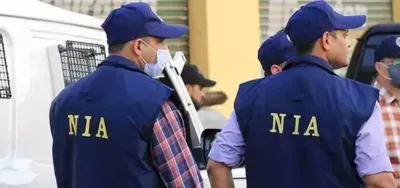
The NIA chargesheet in the Burdwan case found JMB networks operating across West Bengal , Assam , and Jharkhand .
The BJP -led West Bengal government claims improved BSF-STF-intelligence coordination, accelerated border fencing, and stricter anti-smuggling enforcement since coming to power.
Security analysts warn that unless these measures are institutionalised, the border will remain a viable corridor for spies and extremist networks.
The arrest of a suspected Pakistani ISI operative in West Bengal has reignited alarm over decades of unchecked espionage activity along the India-Bangladesh border, with security analysts pointing to chronic gaps in political will and state-Centre coordination that have allowed foreign intelligence networks to embed themselves deep inside Indian territory.
The Arrest and What Investigators Found
The Special Task Force (STF) of West Bengal Police recently apprehended Rana Rauf, alias Wahab Alam, a Pakistani national allegedly linked to Pakistan's intelligence agency, the ISI, along with his Indian associate Mohammad Ijaz. According to reports, Rauf had been living inside India since 2012 on forged documents, methodically gathering intelligence on railway movements, troop deployments, and sensitive military installations — including the Army's Eastern Command headquarters at Fort William, Kolkata.
His arrest near the North 24 Parganas border district is being seen as a textbook illustration of how foreign operatives exploit weakly monitored border corridors. Investigators say the case is not an isolated incident but part of a recurring pattern of ISI-linked infiltration across multiple West Bengal districts.
A Border That Has Long Been Exploited
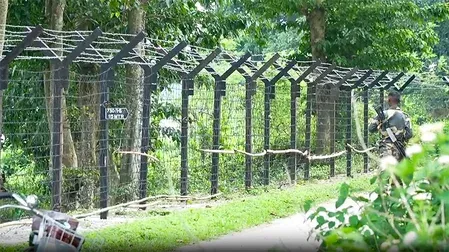
The India-Bangladesh border running through West Bengal is among the most difficult to secure in South Asia. Large stretches reportedly remain unfenced or inadequately lit, enabling illegal crossings. Critics argue that successive state governments treated border management as exclusively the Centre's responsibility, allowing a parallel economy built on cattle smuggling, human trafficking, contraband trade, and narcotics to flourish — a shadow economy that, according to security officials, provided convenient cover for foreign operatives to blend into local communities.
These criminal networks, analysts say, operate in tandem with espionage modules — trafficking arms, fake currency, and narcotics while simultaneously facilitating intelligence-gathering for hostile agencies. This crime-espionage nexus, they argue, has made West Bengal a structurally soft target for Pakistan's ISI.
The 2014 Burdwan Blast: A Warning Ignored
The dangers of this porous border were starkly exposed on 2 October 2014, when an explosion ripped through a rented house in Khagragarh, Burdwan district — approximately 70 km from the residence of then President Pranab Mukherjee. Two men, subsequently identified as bomb-makers, died in the blast. Investigators found that the house had been converted into a bomb-making factory stocked with explosives, chemicals, and radical literature.
The National Investigation Agency (NIA) took over the case and its chargesheet revealed a far more alarming picture: the operatives belonged to Jamaat-ul-Mujahideen Bangladesh (JMB), a proscribed terrorist organisation, which had infiltrated India to build a support base. According to the NIA, JMB's stated objective was to overthrow Bangladesh's democratic government and install a hardline Islamist regime. To that end, its operatives had reportedly established networks across West Bengal, Assam, and Jharkhand, using madrasas and safe houses to radicalise vulnerable youth.
What the Current Government Claims to Have Done
Since the Bharatiya Janata Party (BJP) came to power in West Bengal, the state administration has claimed improved coordination between the Border Security Force (BSF), the STF, and central intelligence bodies. Officials say the government has accelerated border fencing along vulnerable stretches, deployed high-technology surveillance systems in sections where physical fencing is not feasible, and intensified crackdowns on smuggling syndicates dealing in cattle and narcotics.
Chief Minister Suvendu Adhikari has reportedly taken up the unfinished agenda of border fencing and broader security infrastructure upgrades, framing it as correcting years of neglect by predecessor governments — a claim the opposition contests.
What Comes Next
Security experts warn that the sustainability of these measures will determine whether West Bengal's border can be transformed from a gateway for spies and extremists into a genuinely secured frontier. The Rauf arrest, they note, demonstrates that even with improved coordination, long-embedded networks remain active. Unless border security initiatives are institutionalised rather than politically driven, analysts caution, crime and terror networks will continue to find operational space — with consequences that extend well beyond West Bengal.
Point of View
But because of how long he wasn't. Over a decade of undetected presence — inside a state that hosts the Army's Eastern Command — points to a systemic failure that no single government can fully own or entirely disown. The BJP's claims of improved coordination are credible on paper but the Rauf arrest itself proves that legacy networks embedded before any policy shift are still operational. India's eastern border security has historically been treated as a political football between the Centre and state governments; the Burdwan blast of 2014 was a clear enough warning that went only partially heeded. The real accountability question is not which party neglected the border, but why no government — central or state — has produced a durable, non-partisan border management framework for West Bengal in the decade since.
NationPress
18 Aug 2026
Frequently Asked Questions
Who is Rana Rauf and why was he arrested in West Bengal?
Rana Rauf, also known as Wahab Alam, is a Pakistani national allegedly linked to Pakistan's intelligence agency, the ISI, arrested by West Bengal's Special Task Force near North 24 Parganas. He had reportedly been living in India since 2012 on forged documents, gathering intelligence on railway movements, troop deployments, and military installations including the Army's Eastern Command headquarters at Fort William, Kolkata.
How long had the ISI operative been living inside India undetected?
According to reports, Rana Rauf had been living inside India since 2012 — over a decade — using forged documents before his arrest by the West Bengal STF near the North 24 Parganas border.
What was the 2014 Burdwan blast and how is it connected to this case?
On 2 October 2014, an explosion at a rented house in Khagragarh, Burdwan district revealed a bomb-making factory linked to Jamaat-ul-Mujahideen Bangladesh (JMB), a proscribed terrorist organisation. The NIA's subsequent investigation found JMB networks operating across West Bengal, Assam, and Jharkhand — an earlier instance of the same cross-border infiltration pattern that the Rauf arrest now underscores.
Why is the India-Bangladesh border in West Bengal considered a security vulnerability?
Large stretches of the border reportedly remain unfenced or poorly lit, enabling illegal crossings. Successive state governments are accused of treating border management as solely the Centre's responsibility, allowing smuggling, human trafficking, and contraband networks to flourish — networks that also provide cover for foreign intelligence operatives.
What steps has the West Bengal government taken to improve border security?
Since the BJP came to power in West Bengal, the state administration has claimed improved coordination between the BSF, STF, and intelligence agencies, accelerated fencing of vulnerable border stretches, deployment of high-technology surveillance where physical fencing is not feasible, and intensified crackdowns on cattle and narcotics smuggling syndicates. Chief Minister Suvendu Adhikari has reportedly prioritised completing unfinished border fencing projects.