Bengal CM: Eggs to be served separately in ISKCON mid-day meal schools
Synopsis
West Bengal's mid-day meal standoff ends — but not cleanly. Chief Minister Suvendu Adhikari's solution keeps ISKCON in charge of vegetarian meals while routing eggs through self-help groups, a dual-supply workaround that sidesteps the core question of whether a strictly vegetarian religious organisation should be managing state school nutrition at all.
Key Takeaways
West Bengal CM Suvendu Adhikari announced on 29 July that eggs will be served separately in schools where ISKCON provides mid-day meals.
Egg distribution will be handled by self-help groups ; overall meal responsibility stays with ISKCON .
The arrangement takes effect from 1 August , starting as a pilot across a large part of Kolkata under the KMC area.
Primary school meal allocation has been raised from ₹6.78 to ₹10 per student, matching the high and upper primary rate.
Opposition parties and civil society had accused the government of sidelining egg-based protein to accommodate ISKCON's vegetarian dietary code.
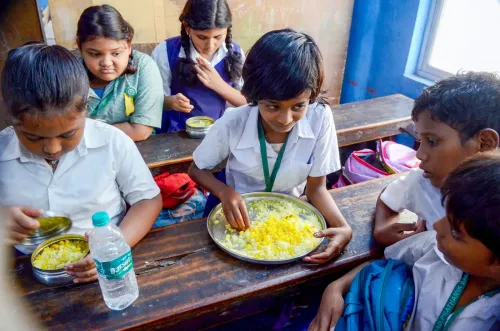
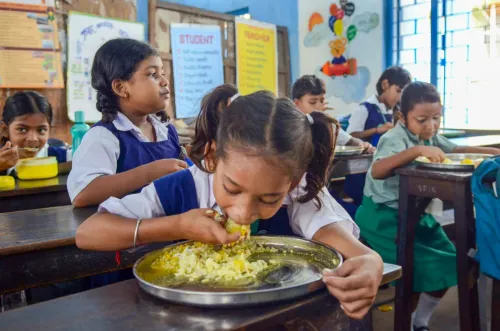
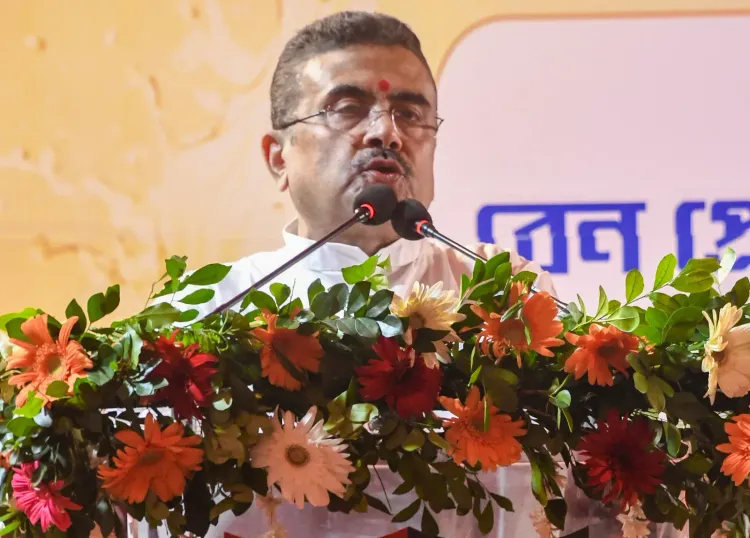
West Bengal Chief Minister Suvendu Adhikari on Wednesday, 29 July resolved a weeks-long controversy over mid-day meal nutrition in state-run schools, announcing that eggs will be provided separately by school authorities alongside the vegetarian meals arranged by the International Society for Krishna Consciousness (ISKCON). The decision takes effect from 1 August.
What the Government Announced
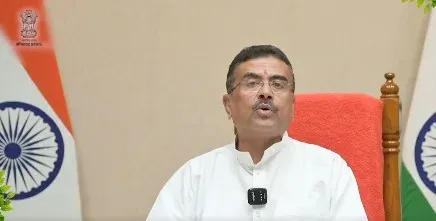
Speaking to reporters, Chief Minister Adhikari confirmed that eggs will be distributed through self-help groups, independent of ISKCON's meal arrangement. 'The government has made arrangements to provide eggs separately at the midday meal. This will be effective from August 1,' he said.
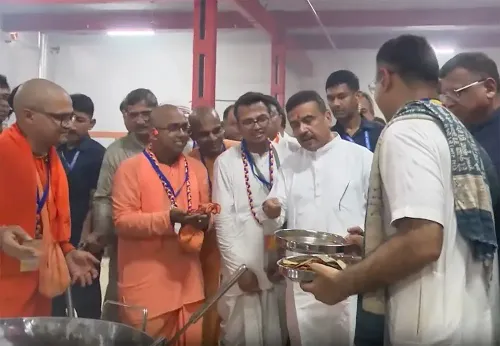
He clarified that the overall responsibility for distributing mid-day meals will continue to rest with ISKCON, which will supply what he described as 'vegetarian, pure-protein food.' The egg provision is an addendum, not a replacement of that arrangement.
Revised Meal Allocation
The Chief Minister also announced an upward revision in the per-student meal allocation. The earlier rate of ₹6.78 per student in primary schools has been raised to ₹10, bringing it on par with the existing allocation for high and upper primary schools. The ISKCON pilot project, covering a 'large part of Kolkata,' is set to launch on 1 August under the Kolkata Municipal Corporation (KMC) area before being scaled statewide.
Background and Criticism
The controversy erupted after the state government announced that ISKCON — a Vaishnava organisation that strictly follows a vegetarian dietary code — would be responsible for mid-day meals at government schools. Opposition parties and sections of civil society argued the move would deprive students of eggs, a key source of affordable protein, in deference to a vegetarian, Hindutva-aligned food agenda.
Critics contended that for many children from low-income households, the mid-day meal egg is often the only reliable animal protein in their daily diet. The pushback was significant enough that the controversy dominated public discourse in the state for several days before Wednesday's announcement.
What Happens Next
With the dual-track arrangement now in place — ISKCON handling the vegetarian meal component, self-help groups supplying eggs — the government appears to have sought a middle ground. Whether the logistics of two separate supply chains will function smoothly in practice, particularly across the full scale of state-run schools, remains to be seen. Advocacy groups have indicated they will monitor implementation closely once the pilot launches on 1 August.
Point of View
Self-help groups for eggs — into the same school at the same time multiplies coordination risk, particularly at scale. More fundamentally, the controversy exposed a structural tension: when a state contracts a religious organisation with a fixed dietary code to feed a diverse student population, nutritional completeness cannot be treated as an afterthought. The ₹10 allocation increase is overdue, but the real accountability question — who ensures every child actually receives the egg — has not yet been answered.
NationPress
28 Oct 2026
Frequently Asked Questions
Will students in West Bengal's ISKCON mid-day meal schools receive eggs?
Yes. Chief Minister Suvendu Adhikari confirmed on 29 July that eggs will be provided separately by school authorities through self-help groups, in addition to the vegetarian meals supplied by ISKCON. The arrangement begins on 1 August.
Why was there controversy over ISKCON providing mid-day meals in Bengal schools?
ISKCON follows a strictly vegetarian dietary code, and critics — including opposition parties and civil society groups — argued that assigning it responsibility for school mid-day meals would deprive students of eggs, a key protein source. They alleged the decision reflected a Hindutva-aligned push to impose vegetarian food in government schools.
What is the revised mid-day meal allocation in West Bengal?
The per-student allocation for primary schools has been raised from ₹6.78 to ₹10, bringing it in line with the existing ₹10 rate for high and upper primary schools. The revision was announced alongside the egg-provision decision on 29 July.
Where will the ISKCON mid-day meal pilot run first?
The pilot covers a large part of Kolkata under the Kolkata Municipal Corporation (KMC) area, with a planned rollout to the rest of West Bengal thereafter. It is scheduled to begin on 1 August.
Who will be responsible for distributing eggs under the new arrangement?
Self-help groups will supply and distribute eggs separately at the school level. ISKCON retains overall responsibility for the vegetarian mid-day meal component.