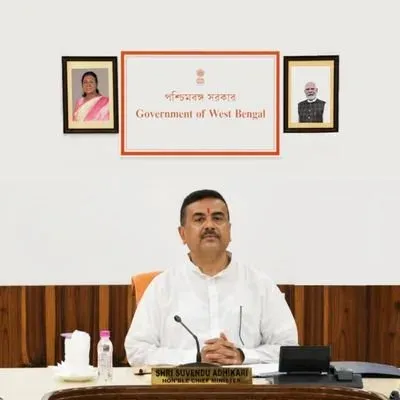
Bengal CM Adhikari unveils direct land purchase policy to attract industries
Synopsis
West Bengal's new BJP Chief Minister Suvendu Adhikari has staked out a sharp break from the state's troubled land-acquisition past — directly invoking Singur and Nandigram — by announcing that the government will buy land directly from owners and hand it to investors. With the state carrying a ₹1,00,000 crore annual debt burden, the industrial push is as much a fiscal necessity as an ideological pivot.
Key Takeaways
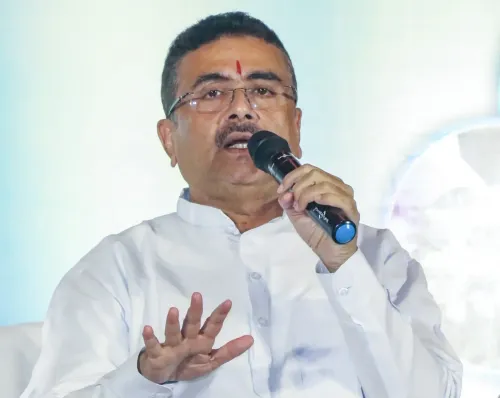
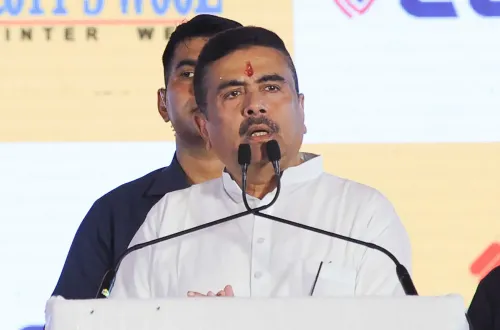
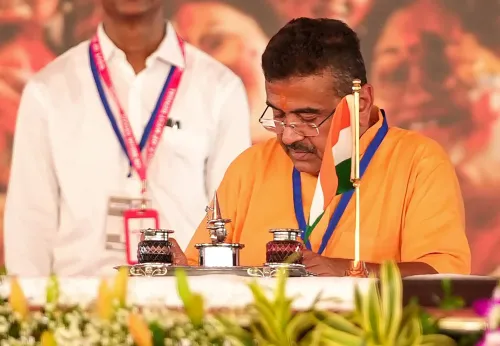
West Bengal CM Suvendu Adhikari announced a direct land purchase policy for industries on 11 July , at a foundation-stone ceremony in Dankuni, Hooghly district .
The state government will buy land directly from owners and transfer it to investors, mirroring a model already used for BSF border fencing.
Adhikari cited Singur and Nandigram as cautionary examples the new policy is designed to avoid.
West Bengal spends nearly ₹1,00,000 crore annually on loan repayment and interest, a debt Adhikari attributed to the previous TMC government.
The BJP -led government also pledged soft loans for new entrepreneurs and committed to eliminating 'cut-money and extortion' culture.
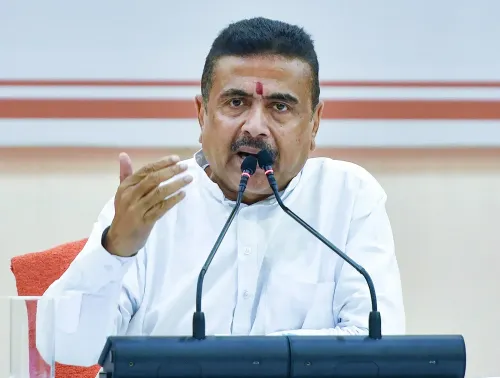
West Bengal Chief Minister Suvendu Adhikari on Saturday, 11 July announced a new policy under which the state government will directly purchase land from owners to facilitate the establishment of new industries, aiming to eliminate the friction over land acquisition that has historically deterred investors in the state.
What the Policy Entails
Adhikari said the direct land purchase model is not entirely new — the state had already deployed it along international border areas, acquiring land and handing it over to the Border Security Force (BSF) for barbed-wire fencing. The same framework will now be extended to industrial use. Speaking at the foundation-stone laying ceremony of a hosiery manufacturing unit in Dankuni, Hooghly district, the Chief Minister gave a direct assurance to prospective investors: 'We will directly purchase the land and give it to you.'
The Singur-Nandigram Shadow
The announcement carries unmistakable historical weight. Adhikari explicitly invoked Singur and Nandigram — the two land acquisition flashpoints of the mid-2000s that became defining moments in West Bengal's industrial decline and the political rise of Mamata Banerjee. By committing to voluntary direct purchase rather than compulsory acquisition, the Bharatiya Janata Party (BJP)-led government is signalling a deliberate departure from the approach that triggered those conflicts. 'We do not want repetition of tension over land availability for industry,' Adhikari said.
Law and Order as Investment Prerequisite
The Chief Minister identified a stable law-and-order environment as the primary condition for attracting fresh capital. He said the new government has already made progress on this front and pledged to eliminate what he described as a past culture of 'cut-money and extortion' — a pointed reference to practices widely associated with the previous administration. 'We are determined for ensuring the right investment atmosphere for the industrialists,' he said.
Debt Burden and the Revenue Imperative
Adhikari also disclosed that the state is spending nearly ₹1,00,000 crore annually on loan repayment and interest servicing — a liability he attributed to the preceding Trinamool Congress (TMC) government led by Mamata Banerjee. He argued that expanding the industrial base is essential to growing state revenues and reducing dependence on borrowing. 'The more industries and factories would be established and more investments made in West Bengal, the more revenue will flow into the government's coffers,' he said.
Employment and Entrepreneurship Push
Beyond large-scale industry, Adhikari said the government intends to foster new entrepreneurship by offering soft loans to first-generation entrepreneurs. He stressed that government jobs alone cannot address the state's unemployment challenge, and that private-sector job creation at scale is indispensable. The goal, he said, is to restore West Bengal's position as one of India's leading investment destinations.
The policy announcement is among the most concrete steps taken by the new BJP government in West Bengal to signal an industrial reset, with implementation details and a formal policy framework expected to follow in the coming weeks.
Point of View
While reframing the BJP as industry-friendly without the coercive optics of forced acquisition. But the harder test lies ahead: voluntary purchase at market rates is expensive, and a state already spending ₹1,00,000 crore a year on debt servicing has limited fiscal headroom to act as a land aggregator at scale. The policy's credibility will depend on how quickly a formal framework is notified, what the compensation formula looks like, and whether the law-and-order improvements Adhikari claims are borne out by investor experience on the ground — not just at foundation-stone ceremonies.
NationPress
10 Oct 2026
Frequently Asked Questions
What is West Bengal's new direct land purchase policy for industries?
Under the policy announced by Chief Minister Suvendu Adhikari on 11 July, the West Bengal state government will directly purchase land from owners and hand it over to investors seeking to set up industries. The model is based on a similar approach already used to acquire land along international borders for BSF fencing.
Why did CM Adhikari invoke Singur and Nandigram?
Adhikari cited Singur and Nandigram — two land acquisition controversies from the mid-2000s that derailed major industrial projects and fuelled political unrest — as examples of the tension the new policy is designed to prevent. By opting for direct purchase over compulsory acquisition, the government aims to avoid repeating those conflicts.
How much debt has West Bengal inherited, according to the CM?
Adhikari said the state is spending nearly ₹1,00,000 crore annually on loan repayment and interest, a burden he attributed to the previous Trinamool Congress government. He argued that industrial expansion is essential to growing state revenues and easing this fiscal strain.
What other investment measures did CM Adhikari announce?
Beyond the land policy, Adhikari pledged to maintain a stable law-and-order environment, eliminate the culture of cut-money and extortion, and provide soft loans to new entrepreneurs. He described these as the foundational conditions for restoring West Bengal's status as a leading investment destination.
Where was the announcement made?
Adhikari made the announcement while addressing the foundation-stone laying ceremony of a hosiery manufacturing unit at Dankuni in Hooghly district, West Bengal, on 11 July.