West Bengal 7th Pay Commission extended to 25 university staff, 3 education boards

Synopsis
West Bengal has formally extended its 7th Pay Commission to cover non-teaching staff in 25 state universities and all employees of three major education boards — but the notification is silent on salary rates, effective dates, or arrear terms, leaving thousands of education workers waiting on the commission's recommendations.
Key Takeaways
The West Bengal Finance Department issued a notification on 6 November 2026 expanding the 7th Pay Commission mandate.
Coverage now includes non-teaching employees in 25 state-aided universities and all staff of WBBSE , WBCHSE , and WBBME .
The notification was signed by Additional Chief Secretary Prabhat Kumar Mishra ; the expansion was decided by Governor R.N.
No revised salary figures, effective date, or arrear settlement framework has been announced pending the commission's recommendations.
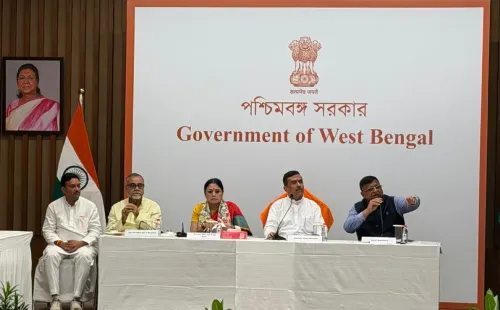
Chief Minister Suvendu Adhikari had earlier announced the 7th Pay Commission formation to restructure state government pay scales.
The West Bengal Finance Department on 6 November 2026 issued a formal notification extending the state's 7th Pay Commission to cover all non-teaching employees across 25 state-aided universities and all employees of three state education boards and councils. The move marks a significant expansion of the commission's mandate beyond core state government employees.
Which Bodies Are Covered
The three education bodies brought under the commission's purview are the West Bengal Board of Secondary Education (WBBSE), the West Bengal Council of Higher Secondary Education (WBCHSE), and the West Bengal Board of Madrasah Education (WBBME). Together, these institutions employ a large number of administrative and support staff whose pay scales had remained outside the commission's original scope.
What the Notification Says
The notification was issued by Prabhat Kumar Mishra, Additional Chief Secretary to the State Finance Department. It states that while the state government had already constituted the 7th Pay Commission for state government employees and certain other categories, Governor R.N. Ravi decided the commission should additionally examine the existing pay structure and service conditions of regular non-teaching staff in state-aided universities and all employees of the three boards and councils.
'The Commission will make necessary recommendations as early as possible,' the notification reads.
Notably, the notification does not specify the rate at which salaries will increase, the new pay structure, the effective date, or how arrears will be settled. According to reports, a decision on these specifics can only follow once the commission submits its recommendations.
Background and Employee Expectations
The 7th Pay Commission extension comes after Chief Minister Suvendu Adhikari had announced its formation to restructure the pay of state government employees. Following that announcement, the state government commenced the initial process of constituting the commission. Employees had been awaiting this move, with many hoping for dearness allowance revisions at par with central government employees — an expectation that remains unresolved pending the commission's report.
This is a notable step in West Bengal's broader public-sector pay reform, though the absence of a timeline or financial quantum in the notification means the actual salary impact remains unknown for now.
What Happens Next
The commission is expected to study current pay structures, compare them against central benchmarks, and table recommendations. Only after that review will the state government determine revised salary structures, effective dates, and arrear settlement mechanisms. Education workers across the covered institutions are expected to follow the commission's proceedings closely.
Point of View
Timeline, or arrear formula. For tens of thousands of education workers in West Bengal's universities and boards, this means the wait continues. The absence of any detail on dearness allowance parity with central government employees — a long-standing demand — suggests the new government is managing expectations carefully while buying time for the commission's deliberations. The real test will be whether the eventual recommendations are implemented swiftly or join the long queue of pending state pay revisions.
NationPress
7 Nov 2026
Frequently Asked Questions
What has West Bengal decided regarding the 7th Pay Commission?
The West Bengal Finance Department has extended the 7th Pay Commission's mandate to cover all non-teaching employees in 25 state-aided universities and all employees of three education boards — WBBSE, WBCHSE, and WBBME. The decision was formalised through a notification issued on 6 November 2026.
Which education boards are covered under the West Bengal 7th Pay Commission?
The three bodies covered are the West Bengal Board of Secondary Education (WBBSE), the West Bengal Council of Higher Secondary Education (WBCHSE), and the West Bengal Board of Madrasah Education (WBBME). Their employees will have their pay structures examined by the commission.
Will salaries increase immediately after the notification?
No. The notification does not specify any new salary rates, effective dates, or arrear settlement terms. Revised pay structures can only be determined after the 7th Pay Commission submits its recommendations to the state government.
Who authorised the expansion of the 7th Pay Commission?
Governor R.N. Ravi decided that the commission should also examine pay structures and service conditions for university non-teaching staff and education board employees. The formal notification was issued by Additional Chief Secretary Prabhat Kumar Mishra of the State Finance Department.
What are employees expecting from the 7th Pay Commission?
Education workers and state government employees have been expecting salary revisions and dearness allowance levels at par with central government employees. Chief Minister Suvendu Adhikari had earlier announced the commission's formation to restructure state pay scales, raising expectations of significant revision.