Bengal Police nab cyber fraud kingpin Aman Singh from Goa beach

Synopsis
West Bengal Police tracked a cyber fraud kingpin to a tent on a Goa beach — the culmination of a multi-state hunt. Aman Singh allegedly ran illegal call centres using SIM boxes to threaten victims with 'digital arrests', and was already wanted in Mumbai and Kolkata on separate charges. His arrest could unravel a network spanning several states.
Key Takeaways
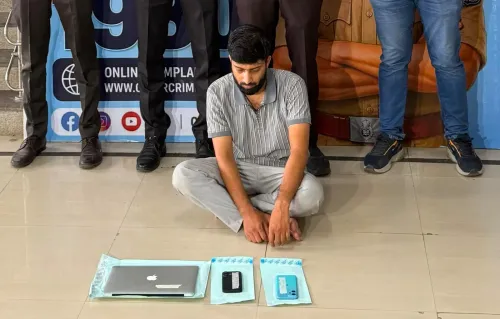
Aman Singh , alleged kingpin of a nationwide digital arrest cyber fraud ring, was arrested from a Goa beach on 27 July .
The arrest was carried out by the cybercrime branch of West Bengal Police following a complaint at Electronics Complex police station, Bidhannagar .
Singh allegedly operated illegal call centres in Kolkata , the Salt Lake area , and other cities, using SIM boxes to mask telecom activity.
He faces a separate case with Mumbai Police and a sexual harassment case in Kolkata, and had been absconding from both cities.
Singh is being brought to Kolkata on transit remand ; police say searches for other network members are ongoing.
The West Bengal Police have arrested Aman Singh, the alleged kingpin of a nationwide cyber fraud ring, from a beach in Goa on Sunday, 27 July. Singh is accused of orchestrating digital arrest scams that duped victims across multiple states, according to police.
How the Arrest Unfolded
Detectives from the cybercrime branch of the West Bengal Police tracked Singh after a complaint was filed at the Electronics Complex police station in Bidhannagar (Salt Lake area), Kolkata. Interrogating previously arrested associates and analysing mobile phone data, investigators zeroed in on Singh as the primary accused in the digital arrest threat case.
Acting on a tip that Singh was hiding in a tent on one of Goa's beaches, a detective team conducted a raid and caught him red-handed. He is being transported to Kolkata on transit remand.
The Scale of the Operation
According to police, Singh ran illegal call centres across several cities, including Kolkata and the Salt Lake area, with the help of associates spread across the country. The network reportedly used SIM boxes to build illegal telecom infrastructure — a method that masks call origins and complicates law enforcement tracing.
Singh is also named as an accused in a case registered with the Mumbai Police, and faces a separate sexual harassment case in Kolkata. He had been evading arrest in both cities before his Goa hideout was identified.
What Digital Arrest Fraud Is
Digital arrest scams involve fraudsters impersonating law enforcement or government officials and threatening victims with fictitious legal action — including fake 'digital arrests' — to coerce them into transferring money. The Ministry of Home Affairs has flagged such scams as among the fastest-growing categories of cybercrime in India, with victims spanning every demographic.
What Happens Next
Police said interrogation of Singh is expected to expose the broader cybercrime network operating both within West Bengal and across other states. Searches are now under way for other members of the ring. The case highlights the cross-state coordination increasingly required to dismantle cyber fraud syndicates that operate with deliberate geographic dispersion to evade local law enforcement.
Point of View
But the more telling detail is the infrastructure: SIM boxes, multi-city call centres, and deliberate geographic scattering across Kolkata, Mumbai, and Goa. This is not opportunistic fraud — it is organised crime with a playbook. Digital arrest scams have surged precisely because they exploit institutional fear; victims comply because the threat mimics a real government process. The fact that Singh was already wanted in Mumbai on a separate charge yet remained at large for months points to a coordination gap between state police forces that syndicates are actively exploiting. Whether his interrogation leads to network-wide dismantling or merely removes one node will depend on how effectively West Bengal Police shares intelligence across jurisdictions.
NationPress
26 Oct 2026
Frequently Asked Questions
Who is Aman Singh and why was he arrested?
Aman Singh is the alleged kingpin of a cyber fraud ring that ran digital arrest scams targeting victims across India. West Bengal Police arrested him from a beach in Goa on 27 July after identifying him as the main accused in a digital arrest threat case filed at the Electronics Complex police station in Bidhannagar, Kolkata.
What is a digital arrest scam?
A digital arrest scam involves fraudsters posing as law enforcement or government officials who threaten victims with fabricated legal action — including fake 'digital arrests' — to extort money. The Ministry of Home Affairs has identified such scams as one of the fastest-growing cybercrime categories in India.
How did West Bengal Police track Aman Singh to Goa?
Detectives from the cybercrime branch interrogated previously arrested associates and analysed mobile phone data to trace Singh. They established that he was hiding in a tent on a Goa beach and conducted a targeted raid, catching him on the spot.
What other cases is Aman Singh facing?
Apart from the digital arrest fraud case in Kolkata, Singh is named as an accused in a separate case registered with Mumbai Police and faces a sexual harassment case in Kolkata. He had been absconding from both cities before his arrest in Goa.
What happens after Aman Singh's arrest?
Singh is being brought to Kolkata on transit remand for further interrogation. Police say his questioning is expected to help identify and locate other members of the cybercrime network operating across West Bengal and other states.