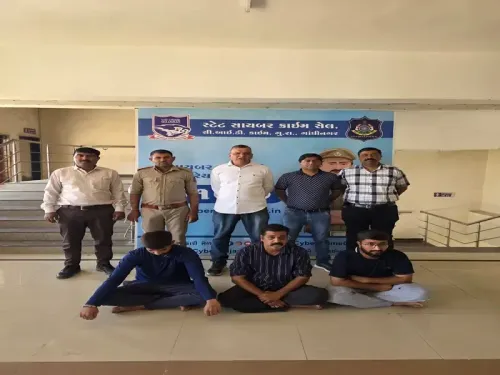
Gujarat Police bust ₹1,071 crore cybercrime ring, arrest Assam man in 1,090 cases
Synopsis
A single 25-year-old from Assam allegedly funnelled over ₹1,071 crore from digital arrest scams through 1,754 bank accounts in a single hour, converting proceeds into cryptocurrency for a Chinese criminal network. Gujarat Police's undercover operation — which also rescued victims mid-scam across six cities — exposes the industrial scale of transnational cyber fraud targeting India's senior citizens.
Key Takeaways
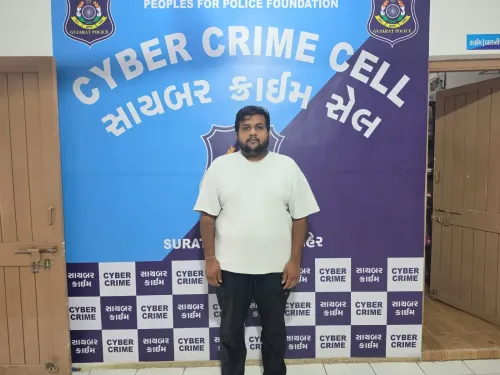
Rafiqool Alam , 25 , from Barpeta, Assam , was arrested by the Gujarat Police Cyber Centre of Excellence on 17 August .
Investigators traced transactions worth ₹1,071.55 crore linked to 1,090 cybercrime cases across India to the accused.
Alam allegedly routed fraud proceeds through multiple bank accounts, converting funds into cryptocurrency before transferring them to a Chinese criminal network .
In one instance, funds were split across 1,754 bank accounts within a single hour to evade detection; 23 cryptocurrency wallets with ₹16 crore in transactions were recovered from his phone.
Police intervened in active digital arrest cases in Ahmedabad , Surat , Jamnagar , Raipur , Mumbai , and Bhubaneswar , preventing further financial losses.
Three cases have been registered at the Cyber Crime Police Station; police have urged citizens not to comply with demands from callers posing as law-enforcement or judicial authorities.
The Gujarat Police Cyber Centre of Excellence on Monday, 17 August arrested a 25-year-old man from Assam who allegedly served as the principal financial handler for an international cybercrime network running digital arrest scams across India. Investigators traced transactions worth ₹1,071.55 crore linked to 1,090 cybercrime cases nationwide to the accused.
The Accused and the Arrest
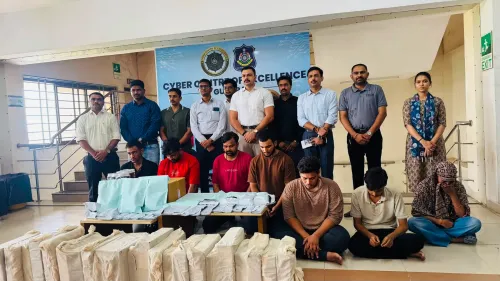
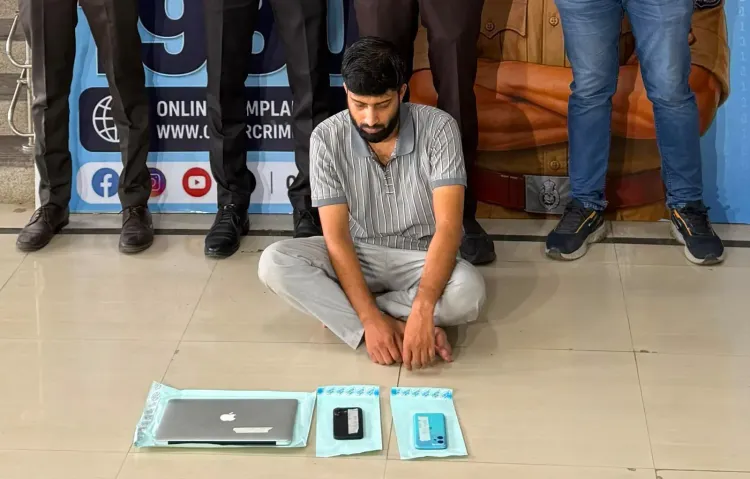
The arrested individual, Rafiqool Alam, is a resident of Barpeta district, Assam. A Gujarat police team conducted a three-day undercover reconnaissance operation before raiding his residence in Barpeta. Technical gadgets were seized from him at the time of arrest.
The investigation was triggered after the Cyber Centre identified a senior citizen who was allegedly being subjected to a live digital arrest. During counselling and questioning, the victim disclosed that fraudsters had digitally arrested him using forged letters purportedly issued by the Maharashtra Police and the Supreme Court.
How the Fraud Network Operated
According to police, Alam allegedly moved money obtained through digital arrest scams and other cyber frauds across multiple bank accounts before converting it into cryptocurrency and routing it to members of a Chinese criminal network. He reportedly communicated operational details — including scanners, user IDs, passwords, cryptocurrency wallet details, and crime instructions — with Chinese criminals via WhatsApp and Telegram.
To evade financial surveillance, the accused allegedly used split transfers, breaking large sums into smaller amounts. In one instance, transactions were reportedly split across 1,754 bank accounts within a single hour. Investigators recovered 23 cryptocurrency wallets from his mobile phone, with transactions worth ₹16 crore traced through them. He also allegedly used the Chip Seller app for illegal cryptocurrency trading and gaming accounts for financial transactions.
Victims Rescued Across Multiple States
A technical examination of bank accounts linked to the initial victim helped investigators identify approximately 10 other individuals allegedly undergoing digital arrest simultaneously at different locations across India. Police teams visited their homes and prevented money transfers to the fraudsters.
In Ahmedabad, a senior citizen was allegedly threatened with implication in a child pornography case by individuals posing as police officers and was asked to pay ₹20 lakh. Officials visited his home at night and stopped the transfer. In Surat, another senior citizen was allegedly threatened with implication in Enforcement Directorate and terrorism cases and was initially asked to pay ₹60 lakh; he had agreed to pay ₹40 lakh and was preparing to sell his flat before intervention. He had also sold his shop for ₹20 lakh and kept the proceeds ready for handover when officials stepped in.
In Jamnagar, a senior citizen was lured by individuals claiming to be brokers for Morgan Max Company, promising returns of 50 to 60 per cent. He had already transferred ₹9.50 lakh and was preparing to send another ₹10 lakh when officials intervened. The Cyber Centre also assisted victims in Raipur (Chhattisgarh), Sundargarh (Odisha), Mumbai (Maharashtra), and Bhubaneswar (Odisha).
Police Advisory and Legal Action
Police have registered three cases at the Cyber Crime Police Station in connection with this investigation. The Cyber Centre of Excellence has appealed to the public not to panic if callers claiming to be police, the CBI, the Enforcement Directorate, the Supreme Court, or other government agencies threaten them with arrest in cases involving money laundering, drugs, courier-related offences, or other crimes and demand money.
With digital arrest scams targeting senior citizens across multiple states, this case underscores the growing reach of transnational cybercrime networks operating inside India — and the urgent need for coordinated inter-state and international law-enforcement responses.
Point of View
071 crore across 1,090 cases, funnelled through 1,754 accounts in a single hour — is not the work of a lone operator; it is industrial-grade financial crime with Chinese coordination at its core. What this arrest lays bare is how India's fragmented banking and crypto oversight creates ideal conditions for layering: split transfers, mule accounts, gaming platforms, and offshore wallets form a laundering chain that no single agency currently has full visibility over. The Gujarat Cyber Centre's proactive victim-rescue model is commendable, but the deeper question is structural — why does it take a state-level unit to identify ten simultaneous digital-arrest victims when centralised financial intelligence should flag such account clustering in real time? Until RBI, FIU-IND, and law enforcement share live transaction data, arrests like this will remain reactive rather than preventive.
NationPress
2 Oct 2026
Frequently Asked Questions
What is a digital arrest scam?
A digital arrest scam is a form of cyber fraud in which criminals impersonate police officers, CBI agents, Enforcement Directorate officials, or judges and falsely inform victims that they are under 'digital arrest' for alleged offences such as money laundering or drug trafficking. Victims are coerced into staying on a video call and transferring money to avoid fabricated legal consequences.
Who is Rafiqool Alam and what was his alleged role?
Rafiqool Alam is a 25-year-old resident of Barpeta district, Assam, arrested on 17 August by the Gujarat Police Cyber Centre of Excellence. He allegedly acted as the primary financial handler for an international cybercrime network, moving fraud proceeds through multiple bank accounts and converting them into cryptocurrency before routing funds to a Chinese criminal network.
How much money is linked to this cybercrime network?
Investigators traced transactions worth ₹1,071.55 crore connected to 1,090 cybercrime cases across India to the accused. Additionally, 23 cryptocurrency wallets recovered from his phone had transactions worth ₹16 crore traced through them.
How did the accused avoid detection by financial agencies?
According to police, Alam allegedly used split transfers — breaking large sums into smaller amounts and routing them across multiple accounts — to evade financial surveillance. In one instance, transactions were reportedly split across 1,754 bank accounts within a single hour. He also allegedly used the Chip Seller app and gaming accounts for cryptocurrency transactions.
What should people do if they receive a digital arrest threat?
The Gujarat Police Cyber Centre of Excellence has advised citizens not to panic or comply with demands from callers claiming to be police, the CBI, the Enforcement Directorate, the Supreme Court, or other government agencies who threaten arrest and demand money. Such calls should be reported immediately to the cybercrime helpline.