Trump remade global trade order in one year, says US Trade Rep Greer
Synopsis
At the G20 Trade Ministers' Meeting in Milwaukee, US Trade Representative Jamieson Greer declared that President Trump has 'essentially remade' the global trading order in just one year — with 10 reciprocal trade agreements, 40% of US goods trade covered, and a pointed rebuke of the WTO. The claim sets the stage for a high-stakes G20 Leaders' Summit in Miami, even as US-Canada talks remain deadlocked.
Key Takeaways
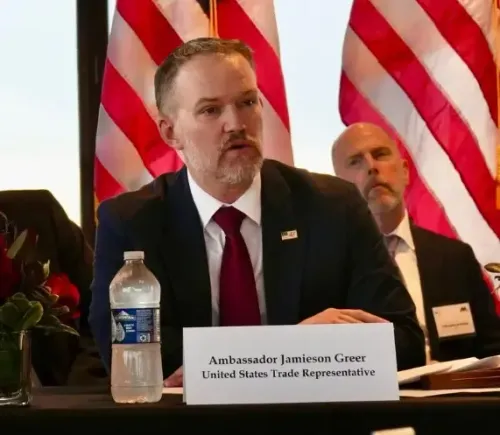
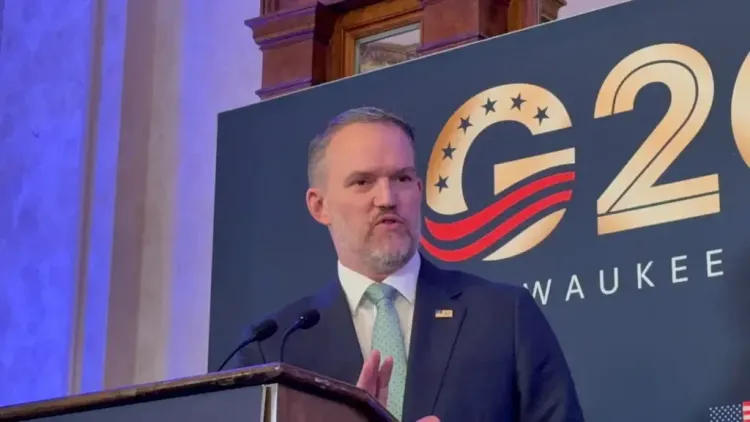
US Trade Representative Jamieson Greer said President Trump has 'essentially remade' the global trading order in one year, speaking at the G20 Trade Ministers' Meeting in Milwaukee on 2 October 2026 .
The US has signed 10 reciprocal trade agreements and 9 joint statements , covering more than 40% of US goods trade.
14 countries have agreed to accept US motor vehicle standards; 10 have accepted FDA approvals; 52 pledged no duties on electronic transmissions.
US goods exports exceeded $1.4 trillion through July 2026, on course for a record annual figure.
Greer dismissed Canada's overtures to India and the EU as 'low-growth plus low-growth', while acknowledging difficult unresolved issues in US-Canada talks.
The G20 Leaders' Summit in Miami later this year will be the next test for Washington's emerging trade framework.
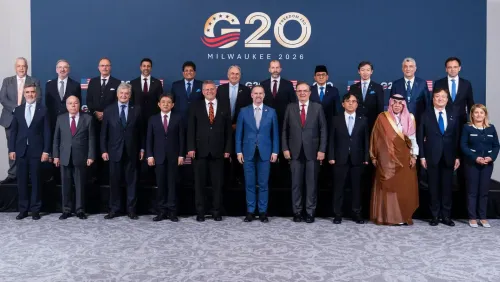
US Trade Representative Jamieson Greer declared on 2 October 2026 that President Donald Trump had 'essentially remade' the global trading order within a single year, citing a sweeping set of tariff measures and reciprocal trade agreements that Washington says have rebalanced US trade and unlocked greater market access. Greer made the remarks to reporters after the G20 Trade Ministers' Meeting in Milwaukee, where the United States is hosting the G20 presidency in 2026.
Deals Struck and Markets Opened
Greer said the Trump administration had signed 10 reciprocal trade agreements and nine joint statements with trading partners, with negotiations continuing with additional countries. Collectively, he said, these deals now cover more than 40 per cent of US goods trade.
The agreements have, according to Greer, reduced both tariff and non-tariff barriers affecting American industrial and agricultural exports, while also aiming to strengthen supply chains and economic security. He highlighted three sectors as emblematic of the progress: automobiles, pharmaceuticals, and digital trade.
'As a result of our trade negotiations, 14 countries have agreed to accept US motor vehicle standards that makes it easier to export vehicles to the world,' Greer told reporters. Separately, 10 countries have agreed to accept US Food and Drug Administration (FDA) approvals for new treatments and medicines, and 52 countries have pledged not to impose duties on electronic transmissions.
A Direct Rebuke of the WTO
Greer explicitly contrasted these outcomes with what he characterised as the World Trade Organization's decades-long failure to deliver comparable results for the United States. 'What the World Trade Organization could not deliver for America over decades, President Trump's trade deals have delivered in the past year,' he said.
This critique reflects a broader shift in Washington's posture — moving away from multilateral rule-based frameworks and towards bilateral and plurilateral arrangements built on reciprocity. Critics have argued that the approach risks fragmenting the global trading system and inviting retaliatory measures from key partners.
Record US Exports and Domestic Manufacturing Push
Greer pointed to US goods exports of more than $1.4 trillion through July of this year, saying the country was on track for its highest-ever annual goods export figure. He framed the administration's trade policy as a three-pronged effort: restoring domestic manufacturing, rebalancing trade deficits, and expanding overseas markets for American exports.
Canada, the EU, and Unresolved Tensions
Asked about Canada's efforts to deepen trade ties with India and the European Union — moves observers saw as a hedge against stalled US-Canada negotiations — Greer was dismissive. 'These are very low-growth jurisdictions, and low-growth plus low-growth is still low-growth,' he said, adding that Washington was 'totally fine' with countries seeking alternative markets for surplus production.
He acknowledged that technical talks with Canada were ongoing but noted that 'a handful of outstanding issues that are quite difficult to resolve' remained. The comment was a pointed acknowledgement of how far apart the two neighbours remain, even as Canada accelerates its pivot toward other partners.
This comes amid a broader pattern: several US trade partners that have struggled to clinch deals with Washington have quietly accelerated their own bilateral and regional trade diplomacy. Notably, the Milwaukee ministerial saw Canada holding parallel meetings with both India and the EU on the sidelines.
What Comes Next
The G20 Leaders' Summit in Miami later this year will be the next major test of whether the US-led trade order Greer described commands broad buy-in or faces pushback. With negotiations still ongoing with multiple partners and the WTO increasingly sidelined in Washington's calculus, the shape of global trade governance in the years ahead remains deeply contested.
Point of View
But the architecture it describes is largely bilateral — a web of one-on-one deals that replaces the multilateral scaffolding of the WTO with something far more dependent on US leverage. That works while American demand remains the world's most coveted prize, but it creates a fragile order: if growth slows or partners find credible alternatives, the deals lack the enforcement depth of treaty-based frameworks. The Canada episode is telling — even a close neighbour and existing free-trade partner has been pushed toward the EU and India, which suggests the approach generates as much realignment as it does resolution. The WTO comparisons also deserve scrutiny: Washington's frustration with the WTO is legitimate, but the institution's gridlock was partly a product of US choices over the past decade.
NationPress
2 Oct 2026
Frequently Asked Questions
What did US Trade Representative Jamieson Greer say at the G20 in Milwaukee?
Greer said that President Trump had 'essentially remade' the global trading order in one year by imposing tariffs and securing reciprocal trade agreements covering more than 40% of US goods trade. He made the remarks on 2 October 2026 after the G20 Trade Ministers' Meeting in Milwaukee.
How many trade deals has the Trump administration signed?
According to Greer, the US has signed 10 reciprocal trade agreements and 9 joint statements with trading partners, with negotiations continuing with additional countries. These deals collectively cover more than 40% of US goods trade.
Why did Greer criticise the World Trade Organization?
Greer argued that the WTO had failed to deliver comparable market-opening outcomes for the United States over decades, whereas the Trump administration's bilateral and plurilateral deals had achieved results within a single year. The remarks signal Washington's continued preference for direct negotiations over multilateral frameworks.
What is the current state of US-Canada trade talks?
Greer acknowledged that technical discussions with Canada are ongoing but said 'a handful of outstanding issues that are quite difficult to resolve' remain. He dismissed Canada's parallel outreach to India and the EU as unlikely to deliver meaningful growth, given what he called 'low-growth jurisdictions'.
What is the significance of the G20 Leaders' Summit in Miami?
The G20 Leaders' Summit in Miami, scheduled for later in 2026, is the next major forum where the US-led trade framework will face scrutiny from both allies and emerging economies. With trade policy forming a central part of the US G20 presidency agenda, the summit is expected to test how broadly Washington's approach commands international support.