CM Himanta Recalls Shastri's Role in Assam's Language Agitation
Synopsis
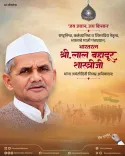
Assam CM Himanta Biswa Sarma marked Lal Bahadur Shastri Jayanti by recalling the late PM's intervention as Home Minister to resolve the 1960 Assam language agitation and his subsequent visit to Guwahati — grounding a national tribute in a distinctly regional memory.
Key Takeaways
Assam CM Himanta Biswa Sarma posted a tribute to Lal Bahadur Shastri on his birth anniversary, 2 October 2026 .
Sarma specifically recalled that Shastri, as Union Home Minister , crafted the formula that helped resolve Assam's language agitation of the early 1960s.
Shastri later visited Guwahati as Prime Minister — a memory Sarma says the state 'still holds close.' Sarma described Shastri as 'a man of simplicity, sacrifice and quiet strength' and used the honorific Shraddheya .
The tribute was posted on Shastri Jayanti , which falls on the same date as Gandhi Jayanti — 2 October .
On the birth anniversary of India's second Prime Minister, Assam Chief Minister Himanta Biswa Sarma paused to recall a chapter of history that few outside the Northeast remember — the day Lal Bahadur Shastri, then Home Minister, personally intervened to defuse one of the most volatile language crises in the country's post-independence story.
Shastri's Formula That Quieted a Burning Assam
The year was 1960, and Assam was in turmoil. The state government's move to make Assamese the sole official language had triggered fierce protests from Bengali-speaking communities, particularly in the Barak Valley and among tea-garden workers. Riots, curfews, and police firings — the agitation left deep scars. Into that charged atmosphere stepped Shastri Ji, then serving as Union Home Minister under Prime Minister Jawaharlal Nehru. He brokered a settlement that balanced Assamese aspirations with the legitimate concerns of linguistic minorities — a formula Sarma now credits with helping 'heal Assam's language agitation.'
It was a demonstration of the quiet, tenacious problem-solving that defined Shastri's political character — getting results not through theatrics, but through patient negotiation and a genuine belief that no grievance was too local to deserve attention from Delhi.
From Home Ministry to Guwahati: A Prime Minister Visits
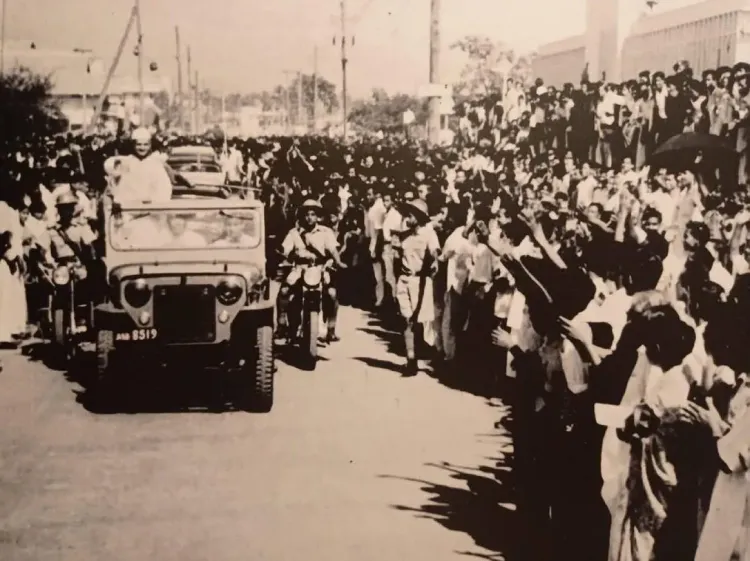
After ascending to the nation's highest office following Nehru's death in May 1964, Shastri visited Guwahati — a moment Sarma describes as 'a memory our state still holds close.' That visit carried symbolic weight: it was a signal from the Centre that the Northeast was not peripheral to the national imagination. For Assam, it was a rare moment of feeling seen by the Prime Minister's chair.
Sarma's tribute, posted on Friday, 2 October 2026 — Shastri Jayanti, which coincides with Gandhi Jayanti — frames the former PM as 'a man of simplicity, sacrifice and quiet strength, whose life continues to inspire all of us in public service.' The phrasing is deliberate: shraddheya (revered) is the honorific Sarma uses, a term of deep respect in Hindi and Assamese public discourse.
Why This Tribute Lands Differently from Guwahati
Most tributes to Shastri on his birth anniversary focus on the Jai Jawan Jai Kisan slogan, the 1965 war with Pakistan, or his death at Tashkent in January 1966. Sarma anchors his remembrance instead in a specific, regional memory — the Assam language settlement — making the tribute feel earned rather than ceremonial. For a Chief Minister who regularly invokes Assam's identity politics, grounding a national tribute in a local historical act is both politically resonant and historically instructive.
Shastri's life — born into poverty in Mughalsarai, rising without wealth or dynasty, serving with a frugality that became legend — remains a counterpoint that politicians across the spectrum quietly invoke when they wish to signal substance over spectacle. On a day shared with the Mahatma, his story asks the same uncomfortable question: what does genuine public service actually look like?
Point of View
A theme central to his governance narrative. The choice to foreground Shastri's administrative intervention in the Northeast, rather than the more nationally prominent 1965 war or Jai Jawan Jai Kisan legacy, signals an effort to claim a BJP ideological lineage that is rooted in the region's lived memory. It also implicitly draws a contrast between quiet, effective federalism and louder forms of political assertion — a frame that suits Sarma's carefully cultivated image as a pragmatic administrator. For the BJP's Northeast outreach under NEDA, invoking Congress-era leaders who served the region with tangible results is a deft piece of historical reappropriation.
NationPress
2 Oct 2026
Frequently Asked Questions
What is Lal Bahadur Shastri Jayanti and when is it celebrated?
Lal Bahadur Shastri Jayanti is the birth anniversary of India's second Prime Minister, celebrated every year on 2 October — the same date as Gandhi Jayanti. Shastri was born on 2 October 1904 in Mughalsarai, present-day Uttar Pradesh.
What was Lal Bahadur Shastri's role in the Assam language agitation?
As Union Home Minister in the early 1960s, Lal Bahadur Shastri is credited with brokering a settlement formula that addressed both Assamese-language aspirations and the concerns of Bengali-speaking minorities, helping to defuse the volatile 1960 Assam language agitation .
Why did Lal Bahadur Shastri visit Guwahati?
Lal Bahadur Shastri visited Guwahati after becoming Prime Minister in 1964 , a trip that Assam CM Himanta Biswa Sarma describes as 'a memory our state still holds close,' reflecting the significance of national leadership engaging directly with the Northeast.
What did Assam CM Himanta Biswa Sarma say about Shastri Jayanti 2026?
On 2 October 2026 , Assam CM Himanta Biswa Sarma posted a tribute calling Shastri 'a man of simplicity, sacrifice and quiet strength,' and specifically recalled Shastri's role in resolving the Assam language agitation and his visit to Guwahati as Prime Minister.
Who was Lal Bahadur Shastri and what is he remembered for?
Lal Bahadur Shastri was India's second Prime Minister , serving from 1964 to 1966 . He is remembered for his slogan Jai Jawan Jai Kisan , leading India during the 1965 war with Pakistan , his extreme personal frugality, and his sudden death in Tashkent in January 1966 after signing a peace accord.