Brazil, US edge closer to trade deal after G20 Milwaukee talks
Synopsis
A bilateral trade deal between Brazil and the United States just got meaningfully closer. Following direct presidential engagement and two face-to-face meetings at the G20 in Milwaukee, both sides have committed to scoping out a formal framework — covering tariffs, quotas, and safeguards — within weeks. The real test now is whether they can agree on what stays off the table.
Key Takeaways
Brazil and the US reaffirmed commitment to a bilateral trade agreement at the G20 Trade Ministers' Meeting in Milwaukee on 1 October 2026 .
Both sides will define a 'conceptual scope' of negotiations in the coming weeks , covering tariffs, non-tariff barriers, quotas, and safeguards.
Minister Márcio Elias Rosa said US Trade Representative Jamieson Greer showed clear willingness to advance the work, stating 'We're closer by the day.' Negotiations reportedly resumed following direct engagement between the two countries' presidents after US tariffs weighed on Brazil's economy.
Brazil reiterated its opposition to tariffs as tools of coercion and its support for WTO -based multilateral trade rules.
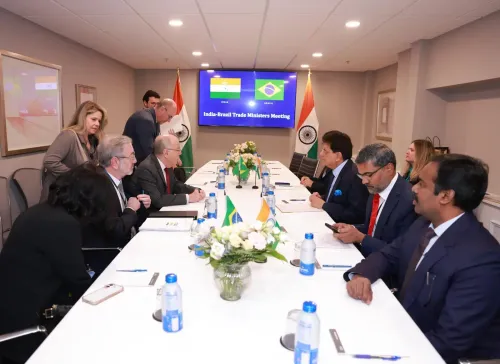
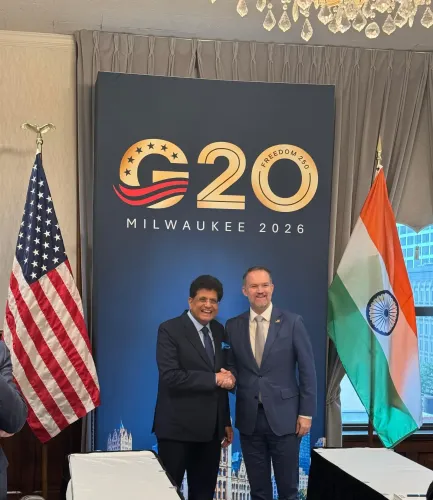
Brazil and the United States are moving closer to a bilateral trade agreement, with both sides committing to define the conceptual scope of negotiations in the coming weeks, covering tariffs, non-tariff barriers, quotas, and safeguards. The development emerged from a meeting between Brazil's Minister of Development, Industry, Trade and Services Márcio Elias Rosa and US Trade Representative Jamieson Greer on the sidelines of the G20 Trade Ministers' Meeting in Milwaukee on 1 October 2026.
What Was Agreed in Milwaukee
Minister Rosa described the bilateral exchange as a 'good meeting,' saying both parties 'renewed the commitment to having an agreement.' Speaking through an interpreter, he noted that Greer had shown clear interest in advancing the negotiations. 'We're closer by the day,' Rosa told reporters during an impromptu press interaction.
The immediate priority, Rosa said, was establishing the boundaries of what the negotiations would cover. 'In the coming weeks, we are going to define a conceptual scope of such trade agreements, which can talk about tariff or non-tariff issues,' he said. He acknowledged the complexity of that exercise, warning that a failure to set limits early could make talks open-ended.
Scope and Structure of the Proposed Deal
Among the specific mechanisms under consideration are tariff reductions, quotas, and safeguards. Rosa was candid about the negotiating challenge: 'Are we going to talk about quotas? Are we going to talk about tariff reduction? Are we going to include safeguards?' Sectors and thresholds would need to be identified before any framework could be formalised, he said. Listing all goods and services, he cautioned, 'would be months or years.'
This is notably the second in-person meeting between the two sides at the Milwaukee G20 gathering, following direct presidential engagement that reportedly helped restart stalled talks after US tariffs began weighing on the Brazilian economy.
Brazil's Position on Multilateralism
Brasilia has been firm on one point: it opposes the use of tariffs as instruments of coercion or discrimination and maintains that the World Trade Organization (WTO) should provide universal rules for global commerce. Rosa was careful to frame bilateral negotiations not as a departure from multilateralism, but as consistent with it. 'The Brazilian government is never away from the negotiation table for one reason. Because Brazil believes in multilateralism,' he said.
The Milwaukee talks ran alongside broader G20 discussions on multilateral trade rules, food security, excess capacity, and WTO reform — a context that gave Brazil's multilateralist stance added visibility on the global stage.
Why This Matters for Both Economies
Brazil and the US share a wide-ranging commercial relationship spanning agriculture, energy, manufacturing, and services. Trade tensions in recent months had strained that relationship, injecting urgency into the search for a negotiated framework on tariff and market-access disputes. A formal agreement, if eventually concluded, would be among the most significant bilateral trade frameworks between a major South American economy and the United States in recent memory. For Brazil, it would also serve as a signal that its diplomacy can deliver market access without abandoning its WTO-first principles.
What Comes Next
Both sides are expected to hold further working-level exchanges in the weeks ahead to map out a conceptual framework. The outcomes of those discussions will likely determine whether the negotiations progress to a formal deal or remain at the scoping stage. Watchers of US trade policy will also note that Greer's visible engagement signals the current US administration's willingness to pursue bilateral tracks even as multilateral WTO negotiations remain slow-moving.
Point of View
But the hard part has not yet begun. Defining what stays outside a deal is as politically charged as what goes in — and both sides know it. Brazil's multilateralist framing is also worth watching: Brasilia is threading a needle, trying to secure bilateral market access from Washington without undermining its credibility at the WTO. Whether Greer's visible enthusiasm translates into a workable framework, or stalls once sectoral lobbies in both countries weigh in, will be the real indicator of intent. The presidential-level restart is promising; the weeks-long scoping exercise will reveal whether the political will holds at the technical level.
NationPress
1 Oct 2026
Frequently Asked Questions
How close are Brazil and the US to a trade deal?
Both sides described themselves as 'closer by the day' following meetings at the G20 Trade Ministers' summit in Milwaukee on 1 October 2026. They have committed to defining the scope of negotiations — covering tariffs, non-tariff barriers, quotas, and safeguards — in the coming weeks, though no formal deal has been signed.
What issues will the Brazil-US trade negotiations cover?
The conceptual scope, to be defined in coming weeks, is expected to address tariff reductions, non-tariff barriers, quotas, and safeguards. Minister Rosa cautioned that the two sides must first agree on which sectors and thresholds fall within the negotiations to avoid open-ended talks.
Why did Brazil-US trade talks stall in the first place?
Talks had been under strain after US tariffs began affecting Brazil's economy. Negotiations reportedly resumed following direct presidential engagement between the two countries, which helped restore the political momentum needed for fresh talks.
What is Brazil's position on tariffs and the WTO?
Brazil has consistently opposed the use of tariffs as instruments of coercion or discrimination and supports the WTO as the body providing universal rules for international commerce. Minister Rosa framed bilateral negotiations as consistent with multilateralism, saying Brazil 'believes in multilateralism' and is never away from the negotiating table.
Where did the latest Brazil-US trade meeting take place?
The meeting between Minister Márcio Elias Rosa and US Trade Representative Jamieson Greer took place on the sidelines of the G20 Trade Ministers' Meeting in Milwaukee on 1 October 2026. It was the second in-person meeting between the two sides at that gathering.