Brazil calls for urgent WTO reform, says tariffs must not be used as coercion tools
Synopsis
At the G20 Trade Ministers' Meeting in Milwaukee, Brazil's trade minister declared the WTO 'under critical condition' and called for its immediate reinvigoration — warning that tariffs must never become tools of coercion. With the WTO's dispute mechanism paralysed and trade nationalism rising, Brazil's push for universal rules carries weight beyond rhetoric.
Key Takeaways
Brazil's Minister Márcio Elias Rosa called for immediate WTO reform at the G20 Trade Ministers' Meeting in Milwaukee on 1 October 2025 .
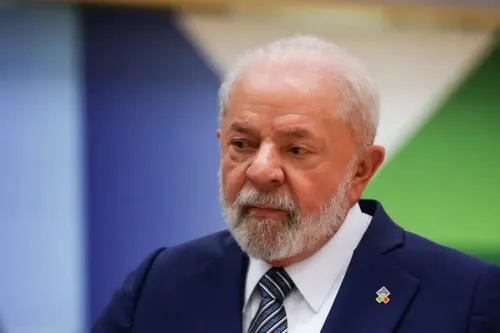
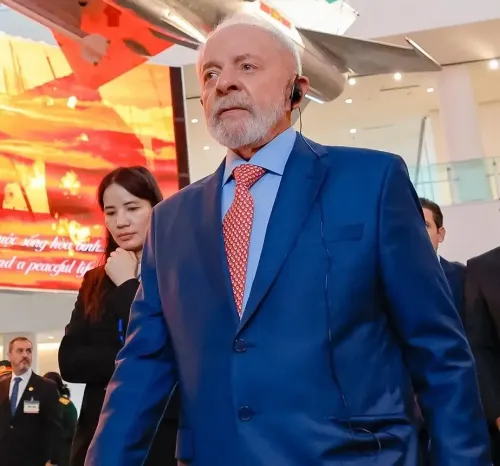
President Lula da Silva has described the WTO as being 'under critical condition' .
Rosa said tariffs must never be used as coercive or discriminatory tools — a pointed statement amid rising global trade tensions.
There is agreement in principle on WTO reform, including from the United States , but divergence on the specific terms of reform.
Talks also covered food security — where progress was reported — and excess industrial capacity , which remains under discussion.
Brazil reaffirmed its commitment to multilateralism , with Rosa saying the country will never leave the negotiating table.
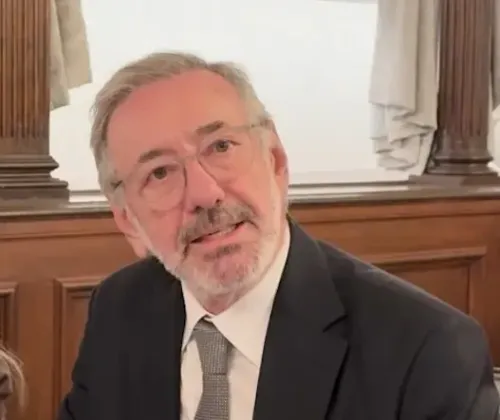
Brazil's Minister of Development, Industry, Trade and Services Márcio Elias Rosa on Wednesday, 1 October 2025, called for the immediate revitalisation of the World Trade Organization (WTO) and the establishment of universally applicable trade rules, arguing that tariffs must never serve as instruments of coercion or discrimination. Rosa made the remarks on the sidelines of the G20 Trade Ministers' Meeting in Milwaukee, where discussions reportedly reinforced the urgency of rescuing a multilateral trading system under strain.
What Rosa Said at the G20 Meeting
Speaking through an interpreter, Rosa said there was broad consensus at the meeting on the need to reinvigorate the WTO without delay. 'There is consensus, for instance, that the WTO needs to be immediately reinvigorated, and that it should become effective,' he said. Citing Brazilian President Luiz Inácio Lula da Silva's characterisation of the organisation, Rosa described the WTO as being 'under critical condition' — a pointed assessment of the body's diminished authority in an era of rising trade nationalism.
Rosa made clear that simply maintaining the WTO's institutional existence was not sufficient. 'Just existing for existing. It's not enough,' he said, stressing that the organisation must be empowered to actually regulate trade disputes and set enforceable multilateral norms.
Brazil's Firm Stance Against Coercive Tariffs
A central thread in Rosa's remarks was Brazil's categorical opposition to the use of tariffs as political leverage. 'Never have tariffs been used as a coercive or discriminatory tool,' he said, in remarks widely read as a rebuke of recent global trends — including sweeping unilateral tariff measures that have roiled trade relations among major economies. Rosa argued that the WTO must serve as the definitive framework for resolving such disputes, rather than allowing bilateral power plays to fill the vacuum.
Notably, this position comes at a moment of heightened global trade tensions, with the WTO's dispute settlement mechanism having been effectively paralysed for several years due to the blocking of new appellate body appointments. Brazil's push for institutional reform is therefore not merely rhetorical — it reflects a structural vulnerability that affects all mid-sized trading economies.
Agreement in Principle, But Divergence on Terms
Rosa acknowledged that while there was agreement in principle on the need for WTO reform — including from the United States — the harder challenge lay in agreeing on the specific terms of that reform. This reflects a longstanding tension within the G20: member states often converge on broad goals while diverging sharply on implementation, particularly when national industrial interests are at stake.
On the subject of food security, Rosa indicated that trade ministers had made progress toward common ground. However, he noted that other contentious issues — such as excess industrial capacity — remained under active discussion, suggesting the Milwaukee meeting did not produce a comprehensive resolution on all fronts.
Brazil's Commitment to Multilateralism
Rosa framed Brazil's continued engagement at the negotiating table as a matter of conviction rather than convenience. 'The Brazilian government is never away from the negotiation table for one reason. Because Brazil believes in multilateralism,' he said. He added: 'We must work and create agreements. A space for Brazil to be defended. It is at the negotiation table.'
This is consistent with Lula's broader foreign policy posture since returning to the presidency, which has emphasised South-South cooperation, opposition to economic unilateralism, and a renewed role for Brazil in global governance forums. Brazil currently holds the G20 presidency and has used that platform to elevate trade reform and development finance on the multilateral agenda.
Background: The WTO's Prolonged Crisis
The WTO, founded in 1995, provides the principal multilateral framework for global trade rules and dispute settlement. For years, its members have debated reforms covering its dispute resolution mechanism, negotiating functions, and its capacity to respond to shifting patterns in global commerce. The impasse over the appellate body — crippled since 2019 — has left many trade disputes effectively unresolved, emboldening unilateral action by major powers. Brazil's call at Milwaukee adds to a chorus of voices demanding that the organisation be restructured before its relevance erodes further.
With the G20 bringing together the world's largest developed and emerging economies, the Milwaukee meeting represents a critical opportunity — though whether consensus on WTO reform terms can translate into binding commitments remains to be seen.
Point of View
And no G20 communiqué has yet produced a credible roadmap to fix it. Brazil can set the agenda as G20 president, but converting 'agreement in principle' into binding reform terms is where every previous multilateral trade push has stalled.
NationPress
1 Oct 2026
Frequently Asked Questions
What did Brazil's minister say about WTO reform at the G20 meeting?
Brazil's Minister Márcio Elias Rosa called for the WTO to be 'immediately reinvigorated' and made effective, describing it as being 'under critical condition.' He argued the organisation must serve as the definitive framework for regulating international trade, not merely exist in name.
Why is Brazil opposed to using tariffs as coercive tools?
Brazil argues that tariffs should serve normal trade policy objectives and must never be used as instruments of political coercion or discrimination against specific countries. The position reflects Brazil's broader commitment to multilateralism and universal rules-based trade — and is widely read as a rebuke of recent unilateral tariff actions by major economies.
Is there agreement on WTO reform among G20 countries?
There is agreement in principle on the need for reform, including from the United States, according to Rosa. However, he acknowledged that the harder challenge is agreeing on the specific terms of that reform, and no binding commitments were reported from the Milwaukee meeting.
What other issues were discussed at the G20 Trade Ministers' Meeting in Milwaukee?
Ministers discussed food security, on which some common ground was reportedly reached, and excess industrial capacity, which remained under active discussion. WTO reform and the fragmentation of global trade rules were the central themes of the meeting.
What is Brazil's role in the G20 on trade matters?
Brazil currently holds the G20 presidency and has used the platform to prioritise trade reform, multilateralism, and development finance. President Lula da Silva's government has consistently advocated for stronger international institutions and rules that apply equally to all economies.