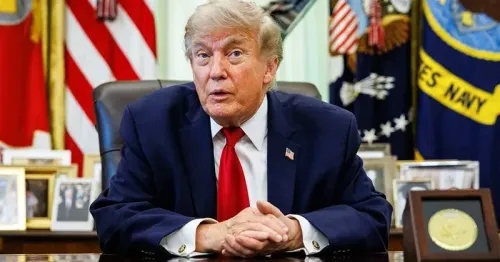
White House Asks Americans: What Does Socialism Cost You?

Synopsis
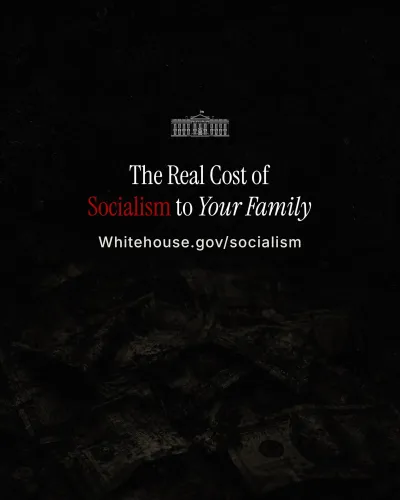
The White House posted a pointed rhetorical challenge on October 2, 2026 — 'Find Out How Much Socialism Costs You' — framing left-leaning economic policies as a personal financial burden on Americans, with no specific programme or cost figure cited.
Key Takeaways
The White House posted 'Find Out How Much Socialism Costs You' on October 2, 2026 with a single image attached.
The post carries no specific dollar figure, named programme, or legislative target.
The framing personalises a macro-political argument by addressing individual Americans directly ('you').
It reflects a recurring conservative rhetorical strategy of linking government expansion to household financial costs.
American economic policy debates have downstream consequences for Indian trade, capital flows, and IT export markets.
The White House fired a pointed question at Americans on Friday, October 2, 2026 — not a policy announcement, but a rhetorical challenge designed to frame the economic debate heading into a politically charged season: 'Find Out How Much Socialism Costs You.'
The post, carrying a single image, is lean on detail but heavy on intent. It reflects a recurring line of attack from the current administration — positioning left-leaning economic proposals, including expanded federal spending, price controls, and government-run programmes, as a direct financial burden on ordinary American households.
The political arithmetic behind the message
The framing of 'socialism costs you' is a well-worn weapon in the American conservative rhetorical arsenal, but its deployment by the official White House account gives it institutional weight. By directing the message at individual pocketbooks — 'you,' not 'the economy' or 'the nation' — the administration is making a deliberate choice to personalise a macro-political argument, translating ideology into grocery bills and tax brackets. With no supporting data, named programme, or specific dollar figure attached, the post functions less as a policy brief and more as a mobilising signal — an invitation to a conversation the White House clearly wants to own.Why Indians are watching Washington's economic messaging
For Indian observers, the debate over state intervention versus market freedom in the United States carries real-world stakes. American economic policy shapes global capital flows, interest-rate decisions by the Federal Reserve, and the investment climate that directly affects Indian IT exports, remittances, and bilateral trade. When Washington wages a culture war over economic models, the ripple effects reach well beyond the Potomac. The White House has not, at this point, attached a specific legislative target or cost estimate to the post. Until it does, the message is best read as a political temperature-check — and a preview of the ideological lines the administration intends to draw in the months ahead.Point of View
Making them stickier with swing voters. Without a concrete figure or target programme, it operates as a priming device rather than a policy argument, seeding a frame before the details arrive. For the current administration, this kind of social-media salvo serves a dual purpose: it energises the base and forces opponents onto the defensive — having to argue against a number that does not yet exist. Internationally, it signals that the White House intends to keep market-vs-state framing central to its political identity through the coming legislative season.
NationPress
2 Oct 2026
Frequently Asked Questions
What did the White House post on October 2 2026?
The White House posted a short message on X reading 'Find Out How Much Socialism Costs You,' accompanied by one image, with no specific policy or dollar figure cited.
What does the White House mean by 'socialism costs you'?
The phrase is a political framing device that links left-leaning economic proposals — such as expanded government healthcare, price controls, or federal spending programmes — to a direct financial burden on individual American taxpayers.
Does the White House post name a specific programme or cost?
No. The post as published carries no specific programme name, legislative bill, or cost estimate. It functions as a broad rhetorical signal rather than a detailed policy argument.
Why does US political messaging about socialism matter for India?
American economic policy shapes Federal Reserve interest rates, global capital flows, and bilateral trade conditions that directly affect Indian exports, IT services revenue, and investment sentiment.
Is this post part of a broader White House campaign?
The framing is consistent with a long-running conservative political strategy of depicting government expansion as a household cost, though no formal campaign name or rollout has been confirmed alongside this post.